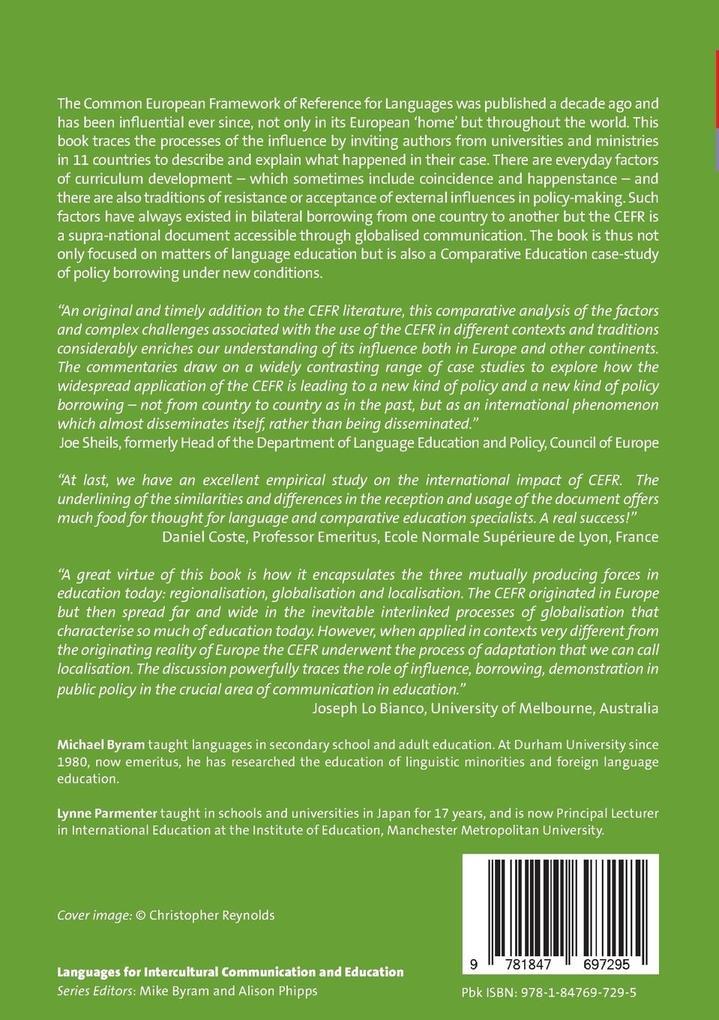
An original and timely addition to the CEFR literature, this comparative analysis of the factors and complex challenges associated with the use of the CEFR in different contexts and traditions considerably enriches our understanding of its influence both in Europe and other continents. The commentaries draw on a widely contrasting range of case studies to explore how the widespread application of the CEFR is leading to a new kind of policy and a new kind of policy borrowing - not from country to country as in the past, but as an international phenomenon which almost disseminates itself, rather than being disseminated. Joe Sheils, formerly Head of the Department of Language Education and Policy, Council of EuropeAt last, we have an excellent empirical study on the international impact of CEFR. The underlining of the similarities and differences in the reception and usage of the document offers much food for thought for language and comparative education specialists. A real success!Daniel Coste, Professor Emeritus, Ecole Normale Superieure de Lyon, FranceA great virtue of this book is how it encapsulates the three mutually producing forces in education today: regionalisation, globalisation and localisation. The CEFR originated in Europe but then spread far and wide in the inevitable interlinked processes of globalisation that characterise so much of education today. However, when applied in contexts very different from the originating reality of Europe the CEFR underwent the process of adaptation that we can call localisation. The discussion powerfully traces the role of influence, borrowing, demonstration in public policy in the crucial area of communication in education.Joseph Lo Bianco, University of Melbourne, Australia