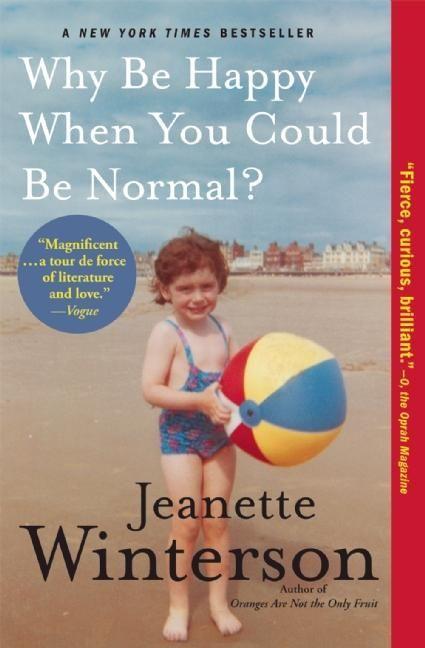
""Why Be Happy When You Could Be Normal?" is raucous. It hums with a dark refulgence from its first pages. . . . Singular and electric . . . [Winterson's] life with her adoptive parents was often appalling, but it made her the writer she is."--"The New York Times"
"She's one of the most daring and inventive writers of our time--searingly honest yet effortlessly lithe as she slides between forms, exuberant and unerring, demanding emotional and intellectual expansion of herself and of us. . . She explores not only the structure of storytelling byt the interplay of past, present, and future, blending science fiction, realism, and a deep love of literature and history. . . . In "Why Be Happy," [Winterson's] emotional life is laid bare. [Her] struggle to first accept and then love herself yields a bravely frank narrative of truly coming undone. For someone in love with disguises, Winterson's openness is all the more moving; there's nothing left to hide, and nothing left to hide behind."--A.M. Homes, "Elle"
"To read Jeanette Winterson is to love her. . . . The fierce, curious, brilliant British writer is winningly candid in "Why Be Happy When You Could Be Normal?" . . . [Winterson has] such a joy for life and love and language that she quickly becomes her very own one-woman band--one that, luckily for us, keeps playing on."--"O, the Oprah Magazine"
"Magnificent . . . What begins as a tragicomic tale of triumph over a soul-destroying childhood becomes something rougher and richer in the later passages. . . . Winterson writes with heartrending precision. . . . Ferociously funny and unfathomably generous, Winterson's exorcism-in-writing is an unforgettable quest for belonging, a tour de force of literature and love."--"Vogue"
"A memoir as unconventional and winning as ["Oranges Are Not the Only Fruit"], the rollicking bildungsroman . . . that instantly established [Winterson's] distinctive voice. . . . It's a testament to Winterson's innate genero