








Das eBook.de Hörbuch Abo - jederzeit, überall, für nur 7,95 € monatlich!
Jetzt entdecken
mehr erfahren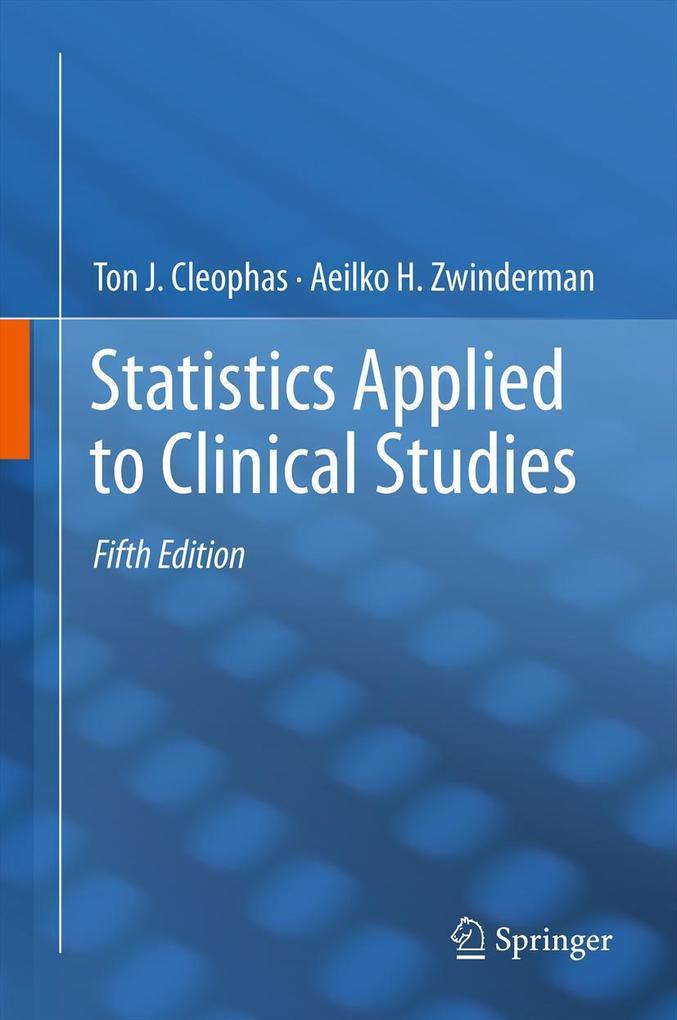
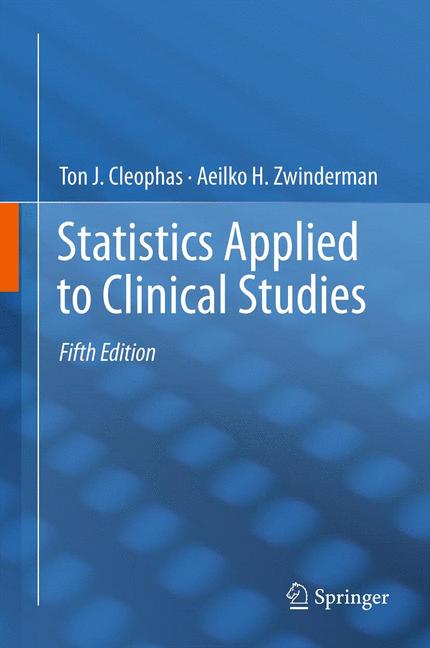
Inhaltsverzeichnis
Preface. Foreword. -1 Hypotheses, data, stratification. -2 The analysis of efficacy data. -3 The analyis of safety data. -4 Log likelihood ratio tests for safety data analysis. -5 Equivalence testing. - 6 Statistical power and sample size. -7 Interim analyses. -8 Clinical trials are often false positive. -9 Multiple statistical inferences. -10 The interpretation of the p-values. -11 Research data closer to expectation than compatible with random sampling. -12 Statistical tables for testing data closer to expectation than compatible with random sampling. -13 Dispersion issues. -14 Linear regression, basic approach. -15 Linear regression for assessing precision, confounding, interaction, basic approach. -16 Curvilinear regression. -17 Logistic and cox regression, markow models, regression with laplace transformations. -18 Regression modeling for improved precision. -19 Post-hoc analysis in clinical trials, a case for logistic regression analysis. -20 Multistage regression. -21 Categorical data. -22 Missing data. -23 Poisson regression for event analysis. -24 More on non linear relationships, splines. -25 Multivariate modeling. -26 Bhattacharya modeling. -27 Trend-testing. -28 Confounding. -29 Propensity score matching. -30 Interaction. -31 Time-dependent factor analysis. -32 Meta-analysis, basic approach. -33 Meta-analysis, review and update ofmethodologies. -34 Meta-regression. -35 Crossover studies with continuous variables. -36 Crossover studies with binary responses. -37 Cross-over trials should not be used to test treatments with different chemical class. -38 Quality-of-life assessments in clinical. -39 Item response modeling. -40 Statistics for the analysis of genetic data. -41 Relationship among statistical. -42 Testing clinical trials for randomness. -43 Clinical trials do not use random samples anymore. -44 Clinical data where variability is more important than averages. -45 Testing reproducibility. -46 Validating qualitative diagnostic tests. -47 Uncertainty of qualitative diagnostic tests. -48 Meta-analyses of qualitative diagnostic tests. -49 C-statistics versus logistic regression for assessing the performance of qualitative diagnostic tests. -50 Validating quantitative diagnostic tests. -51 Summary of validation procedures for diagnostic tests. -52 Validating surrogate endpoints of clinical trials. -53 Binary partitioning. -54 Methods for repeated measures analysis. -55 Mixed linear models for repeated measures. -56 Advanced analysis of variance, random effects and mixed effects models. -57 Monte Carlo methods for data analysis. -58 Artificial intelligence. -59 Fuzzy logic. -60 Physicians daily life and the scientific method. -61 Incidence analysis and the scientific method. -62 Superiority-testing. -63 Non-inferiority testing. -64 Time series. -65 Odds ratios and multiple regression, why and how to use them. -66 Statistics is no bloodless algebra. -67 Bias due to conflicts of interests, some guidelines. Appendix . Index.
From the reviews of the fifth edition:
Es wurden noch keine Bewertungen abgegeben. Schreiben Sie die erste Bewertung zu "Statistics Applied to Clinical Studies" und helfen Sie damit anderen bei der Kaufentscheidung.