








Das eBook.de Hörbuch Abo - jederzeit, überall, für nur 7,95 € monatlich!
Jetzt entdecken
mehr erfahren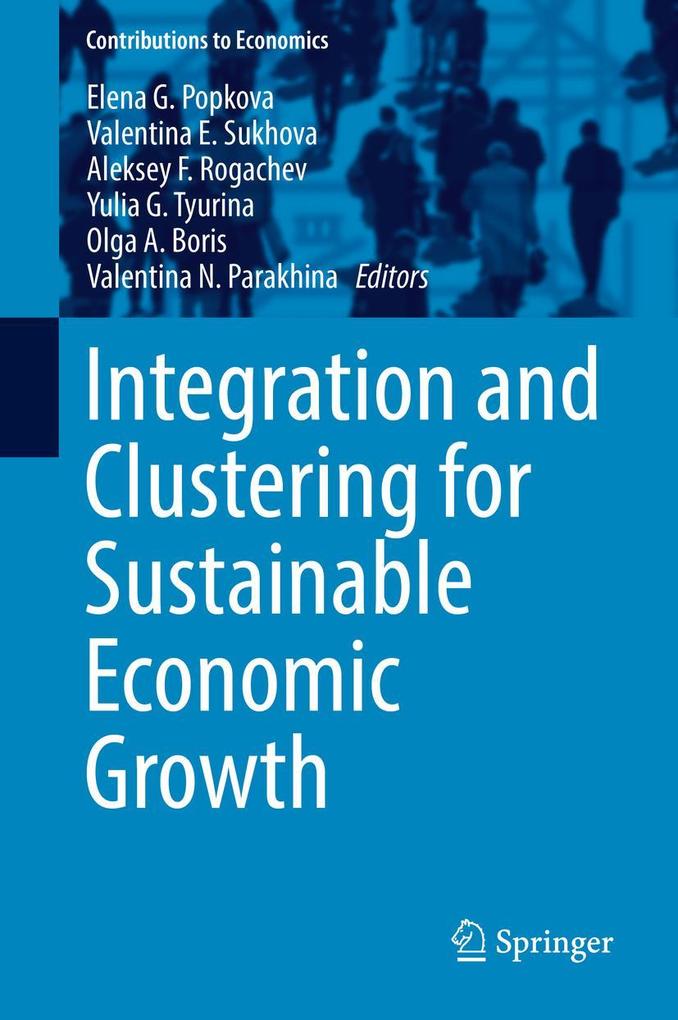

Inhaltsverzeichnis
Part 1: Building Cluster Initiatives as a Factor of Competitiveness of Modern Enterprises. - Chapter 1: Contradiction of Clusters Taxation in Russia: Taxes as Barriers and Stimuli for Clustering. - Chapter 2: Using Project-Based Approach in Public-Private Partnership with Participation of Corporate Holding Structures. - Chapter 3: Effective HR Management as the Most Important Condition of Successful Business Administration. - Chapter 4: Marketing Strategies of Cluster Development in Retailing Sector. - Chapter 5: Place and Role of Budgeting in the System of Methods of Managerial Accounting of Cluster Contractual Relationship. - Chapter 6: Role of Clusters in Promotion of Region s Economic Competitiveness. - Chapter 7: Clustering as a Growth Point of Modern Russian Business. - Chapter 8: Perspectives of Use of Competence-Based Approach to Management in Educational Services Market. - Chapter 9: Marketing Aspects of Cluster Management in Retailing Sector. - Chapter 10: History of Views on Audit of Commercial Structures Management Quality. - Chapter 11: Approaches to Organization of Project Management in Russia. - Chapter 12: CORPORATE CULTURE OF COMMERCIAL ORGANIZATION AS AN EFFECTIVE MANAGEMENT TOOL. - Part 2: Provision of Economic Security by Means of Creation of Innovational Network of Transnational Cluster Initiatives. - Chapter 13: Transnational Cluster Initiatives in Business as a Top-Priority Direction of Maximization of Economic Growth in Asian Countries. - Chapter 14: Modeling of Eco-Economic Security With the Use of Tax Instrumentarium. - Chapter 15: Formation of the System of Clustering as a Means of Perspective Development of Innovational Infrastructure of Region. - Chapter 16: Concept of Innovational Development of Entrepreneurial Potential of Small Enterprises. - Chapter 17: Problems and High-Priority Directions of Realization of Innovational Strategy of Development of Fuel and Energy Complex Enterprises. - Chapter 18: Biotech Cluster as a Critetion of Food Security Formation. - Chapter 19: Education as the National Safety Element in the Globalizing World. - Chapter 20: Formation of Creative Approach to Economic Activities as One of the Goals of Professional Training of Future Economists. - Chapter 21: Marketing Instrumentarium of Provision of Food Security. - Chapter 22: Innovational Approach to Management of Human Resources of Cluster Entity. - Chapter 23: YOUNG SPECIALISTS LABOR MARKET IN MODERN RUSSIA: ANALYSIS, PROBLEMS, AND PERSPECTIVES. - Part 3: Effectiveness of State Management and Economic Growth in the Context of Global Integration and Clustering. - Chapter 24: Sense of Rational Approach to Socio-Economic Development of Entrepreneurship. - Chapter 25: Integration of Social and Innovative Activities into Industrial Organization. - Chapter 26: Using Economic and Mathematical Methods During Formation of Construction Cluster. - Chapter 27: Support for Cluster Initiatives in View of Development of Innovational Economy: Regarding the Issue of Legal Regulation at the Level of Subjects of the Russian Federation. - Chapter 28: Methodology of Complex Evaluation of Eco-Economic Effectiveness of Agricultural Clusters. - Chapter 29: POLITICAL EXISTENCE OF THE SYSTEM OF SOCIAL SPACE-TIME. - Chapter 30: Wind Rose as One of the Main Factors of Apartment Buying Decision. - Chapter 31: Conceptual Aspects of Tax System Development in Cyclic Economy. - Chapter 32: Economic Aspects of Application of Biotechnologies During Creation of Forest Plantations. - Part 4: Methodological Approaches to Measurement of Sustainable Development of Industrial Enterprises Under the Conditions of Integration and Clustering. - Chapter 33: Educational Clusters as a Factor of Development of Educational Services Market in Region. - Chapter 34: Development of Entrepreneurial Component and a Factor of Increase of Effectiveness of Cluster Structures Management. - Chapter 35: Two-Level Economic and Mathematical Model of Monotown Development on the Basis of Cognitive Maps. - Chapter 36: Rational Environmental Management the Platform for Integration and Optimization of Resources. - Chapter 37: Green Technologies the Basis for Integration and Clustering of Subjects at the Regional Level of Economy. - Chapter 38: Effectiveness of State Territorial Administration in Provision of Sustainable Economic Growth of the Region. - Chapter 39: Economic and Mathematical Modeling During Organization and Conduct of Business Games. - Chapter 40: Strategic Management of Clustering Policy During Provision of Sustainable Development. - Chapter 41: Conceptual Features of Management Tools of Enterprise Structures Under the Conditions of Globalization of the World Market. - Chapter 42: Measures to Improve the Investment Attractiveness of Enterprises in the Modern Context. - Chapter 43: Adaptation of Macro-Economic Models to Solving the Problem of Countries Differentiation in Global Economy. - Chapter 44: Problems of Sustainable Development of Depressive Region in Crisis. - Chapter 45: Improvement of Methods of Analysis of Effectiveness of Stock Management at Industrial Enterprises. - Chapter 46: Modeling of Cluster Processes in the Sphere of Manufacture of ECO-Products: Issues of Ecological and Food Security of Russia. - Chapter 47: Development Efficiency Analysis of Public Administration Informatization. - Chapter 48: Formation of a Complex System of Indicators for Evaluation of Smooth Production Flow. - Chapter 49: Building a Strategy of Development of Hospitality Industry on the Basis of Improvement of the System of Personnel Training. - Chapter 50: Perspectives of Development of Small Business Within Modernization of Tax and Cluster Policy. - Chapter 51: Complementary Approach to Functioning of Entrepreneurial Structures Under the Conditions of Economic Instability of Region. - Chapter 52: Economic Growth in Russia: Influence of Oil Shock and Macro-Economic Factors. - Chapter 53: Transformation of Ethnocultural Development of Indigenous Peoples in the Conditions of Socialist Modernization of the Far East in 1920-1970 s: Problems of Historiography.
Es wurden noch keine Bewertungen abgegeben. Schreiben Sie die erste Bewertung zu "Integration and Clustering for Sustainable Economic Growth" und helfen Sie damit anderen bei der Kaufentscheidung.