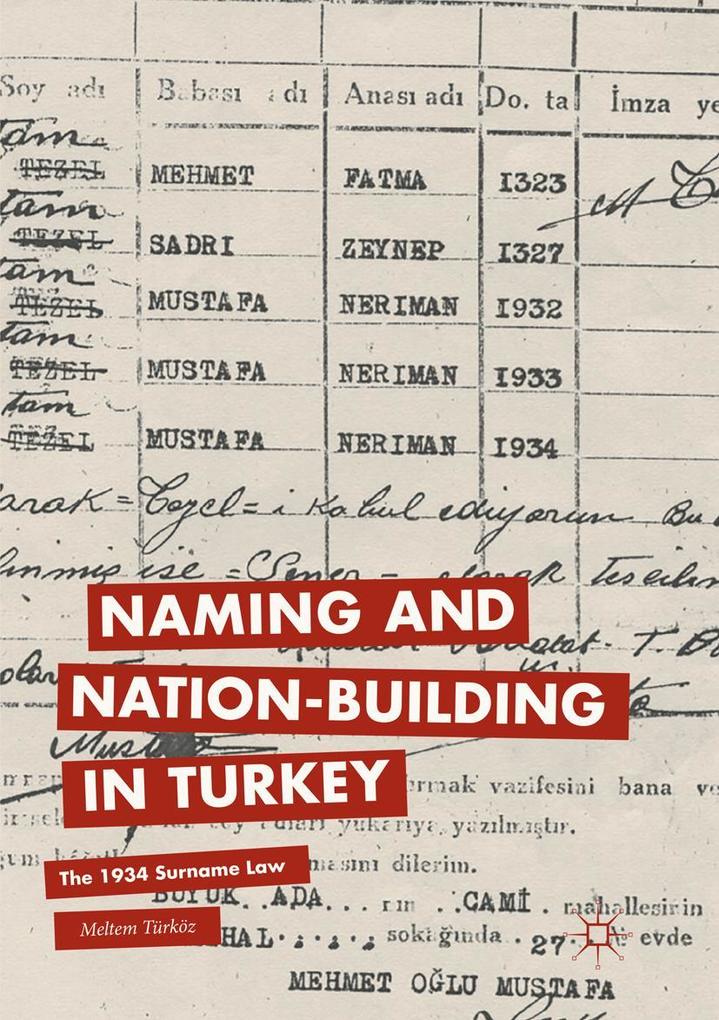
This book examines how the Turkish Surname Law of 1934 was adopted and reframed in diverse social contexts at a time of top down nationalism. Through historical ethnography, the author explores the genesis of the law, its drafting in parliament, the Turkish Language Reform, and its reception. The project draws from an oral historical narrative, official parliamentary and registry documents, and popular media.
Inhaltsverzeichnis
Chapter 1: Introduction: Surnames and the construction of Turkish citizens. - Chapter 2: Intellectual precursors and cultural context: Osmanl ca, Turcology, Language Reform and Surnames. - Chapter 3: Making, disseminating and enforcing the law. - Chapter 4: Generating surnames in theory and practice: surnames booklets, registry documents and the graphic artifacts of the state. - Chapter 5: The social life of the state s fantasy. - Chapter 6: The burden of minority names. - Chapter 7: Turkish surnames and their critics since 1934. - Chapter 8: Conclusion: The legacy of the surname law in the 21st century.