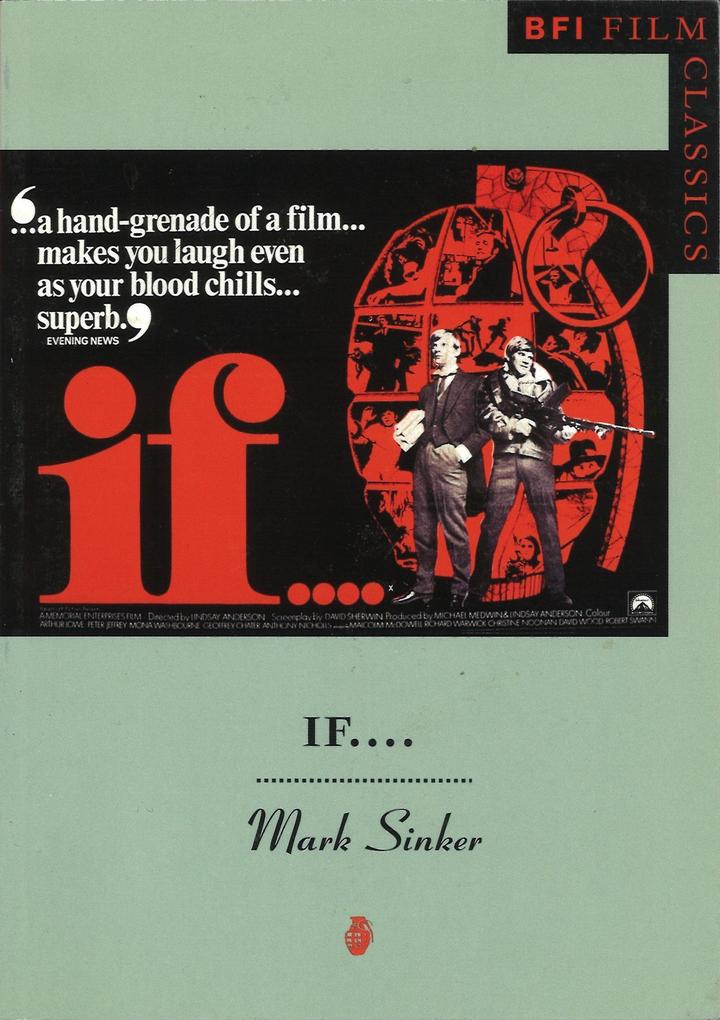
Lindsay Anderson's film if. . . (1968), starring Malcolm McDowell as a schoolboy who leads a guerilla insurgence, imagines how repression, conformity, and fusty ritual at an English public school could lead to anarchy and bloody revolt. Its title is a sardonic nod to Rudyard Kipling's most famous poem, and its story a radical updating of Kipling's 1899 story 'Stalky and Co. ,' in which prankish rebels are groomed to police the empire. Released at a time of unprecedented student uprisings in Europe and America, if. . . provided a peculiarly English perspective on the battle between generations - the perennial war of the romantically passionate against the corrupt, the ugly, the old, and the foolish. Though its emotional surface is authentically anti-authoritarian, its intellectual substance, as Mark Sinker argues, is rooted in a deep familiarity with the symbols of English ruling-class values. No longer a vehicle for shock or dissent, if. . . is today enjoyed comfortably, even nostalgically, but for Sinker this renders its many knots and paradoxes, the moments of poetry that Anderson argued were cinema's raison d'etre, all the more fascinating.