







Das eBook.de Hörbuch Abo - jederzeit, überall, für nur 7,95 € monatlich!
Jetzt entdecken
mehr erfahren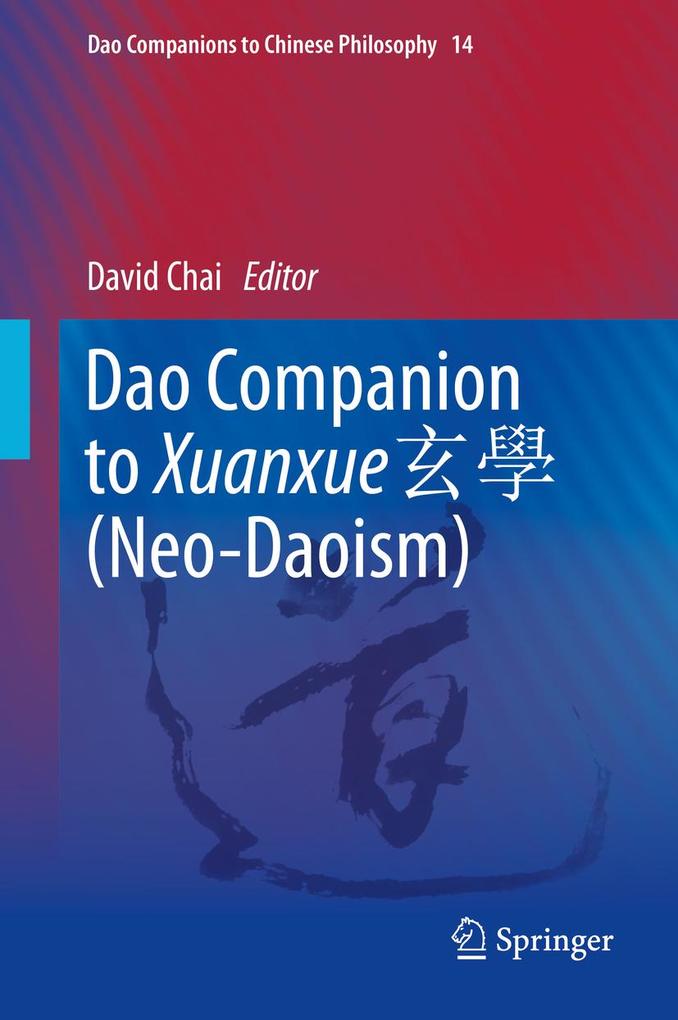
This comprehensive volume surveys an important but neglected period of Chinese intellectual history:
Xuanxue
(Neo-Daoism). It provides a holistic approach to the philosophical and religious traits of this movement via the concepts of non-being, being, and oneness. Thinkers and texts on the periphery of
Xuanxue
are also examined to show readers that
Xuanxue
did not arise in a vacuum but is the result of a long and continuous evolution of ideas from pre-Qin Daoism.
The 25 chapters of this work survey the major philosophical figures and arguments of
Xuanxue
, a movement from the Wei-Jin dynastic period (220-420 CE) of early-medieval China. It also examines texts and figures from the late-Han dynasty whose influence on
Xuanxue
has yet to be made explicitly clear. In order to fully capture the multifaceted nature of this movement, the contributors brilliantly highlight its more socially-oriented characteristics.
Overall, this volumepresents an unrivaled picture of this exciting period. It details a portrait of intellectual and cultural vitality that rivals, if not surpasses, what was achieved during the Warring States period. Readers of the
Yijing
,
Daodejing
, and
Zhuangzi
will feel right at home with the themes and arguments presented herein, while students and those coming to
Xuanxue
for the first time will acquire a wealth of knowledge.
Inhaltsverzeichnis
Part 1: Basic Matters. - Chapter 1. On the Difference between Classical and Neo-Daoism. - Chapter 2. Wang Bi, Guo Xiang and Philosophical Exegesis: A New Approach to Reading Classical Texts (Richard J. Lynn). - Chapter 3. The Neo-Daoist Lifestyle: Self-Cultivation and Qi Practices (Livia Kohn). - Chapter 4. The Patterning of Names (mingli ) and Metaphysical Style (fengdu ) in Neo-Daoism (Jana Rosker). - Chapter 5. The Place of Reclusion (yin ) in Neo-Daoism (Thomas Michael). - Part 2: Foreshadowing Neo-Daoism in the Eastern Han. - Chapter 6. Concept of Oneness in the Taiping Jing (Barbara Hendrischke). - Chapter 7.
The Taiping Jing s
Interest in the Social Impact of Yin and Yang (Barbara Hendrischke). - Chapter 8. Dao and Spiritual-Clarity: The Two Faces of Heshang Gong (Kam-Ming Yip). - Chapter 9. The Xiang er Commentator s Method and Contribution to Neo-Daoism (Ronnie Littlejohn). - Chapter 10. Wang Chong s View of Spontaneity (ziran ) and its Influence on Wang Biand Guo Xiang (Alexus McLeod). - Part 3: Wei Dynasty Figures. - Chapter 11. He Yan s (193-249) Essay on Dao (dao lun ); Essay on the Nameless (wuming lun ) (Paul D Ambrosio). - Chapter 12. He Yan s Commentary to the Lunyu (Yuet-Keung Lo). - Chapter 13. Ruan Ji s (210-263) Notion of Ziran in Biography of the Great Man (daren xiansheng zhuan ) (Ellen Zhang). - Chapter 14. Ruan Ji s On Comprehending Zhuangzi (da Zhuang lun )(David Chai). - Chapter 15. Ruan Ji s Essay on Music (yue lun ) and the Importance of Taking Pleasure in Music (Elisa Levi Sabattini). - Chapter 16. Ji Kang s (223-262) Rhapsody on the Qin (qinfu ) (David Chai). - Chapter 17. Ji Kang s Dispelling Self-Interest (shisi lun ) (David Chai). - Chapter 18. The Aesthetics of Musical Emotion in Ji Kang s Music Has in It Neither Grief nor Joy. (sheng wu aile lun ) (So-Jeong Park). - Chapter 19. Time, Space and Decision: Wang Bi s (226-249) Interpretation of the Yijing (Tze-Ki Hon). -Chapter 20. Language and Nothingness in Wang Bi (Eric Nelson). - Chapter 21. Wang Bi s Metaphysical Reading of the Daodejing (Alan Fox). - Chapter 22. Xiang Xiu s (227-272) Commentary to Zhuangzi . - Part 4: Jin Dynasty Figures (Major). - Chapter 23. Pei Wei s (267-300) Treatise on Treasuring Being (chongyou lun ). - Chapter 24. Metaphysics and Ethics in Guo Xiang s Commentary to the Zhuangzi (Chris Fraser). - Chapter 25. Lone-Transformation (duhua ) and Interdependence (xiangyin ) (Yuet-Keung Lo). - Chapter 26. Guo Xiang s Theory of Sagely Knowledge (Richard J. Lynn). - Chapter 27. Zhang Zhan s Commentary to Liezi. - Chapter 28. Finding One s Home within One s Self: Themes of Reclusion (yin ) in the Liezi (Jeffrey Dippmann). - Chapter 29. On
xuan
in the
Baopuzi
(Fabrizio Pregadio). - Chapter 30. Seeking Immortality in the
Baopuzi neipian
(Fabrizio Pregadio). - Chapter 31. Being, non-Being, and Oneness in the
Baopuzi
(Thomas Michael). - Part 5: Jin Dynasty Figures (Minor). - Chapter 32. Zhi Daolin (314-366). - Chapter 33. Empty Traces: Neo-Daoist Influences on the Chinese Madhyamika Buddhism of Seng Zhao (384-414) (Jeffrey Dippmann). - Chapter 34. The Image of Landscape in Xie Lingyun s (385-433) Poetry (Johanna Liu).
Es wurden noch keine Bewertungen abgegeben. Schreiben Sie die erste Bewertung zu "Dao Companion to Xuanxue (Neo-Daoism)" und helfen Sie damit anderen bei der Kaufentscheidung.