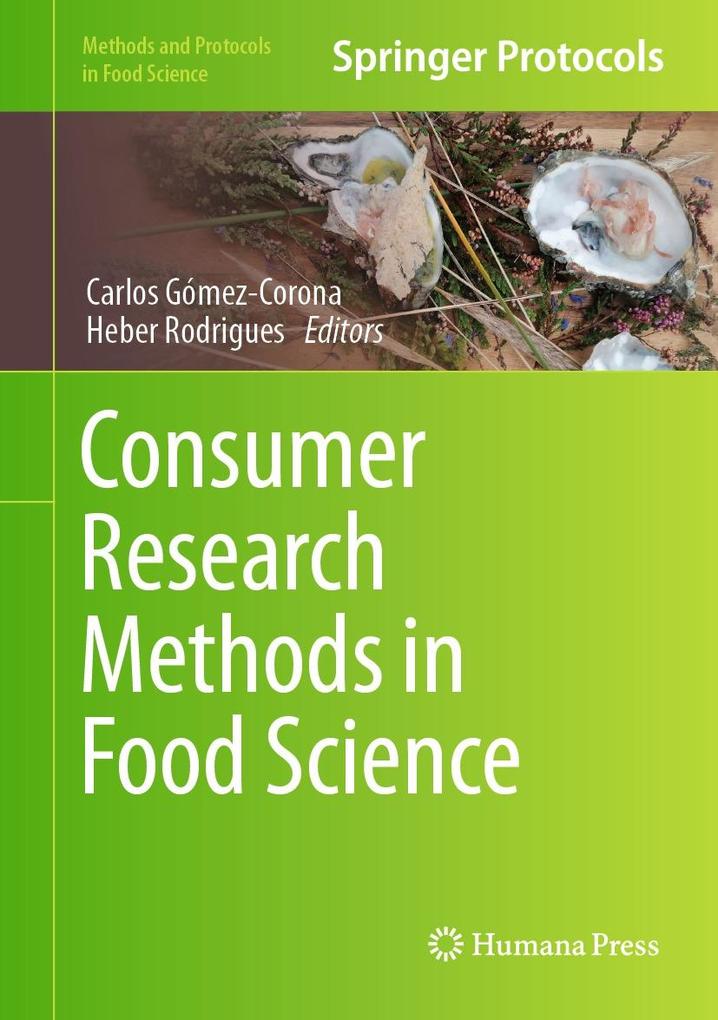
This volume details a wide range of consumer research methods from different disciplines with an application to food and beverages. Each chapter is written by well-known researchers in the field that guides the reader on a specific method in applied consumer research. Chapters are separated by disciplines, detail brief theoretical background, provide a clear examples of the methodology, anthropology, history, linguistics, and visual arts, culinary arts, design, and user experience are also approached. The separation of methods through disciplines gives a better structure to the reader when trying to apply each method.
Authoritative and cutting-edge, Consumer Research Methods in Food Science detail clear steps and a framework to reproduce consumer research methods in different applications.
Inhaltsverzeichnis
Consumer research in food science: history, objectives, ethics, and general principles. - The historical development of food systems and heritage. - Sensory and Multi-sited Ethnographic Methods for Consumer Research. - Consumer research through cookbooks and cooking shows: Linguistics, Cultural Studies, and Media Studies. - The analysis of images in consumer research. - A structural approach to social representations of food and beverages: some methods to scientifically study lay thinking. - Perception and representation: Sorting task and Projective mapping. - Measure of the verbal emotional responses triggered by food products. - Implicit methods of food wanting. - Methods for studying multisensory perception in consumer research. - Doing (consumer) research with children: what s new? . - Creativity. - Qualitative data analysis: Challenges and opportunities for food researchers. - Consumer research in social media: guidelines and recommendations. - Research through scenarios. - Implementing eye tracking technology in experimental design studies in food & beverage advertising. - Field Studies in Food Settings: Lessons Learned and Concrete Cases. - Econometric tools for food science. - Product portfolio management. - Use of lexicometry in sensometrics, an essential complement to holistic methods. An original methodology. - Concept and packaging testing in the food industry. - Measuring desirability using reaction cards method. Meal evaluations: Studying foods and beverages in the meal context. - Studying future food scenarios with design fiction.