








Das eBook.de Hörbuch Abo - jederzeit, überall, für nur 7,95 € monatlich!
Jetzt entdecken
mehr erfahren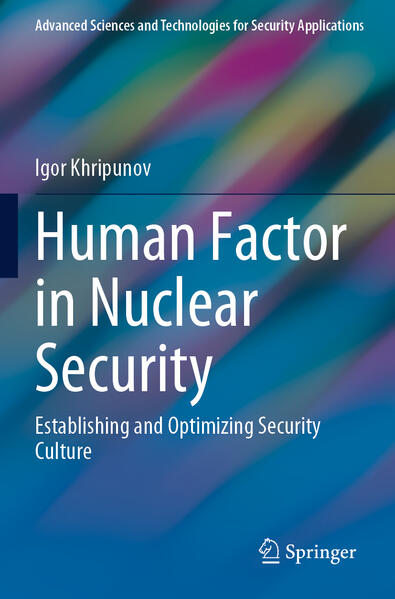
This book attempts to look into the genesis of security culture as a concept which emerged with the recognition of the role of the human factor in the context of security. It traces the rapid evolution of security culture into a multi-functional discipline reinforced by supplementary tools such as assessment and enhancement methodologies, reviews practical steps to harmonize nuclear safety and security culture as well as recommends its practical application to address insider threats and their consequences. In addition, it demonstrates how to tailor the generic model of nuclear security culture to meet specific needs of diverse facilities and activities in different countries. Finally, the book discusses several challenges which need to be addressed to make security culture a user-friendly, universal, and sustainable instrument to turn the perception of the human factor as a liability into an asset of nuclear security.
Inhaltsverzeichnis
Human Factor in Nuclear Security
represents a seminal contribution to the discourse on nuclear security, illuminating the critical role of the human factor in shaping security outcomes. The writing is lucid and easy to understand . By emphasizing the transformative potential of collaborative efforts and interdisciplinary approaches, Khripunov offers a road map for navigating the complex challenges of security governance in an era marked by uncertainty and volatility. (Arjun Banerjee, International Journal of Nuclear Security, Vol. 9 (1), 2025)
Es wurden noch keine Bewertungen abgegeben. Schreiben Sie die erste Bewertung zu "Human Factor in Nuclear Security" und helfen Sie damit anderen bei der Kaufentscheidung.