








Das eBook.de Hörbuch Abo - jederzeit, überall, für nur 7,95 € monatlich!
Jetzt entdecken
mehr erfahren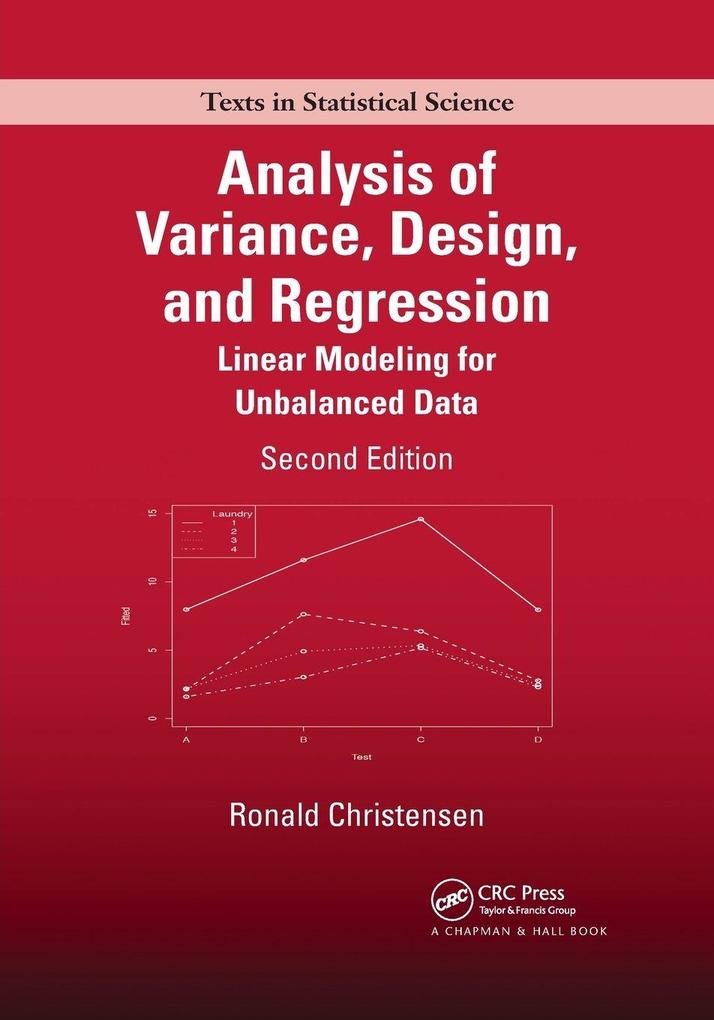
This second edition focuses on modeling unbalanced data. It presents many new topics, including new chapters on logistic regression, log-linear models, and time-to-event data. It shows how to model main-effects and interactions and introduces nonparametric, lasso, and generalized additive regression models. The text carefully analyzes small unba
Analysis of Variance, Design, and Regression: Linear Modeling for Unbalanced Data, Second Edition presents linear structures for modeling data with an emphasis on how to incorporate specific ideas (hypotheses) about the structure of the data into a linear model for the data. The book carefully analyzes small data sets by using tools that are easily scaled to big data. The tools also apply to small relevant data sets that are extracted from big data.
New to the Second Edition
The text can be used in a variety of courses, including a yearlong graduate course on regression and ANOVA or a data analysis course for upper-division statistics students and graduate students from other fields. It places a strong emphasis on interpreting the range of computer output encountered when dealing with unbalanced data.
Inhaltsverzeichnis
Praise for the First Edition:
". . . written in a clear and lucid style . . . an excellent candidate for a beginning level graduate textbook on statistical methods . . . a useful reference for practitioners."
-Zentralblatt für Mathematik
"Being devoted to students mainly, each chapter includes illustrative examples and exercises. The most important thing about this book is that it provides traditional tools for future approaches in the big data domain since, as the author says, the machine learning techniques are directly based on the fundamental statistical methods."
~Marina Gorunescu (Craiova)
Es wurden noch keine Bewertungen abgegeben. Schreiben Sie die erste Bewertung zu "Analysis of Variance, Design, and Regression" und helfen Sie damit anderen bei der Kaufentscheidung.