




Das eBook.de Hörbuch Abo - jederzeit, überall, für nur 7,95 € monatlich!
Jetzt entdecken
mehr erfahren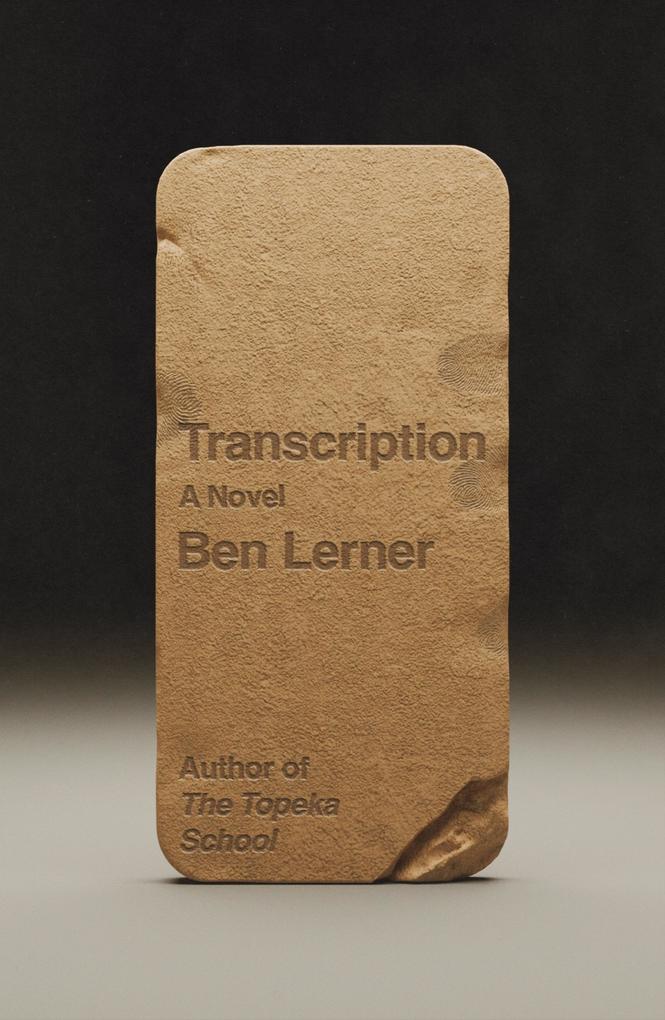
Winner of the Orwell Prize
Named a Best Book of the Year (So Far) by The New York Times
From "the most talented writer of his generation" (Giles Harvey, The New York Times Magazine), a lightning flash of a novel that is at once a gripping emotional drama and a brilliant examination of the devices, digital and literary, we use to store-or to erase-our memories.
The narrator of Ben Lerner's new novel has traveled to Providence, Rhode Island, where he is to conduct what will be the final published interview with Thomas, his ninety-year-old mentor and the father of his college friend Max. Thomas is a giant in the arts who seems to hail from the future and the past simultaneously and who reenchants the air when he speaks. But the narrator drops his smartphone in the hotel sink. He arrives at Thomas's house with no recording device, a fact he is mysteriously unable to confess.
What unfolds from this dreamlike circumstance is the unforgettable story of the triangle formed by Thomas, Max, and the narrator, and an exploration of fathers and sons, male friendship and rivalry, and the challenges of parenting in a burning world. One of the first great novels about the early days of Covid, it is also a brilliant meditation on those technologies that enrich or impoverish our connection to one another, that store or obliterate memory. Full of startling insight, but summoning the intensity of a séance, Lerner's writing shows us how the air is full of messages, full of ghosts. Ultimately, Transcription demonstrates what only a work of fiction can record.
"[Lerner's] strangest and most moving book yet . . . Lerner has found a way to make phonelessness vivid, almost fleshy in its legibility . . . A novel that attempts to reimagine the most alienating of our shared afflictions-the human body in disarray, the relatively new societal anxiety of phone addiction-into a more humane aesthetic experience."
-Kevin Lozano, New York
"Above all, [Lerner] makes a case that reading-our experience of decoding, observing patterns, interpreting and misinterpreting language-is not merely a means of accessing a version of reality but an event in itself, and a profound encounter . . . There is a sense of the novel reveling in its own power of listening, its own antennae . . . The novel is our great, communal dream, the place that reveals what composite creatures we really are, what tangles of invention, what repositories for one another's needs and fears. ('I sound angry, but I think it is yours, the anger, reflected in me,' a character says to another.) Can your phone do all that?"
-Parul Sehgal, The New York Times Magazine
"Helping us recognize the atmosphere we're immersed in has always been Lerner's talent . . . [Transcription] lets us glimpse a deep, unappeasable desire: to have the dead, or the dead's appointed representatives, forgive us, so that we may forgive them for having left us . . . Lerner's novel comes as close as we can yet imagine to . . . registering a change that is everywhere around us."
-Nicholas Dames, The Atlantic
"A slim book-144 pages-and yet it cracks open some of the most colossal and enduring philosophical questions facing us today."
-MJ Franklin, The New York Times
"A short, tightly organized chamber piece . . . Another impressive quality of Transcription is its mixture of ingenuity and directness . . . But it's all so interwoven that it's hard to say which theme is on top at any particular moment, and none of the storylines goes the way the reader might expect . . . You feel that Lerner has earned it when he has the narrator repeat a line of Thomas's on the subject of dream interpretation: 'You call this fiction, but it is more.'"
-Christopher Tayler, New York Review of Books
"An immensely fun and engaging book to read. Lerner is a great observer, for example on the sensation of being unintentionally phoneless . . . Transcription can be read quickly but takes time to settle and persists in the mind."
-Chris Power, Financial Times
"The texture of the writing . . . blends the narrator's version of events with his dreams and even, at one point, suggests that he is aware he is in a novel. Even more vitally, Mr. Lerner is very funny. When attached to a character, indeterminacy manifests itself as confusion, and the novel mines a lot of humor from the bumbling of its poet-antihero. The narrator's mishandling of his cellphone reprises the author's delightful affinity for physical slapstick . . . [The] morals of Transcription have to do with its insistence on mystery, and on art that teases the mind and refreshes the senses. It may be a novel, but Mr. Lerner, after all, is a poet."
-Sam Sacks, The Wall Street Journal
"I love to get into the cushioned golf cart of Lerner's consciousness and accompany him on one of his careful rides, where he takes care of both of us and sharpens my consciousness . . . The grain of his brain stories is so fine and, to this brain, those stories are as universal as any others."
-Sasha Frere-Jones, 4Columns
"Slim and compelling, a dizzying blend of autofiction and other genres of self inspection."
-Kate Tuttle, The Boston Globe
"Transcription promotes a sense of phenomenal reality as groundless and shifting via the direct, at times barely dramatised channelling of ideas derived from contemporary art, science and technology studies, critical theory and avant-garde poetics . . . Intimately elliptical, cerebral yet tender, mystery deployed as both spur to reflection and tool of seduction."
-Leo Robson, Literary Review
"A novel about touch, devices and familial inheritances that is itself intricate, uncanny, sometimes breathtakingly realistic . . . Transcription reveals itself as more, far more, than an anthropology of digital modernity . . . And it's precisely in these moments of storytelling and connection that we might, just might, escape the noose of nowness, become touched by an enriched sensation of time."
-Sukhdev Sandhu, The Guardian
"This may be the best novel you'll read all year . . . Brilliant and incisive . . . A novel as intelligent and elegant as any you might read . . . You learn more from Lerner's prose about the ways in which we reach for each other, and miss each other, and try and try again-which is a lifelong project, and maybe, from that angle, a sad one-than you will from reading most other books. Lerner's style is distinctive and wonderful."
-Cal Revely-Calder, The Telegraph
"Transcription is both clinical and tender, and its labyrinthine family drama gets messier and more fascinating with rereading. It's a subtle but ultimately dazzling novel that is at once a temple of memories and a hall of mirrors. And it's a beautiful work of art, a testament to the way fiction both muddies and deepens our sense of what's true."
-The Toronto Star
"A lovely, desponding, idiosyncratic novel, anchored in a series of dialogues about artmaking, technology, and literal and figurative parenthood. Few books so aptly capture the weirdness of being flanked by two mutually incomprehensible generations-tech-illiterate elders on the one hand and digital natives on the other-and the mental gymnastics involved in liaising between them . . . By channeling the Delphic spirits of his mentors, Lerner manages to avoid heavy-handed commentary in favor of stranger pursuits: finding the sense and nonsense in natural speech; intersplicing shards of citation and quotation; and contesting the very concept of a stable narratorial voice."
-Maggie Millner, n+1
"[Transcription] heightened my experience of fiction itself. The book is slim, curious, at once crystalline and slippery. It's hard to think of a writer so laureled who is able to remain so restless. Is restlessness an improbable claim for such a writer-as-character as Lerner . . . ? Not when the author's ambitious and protean formal experimentations track an evolving self so inviting, collaborative, and generous."
-Gemma Sieff, Artforum
"[A] strangely captivating blend of fiction, memoir and critical essay, shot through with humor and anxiety."
-NPR
"Brilliant . . . A penetrating meditation on fraudulence, fatherhood, and the fate of authentic experience in our digital age . . . If this seems like rather a lot to cram into a single novel, it is. But that only makes Transcription's slender 144 pages all the more remarkable."
-Katie Tobin, Jacobin
"With Transcription, Lerner is rising to the challenge of novelizing what has become emblematic of millennial life . . . Transcription is not just about iPhones; it remains connected to and contextualized through Lerner's past works . . . What allows him to endure is that these themes and interests are presented in new ways, updated to fit his age and his focus in life, and grounded in our strange, changing world."
-Sarah McEachern, Los Angeles Review of Books
"Lerner is an artist whose medium is language; challenging our notions of what books are capable of . . . Lerner's deceivingly straightforward prose is both accessible and vividly attuned to sensory detail, and his sharp ear for spoken language shines across the novel."
-Devyn Andrews, Chicago Review of Books
"Difficult to put down . . . [Transcription] has hardly left my brain in the days since I finished reading it."
-Drew Gillis, The AV Club
"Both literary and accessible, uncanny and prescient, Lerner's short novel is perfect for this moment in time that finds society obsessed with recording everything on our phones. Addictive, funny, and thought-provoking."
-Al Woodworth, Amazon Editor's Pick
"I found this novel-as I did with Lerner's other books-totally transfixing. The book is 144 pages long. I'll bet it'll take you less time to read than your daily average screen time on your phone. Take a day off; enjoy this book."
-Emily Sundberg, Feed Me substack
"Fiction, in Transcription, works as a form of preservation, at once eternal and delicate, deceptive and precarious and gregarious and cowardly . . . Lerner's subtle play of motifs-ingestion, mediation, repetition, fabrication-has never been sharper, his fictional architecture wrought finely like a twinkling Blaschka flower . . . Such love-which, to his credit, Lerner manages to describe beyond sentimentality-is presented to the reader as an end: of meaning, of literature, of the purified thing beyond the thing."
-Federico Perelmuter, Kismet
"A world that seems equal parts Escher and Kafka . . . Transcription works by exploring the specific and allowing it to stand in for the general."
-Dan Friedman, Forward
"Transcription is a beautiful meditation on cognitive capacity and the power of fiction . . . One of the most compelling contemporary books I've read this year."
-Grace Byron, Defector
"A stunning meditation on parenthood, technology, and memory as pleasurable as reading Lerner has ever been."
-Jasmine Vojdani, Vulture
"[An] exquisite, shape-shifting novel."
-Giles Harvey, The New Yorker
"Intricate and unsettling, Transcription is a book of echoes and parallels; the connections it draws between individuals, and between life and art, are a signature of Lerner's refined, allusive fiction. It's also a compelling exploration of how this hyper-literate sensibility, its intense interest in overlap and resonance, can lead us astray."
-Hannah Rosefield, The New Republic
"Smartphones have become so integral to our lives, really external hard drives to brains and souls, that how modern authors incorporate them into regular old paper books has become a kind of steeplechase. Right now Lerner, with his combination of erudition and lightness, and decathlete's command of different, overlapping genres, is winning."
-Alexandra Jacobs, The New York Times
"Remarkable . . . Lerner's voice is one that interrupts itself, repeats history, and reorders the world."
-Hannah Gold, Harper's Magazine
"In our world of deepfakes, 'fresh air' scents, and robo-voices emanating from pockets, there's hope that understanding fiction-what we consider artifice, as well as its limits-might help lead us, collectively, back to our senses."
-Liza St. James, Bomb (Editor's Choice)
"Lerner has been hailed by The New York Times as 'the best writer of his generation,' and his fourth novel lives up to the hyperbole . . . Thomas once told the narrator: 'We hear as if. We are together, erring.' To riff on Rilke ('For beauty is nothing / but the beginning of terror'), Lerner's tale suggests that beauty might be only the beginning of error."
-Michael Autrey, Booklist (starred review)
"Ben Lerner's novels contain some of the best art criticism I've encountered. His analysis is embodied but self-conscious, erudite but sincere. That's why I'm looking forward to Transcription, about a non-interview with a 'giant in the arts.' I wouldn't trust many writers to make a 'plot' like that worth my time, but I trust him."
-Lisa Yin Zhang, Hyperallergic
"It's every journalist's worst nightmare, and yet, Lerner's book still comes as a delightful exploration of mentorship, fatherhood, and a career in the arts, as well as a testament to our growing reliance on technology as a store of cultural memory."
-Cultured (Best Anticipated)
"Beautiful and resonant . . . Lerner's lyrical narrative brims with insights into how memories take and change shape, the nature of father figures, and the ways an artist's influence echoes through time. It's a knockout."
-Publishers Weekly (starred review)
"Transcription is another masterful intervention from a writer of unparalleled exactitude and intelligence. Lerner's linguistic precision, stylistic brilliance and philosophical range are not only thrilling things to encounter on the page, they are gentle surgical tools for a tender existential operation upon the reader. They crack open a profound reckoning with how we are living now, and the effect is genuinely startling. We call this fiction, but it is much, much more."
-Max Porter, author of Shy
"Transcription is both dizzyingly accomplished and disarmingly tender-an acutely elegant and forensic meditation on the disorientation of what it means to be alive now."
-Sophie Mackintosh, author of Cursed Bread
"Some of the most vivid, offbeat, and affecting writing Lerner has delivered . . . [Transcription is] surprisingly potent given its length, interested in the ways that we manufacture our identities and how technology speeds the process along."
-Kirkus Reviews (starred review)
Es wurden noch keine Bewertungen abgegeben. Schreiben Sie die erste Bewertung zu "Transcription" und helfen Sie damit anderen bei der Kaufentscheidung.