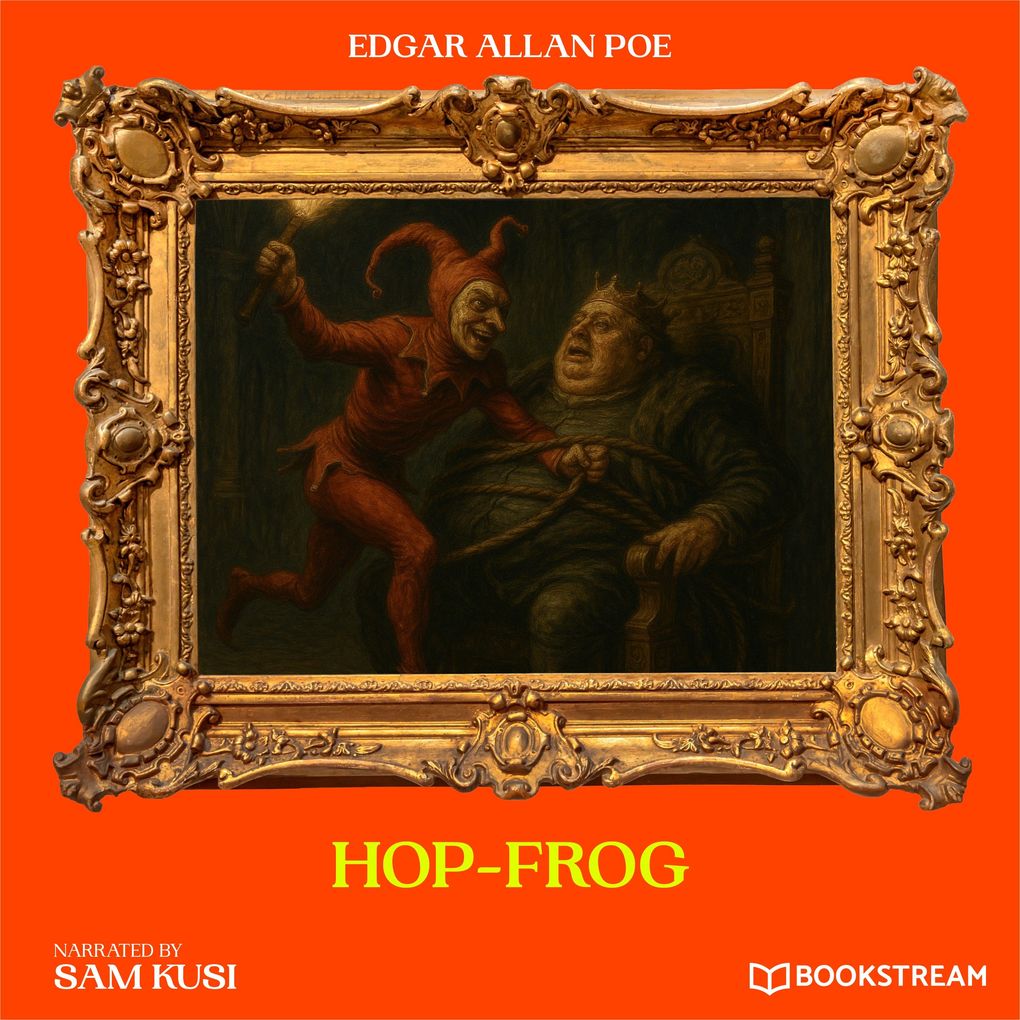
"Hop-Frog" (originally "Hop-Frog; Or, the Eight Chained Ourang-Outangs") is a short story by American writer Edgar Allan Poe, first published in 1849. The title character, a person with dwarfism taken from his homeland, becomes the jester of a king particularly fond of practical jokes. Taking revenge on the king and his cabinet for the king's striking of his friend and fellow dwarf Trippetta, he dresses the king and his cabinet as orangutans for a masquerade. In front of the king's guests, Hop-Frog murders them all by setting their costumes on fire before escaping with Trippetta.
The court jester Hop-Frog, "being also a dwarf and a cripple", is the much-abused "fool" of the unnamed king. This king has an insatiable sense of humor: "he seemed to live only for joking". Both Hop-Frog and his best friend, the dancer Trippetta (also small, but beautiful and well-proportioned), have been stolen from their homeland and essentially function as slaves. Because of his physical deformity, which prevents him from walking upright, the King nicknames him "Hop-Frog".