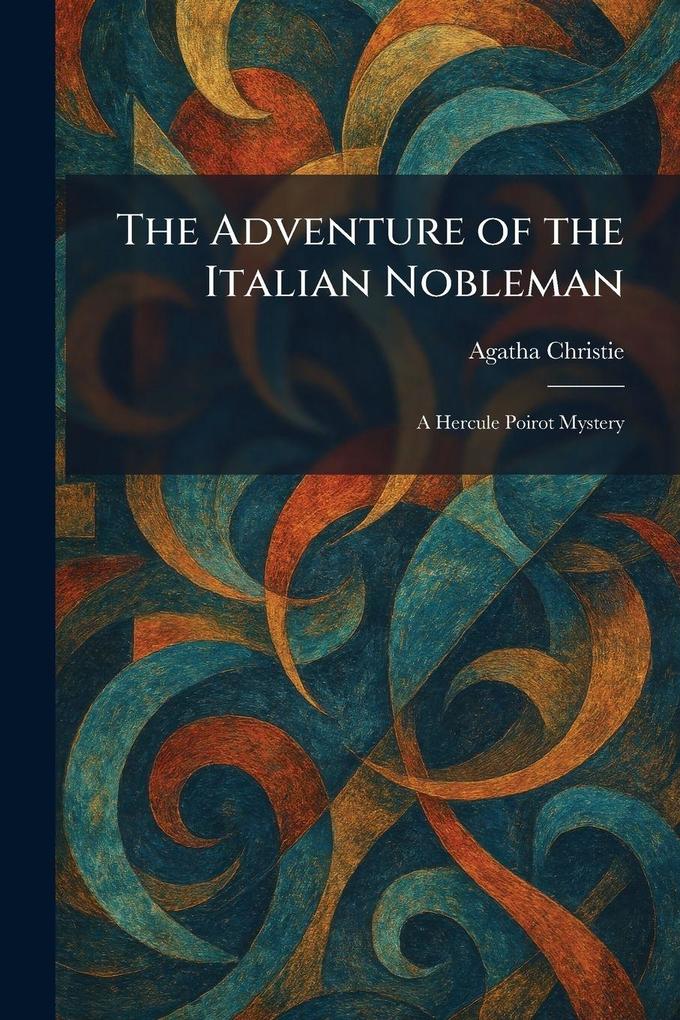
"The Adventure of the Italian Nobleman" is a compelling mystery featuring the legendary Belgian detective Hercule Poirot and his faithful companion, Captain Hastings. The narrative begins when a quiet evening is interrupted by the arrival of Dr. Hawker, a medical professional distressed by a frantic telephone call from one of his patients, Count Foscatini. Upon arriving at the Count's flat, the trio discovers a grim scene: the nobleman has been brutally murdered while dining.
What initially appears to be a straightforward case of blackmail or political intrigue quickly becomes a complex puzzle for Poirot's "little grey cells." As he examines the remnants of the victim's final meal and the specific timing of the events, Poirot identifies inconsistencies that elude the official investigators. Agatha Christie weaves a tight, suspenseful tale that showcases Poirot's unparalleled deductive reasoning and meticulous attention to detail. This short story is a classic example of Golden Age detective fiction, highlighting the intricate plotting and psychological insight that made Christie a master of the genre. Readers will enjoy the brisk pace and the clever resolution that exposes a cunning deception.
This work has been selected by scholars as being culturally important, and is part of the knowledge base of civilization as we know it. This work was reproduced from the original artifact, and remains as true to the original work as possible. Therefore, you may see the original copyright references, library stamps (as most of these works have been housed in our most important libraries around the world), and other notations in the work.
This work is in the public domain in the United States of America, and possibly other nations. Within the United States, you may freely copy and distribute this work, as no entity (individual or corporate) has a copyright on the body of the work.
As a reproduction of a historical artifact, this work may contain missing or blurred pages, poor pictures, errant marks, etc. Scholars believe, and we concur, that this work is important enough to be preserved, reproduced, and made generally available to the public. We appreciate your support of the preservation process, and thank you for being an important part of keeping this knowledge alive and relevant.