








Das eBook.de Hörbuch Abo - jederzeit, überall, für nur 7,95 € monatlich!
Jetzt entdecken
mehr erfahren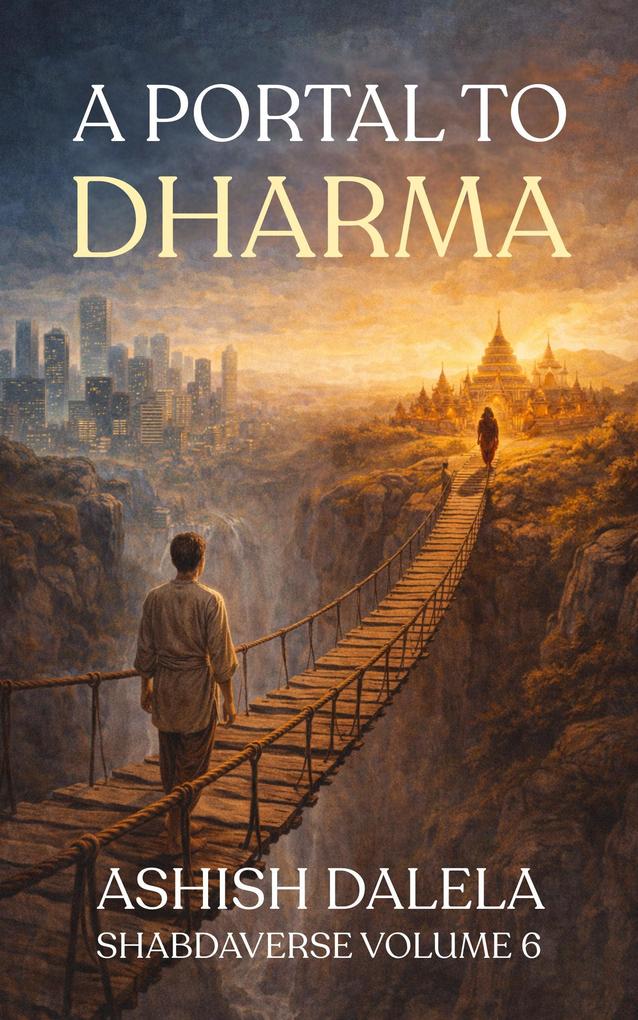
The Bhagavad-Gita describes that four kinds of people come to God distressed, avaricious, inquisitive, and knowledgeable. Of these, the first two categories (comprising the vast majority) are not loyal. They come and go based on distress and avarice. Loyalty begins with inquisitiveness. Without serious inquiry, resolution of doubts, and deep conviction, human life is wasted in running from pillar to post. Therefore, the Vedic tradition defines a human not by the shape of the body, but by the capacity to inquire into the biggest questions of life. The Vedic tradition distinguishes itself through its capacity to limitlessly answer questions. The intelligent are preferred over the believers because the believers come and go based on distress and avarice, while the inquisitive get committed after sustained and prolonged inquiry.
This anthology of articles hopes to answer many common questions that any sincere newcomer with a capacity for inquiry and potential for commitment asks. Are these myriad deities reality or illusion? Is this a religion of a God or a godless religion? How can stone, metal, or wood idols be divine? How can fire rituals please any deity? Why so many books and so many diverse teachings? Why so many schools and sects? Are Vedic texts mythology? How can there be any truth in Vedic texts when they differ, if not conflict with, modern science? Are we following a way of life, or a process to transcend life and death? What is the relation between religion and culture? What can be adapted to modernity and what should be accepted from tradition? What is Yoga and why so many kinds of Yoga? Should we respect all religions, or should we point out their flaws? What is the relation between morality and spirituality? How can we emphasize celibacy when some Vedic deities are found engaged in romantic and/or sexual acts?
We don't expect to answer all questions, because they are too many to answer in any book. The Vedic tradition is vast because our questions are unlimited. Hence, this book doesn't aim to be exhaustive. It only aims to answer preliminary present-day questions to encourage readers into deeper inquiry.
Es wurden noch keine Bewertungen abgegeben. Schreiben Sie die erste Bewertung zu "A Portal to Dharma (SHABDAVERSE, #6)" und helfen Sie damit anderen bei der Kaufentscheidung.