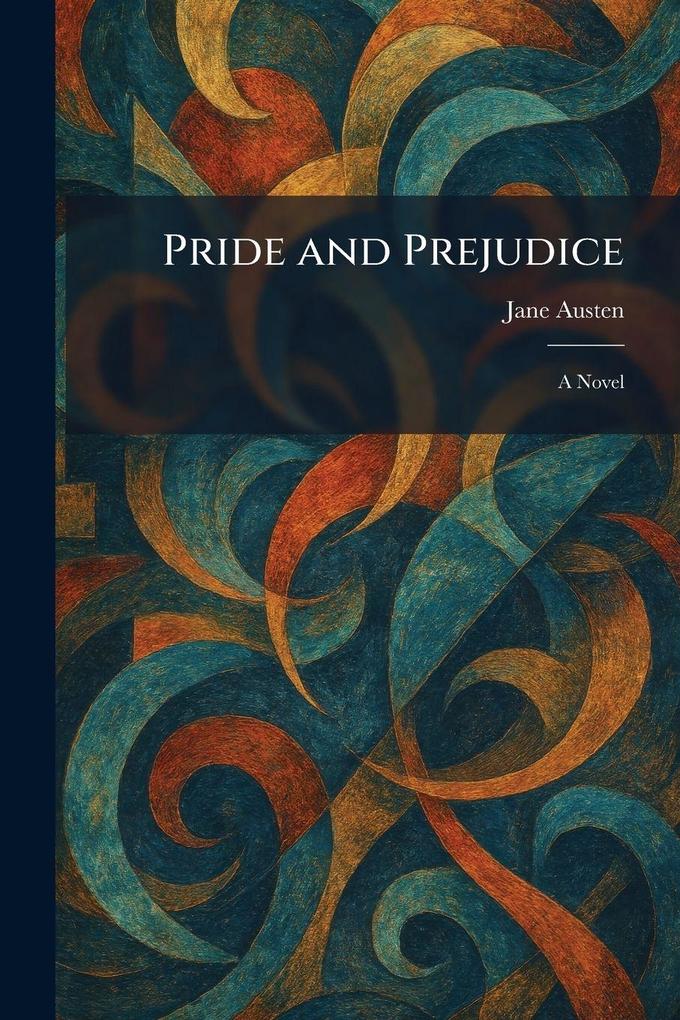
"Pride and Prejudice" is a timeless masterpiece of English literature that explores the complexities of manners, upbringing, and marriage in the society of the landed gentry of the British Regency. The narrative follows the spirited Elizabeth Bennet as she navigates the challenges of her family's social standing and the pressure to marry well. At the heart of the story is her evolving relationship with the wealthy and seemingly aloof Fitzwilliam Darcy. What begins as mutual disdain fueled by pride and misguided prejudice gradually transforms into a profound understanding and love.
Jane Austen's sharp wit and keen social observation are on full display in this celebrated novel. Through a cast of unforgettable characters, including the bumbling Mr. Collins and the formidable Lady Catherine de Bourgh, Austen satirizes the rigid social hierarchies of her time. "Pride and Prejudice" remains one of the most beloved novels in the English language, cherished for its sparkling dialogue, psychological depth, and enduring commentary on the human condition. It is a quintessential comedy of manners that continues to captivate readers with its charm and intellectual rigor.
This work has been selected by scholars as being culturally important, and is part of the knowledge base of civilization as we know it. This work was reproduced from the original artifact, and remains as true to the original work as possible. Therefore, you may see the original copyright references, library stamps (as most of these works have been housed in our most important libraries around the world), and other notations in the work.
This work is in the public domain in the United States of America, and possibly other nations. Within the United States, you may freely copy and distribute this work, as no entity (individual or corporate) has a copyright on the body of the work.
As a reproduction of a historical artifact, this work may contain missing or blurred pages, poor pictures, errant marks, etc. Scholars believe, and we concur, that this work is important enough to be preserved, reproduced, and made generally available to the public. We appreciate your support of the preservation process, and thank you for being an important part of keeping this knowledge alive and relevant.