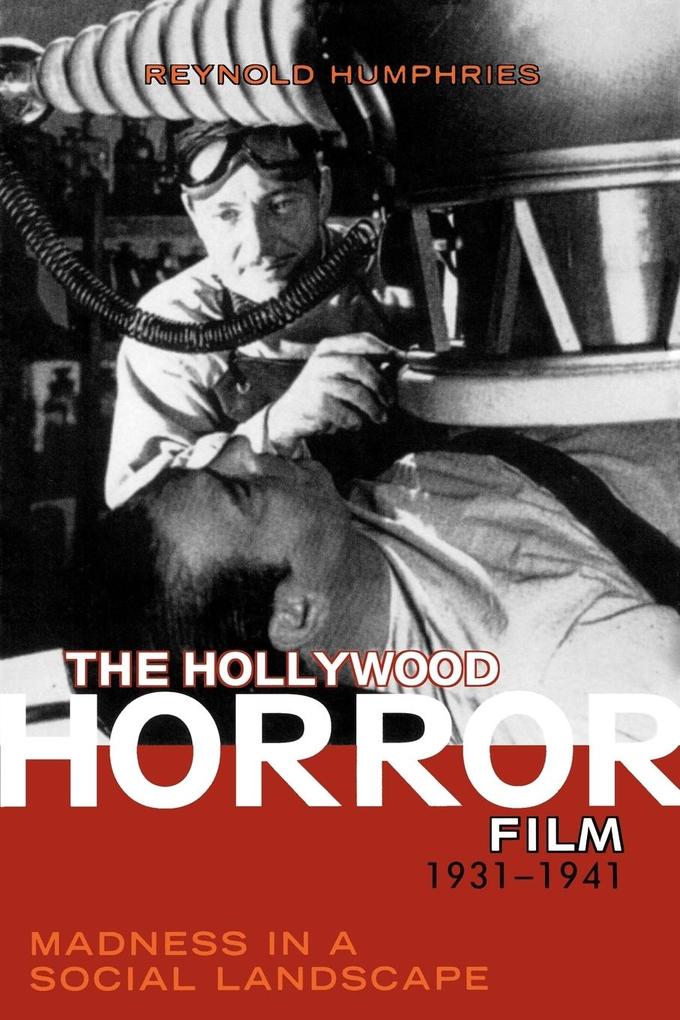
Humphries has conclusively justified his rigorously promulgated thesis: because he regards psychoanalysis and Marxism as interdependent, he must employ both disciplines to any meaningful analyses of movies, especially of those horror movies of the 1930s. Gothic Studies, November 2007 During the period 1930-1941, horror classics such as Frankenstein, King Kong, and The Mummy were produced in Hollywood, along with a number of lesser-known but significant works. In this study, Humphries analyzes representative horror films of this era and discusses their impact on audiences of the time. Particular attention is paid to the subconscious dimension of the films and the ideologies they promote. Humphries teaches film studies at the U. of Lille in northern France. Reference and Research Book News, November 2006 ...one of the most outstanding critical works in this area to have appeared in the first years of the twenty-first century. -- Tony Williams The, November 3Rd Club ...one of the most significant contributions to the understanding of American cinema of recent years. -- Michael Grant Film Studies In this brilliant and provocative study of Hollywood horror films between 1931 (the year of Dracula and Frankenstein) and 1941 (the year of The Wolfman), Reynold Humphries argues that these films, whose themes and concerns touch on forbidden and repressed desires, have something important to tell us. Satisfied neither with the view that particular historical events - World War I, the Depression, European fascism - account for the surge in horror films at that historical moment, nor with psychoanalytic interpretations that neglect class, race and history, he relies on an articulation of Marxist and psychoanalytic theories that highlights their interdependence. Humphries takes it as his task, as he puts it, "to pinpoint, explain and analyse the contradictions in the films between the individual and the collective, between ideology as the way subjects live out in the Imaginary their real social relations and conditions and some more human alternative, long repressed but capable of finding textual form." The result is a lucid, fascinating and highly original book that makes an important contribution to our understanding of film and history. -- William Rothman, Director of the Graduate Program in Film Studies, University of Miami Each chapter delves deeply into its task of examining the seminal horror films of the period for their conscious and unconscious meanings from a variety of social science perspectives. Its theme forces the reader to engage in an internal dialogue about what is sacred and profane, titillating or obscene, horrifying or camp. Overtly, the book provides a police interrogation room for viewing the horror film audience while viewing the horror film. Covertly, the book also holds a mirror up to the readers and their own fragile or jaded sensibilities about the origins of 'horroritica' in film. The Journal of the Fantastic in the Arts, Summer 2009 (Vol. 19.3) Humphries presents his project with engaging self-awareness, sometimes even presenting himself as a kind of mad scientist or doctor (a type of film character he discusses), "driven by an insatiable desire for truth and knowledge, noble sentiments that all too often lead to a rejection of society's most precious values (i.e. presuppositions)" (x). -- Martin Fradley Film Quarterly, Winter 2009-2010