"Arresting. Koven's scholarship is excellent, and this book will appeal across a wide range of disciplines."--James Epstein, Vanderbilt University
"New, fresh and original. Koven is an indefatigable and energetic researcher, and he looks at cross-class benevolence and the settlement house movement from a new perspective."--Susan Pedersen, Columbia University
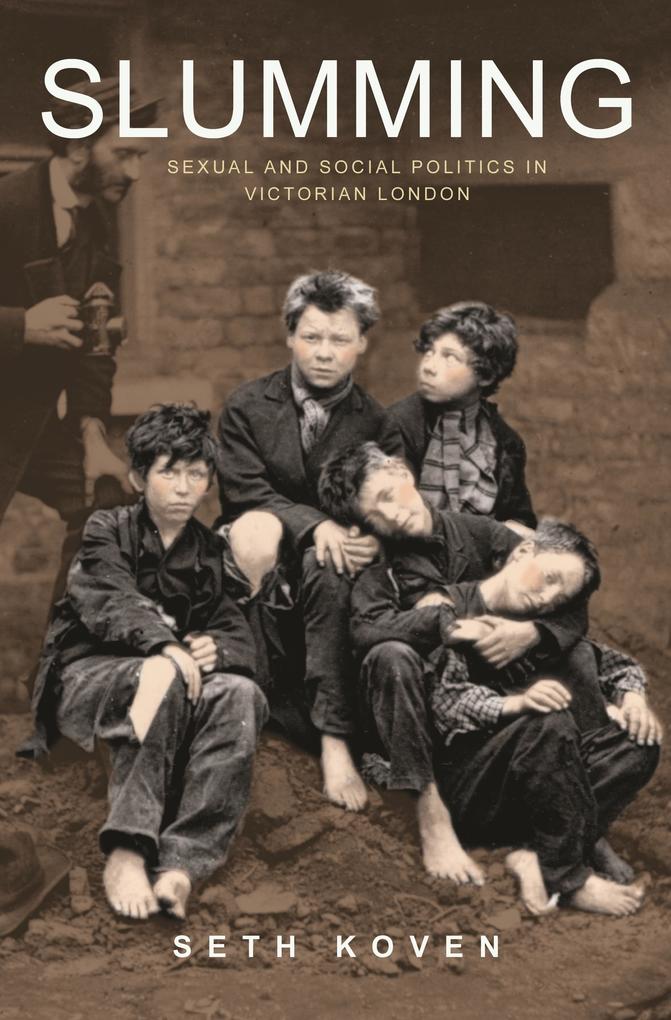
"This is a brilliantly crafted, deeply researched, and provocative cultural history. Seth Koven paints a vivid picture of Victorian and Edwardian slummers and the social and sexual politics that impelled their urban journeys. This book is essential reading for cultural critics, historians, urbanists, and scholars of gender and sexuality. It is interdisciplinary history of the highest order."--Judith R. Walkowitz, author of City of Dreadful Delight: Narratives of Sexual Danger in Late-Victorian London
"Slumming adds a new and vital dimension to the modern history of London. Historians have spent much time examining the changing condition of outcast London but little on those whose investigations and explorations revealed that condition. As Seth Koven reveals, 'slumming' was more than a matter of religious or political concern. It was exciting, transgressive, and a way of discovering or releasing another person within the self."--Gareth Stedman Jones, author of Outcast London
"Seth Koven's much awaited Slumming gives us a vivid, authoritative, and astute new history of the Victorian phenomenon that took hundreds of middle-class men and women into urban 'nether worlds' of poverty and deprivation. More than any other previous chronicler of this cultural trend, Koven makes clear that motives for slumming were complex and morally ambiguous. He also reminds us that Victorian renderings of children and the poor inaugurated a tradition of representation in which compassion and voyeurism coexist uncomfortably and, perhaps, inevitably."--Deborah Epstein Nord, author of Walking the Victorian Streets: Women, Representation, and the City
"The stories Seth Koven tells in Slumming and his insights and analyses of them are intriguing and convincing. The reader will be fascinated by his intertwining of sexuality, particularly in its homoerotic dimension, with activities designed to help the poor. This brilliant book helps us better to understand both the past and the present."--Peter Stansky, author of Sassoon: The Worlds of Philip and Sybil
"Subtle, elegant, and insightful, Koven's book explores the remote, difficult world of Victorian philanthropy. It brings to life the wealthy men and women and their relations with poor, and far from deferential, slum-dwellers in all their complexity and confusion. Superbly written and wonderfully readable."--Pat Thane, author of Old Age in English History: Past Experiences, Present Issues
"Slumming is a brilliant exploration of urban class and gender relations as seen through the lens of philanthropy. Koven writes cultural history at its best."--Lynn Hollen Lees, author of The Solidarities of Strangers: The Poor Laws and the People, 1700-1948
"This is a wonderful book, replete with fresh insights about the complex relations between educated Victorians and the urban poor. A rich, compelling addition to our understanding of the past."--Martha Vicinus, University of Michigan, author of Intimate Friends: Women Who Loved Women, 1778-1928
Inhaltsverzeichnis
LIST OF ILLUSTRATIONS xiii ACKNOWLEDGEMENTS xv INTRODUCTION Slumming: Eros and Altruism in Victorian London 1 Slumming Defined 6 Who Went Slumming? Sources and Social Categories 10 Eros and Altruism: James Hinton and the Hintonians 14 PART ONE: INCOGNITOS, FICTIONS, AND CROSS-CLASS MASQUERADES 23 CHAPTER ONE Workhouse Nights: Homelessness, Homosexuality, and Cross-Class Masquerades 25 James Greenwood and London in 1866 31 Reading "A Night in a Workhouse" 36 Responses to "A Night in a Workhouse" 46 Homelessness as Homosexuality: Sexology, Social Policy, and the 1898 Vagrancy Act 70 Postscript: Legacies of "A Night" on Representations of the Homeless Poor 74 CHAPTER TWO Dr. Barnardo's Artistic Fictions: Photography, Sexuality, and the Ragged Child 88 Facts, Fictions, and Epistemologies of Welfare 94 "The Very Wicked Woman" and "Sodomany" in Dr. Barnardo's Boys' Home 103 Representing the Ragged Child 112 Joseph Merrick and the Monstrosity of Poverty 124 Conclusion 129 CHAPTER THREE The American Girl in London: Gender, Journalism, and Social Investigation in the Late Victorian Metropolis 140 Journalism as Autobiography, Autobiography as Fiction 142 Gender and Journalism 151 An "American Girl" Impersonating London's Laboring Women 155 Conclusion 177 PART TWO: CROSS-CLASS SISTERHOOD AND BROTHERHOOD IN THE SLUMS 181 CHAPTER FOUR The Politics and Erotics of Dirt: Cross-Class Sisterhood in the Slums 183 Cross-Class Sisterhood and the Politics of Dirt 184 "There will be something the matter with the ladies" 198 "Nasty Books": Dirty Bodies, Dirty Desires in Women's Slum Novels 204 Conclusion: "White Gloves" and "Dirty Hoxton Pennies" 222 CHAPTER FIVE The "New Man" in the Slums: Religion, Masculinity, and the Men's Settlement House Movement 228 The Sources of "Brotherhood" in late Victorian England 231 "Modern Monasteries," "Philanthropic Brotherhoods," and the Origins of the Settlement House Movement 236 Religion and Codes of Masculinity 248 "True hermaphrodites realised at last": Sexing the Male Settlement Movement 259 A Door Unlocked: The Politics of Brotherly Love in the Slums 276 CONCLUSION 282 MANUSCRIPT SOURCES 289 NOTES 293 INDEX 379