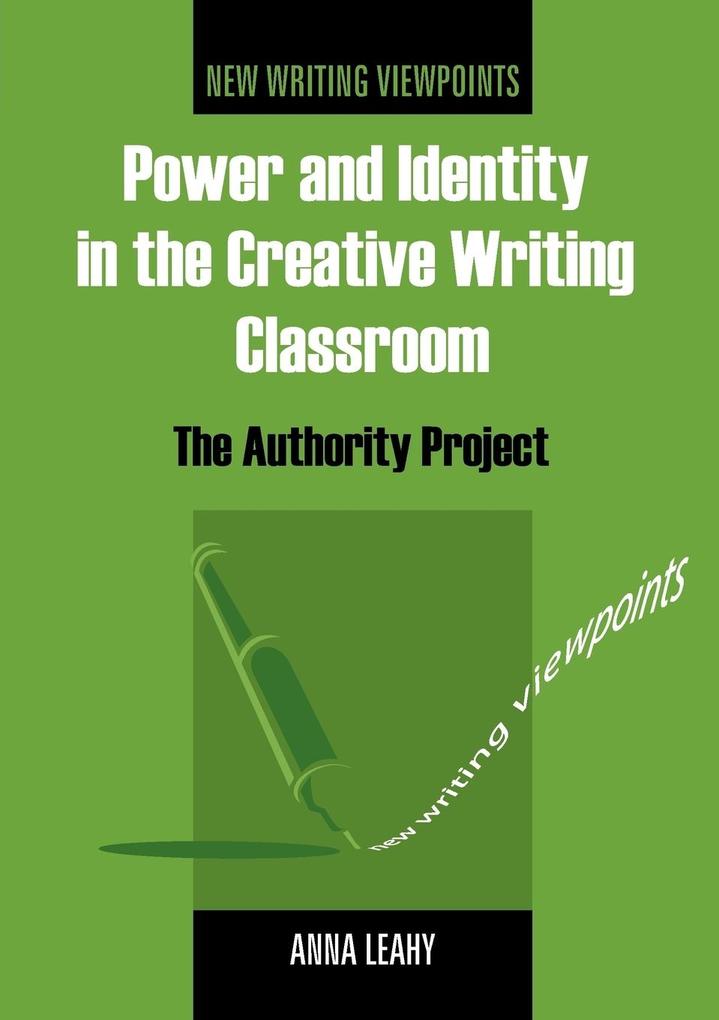
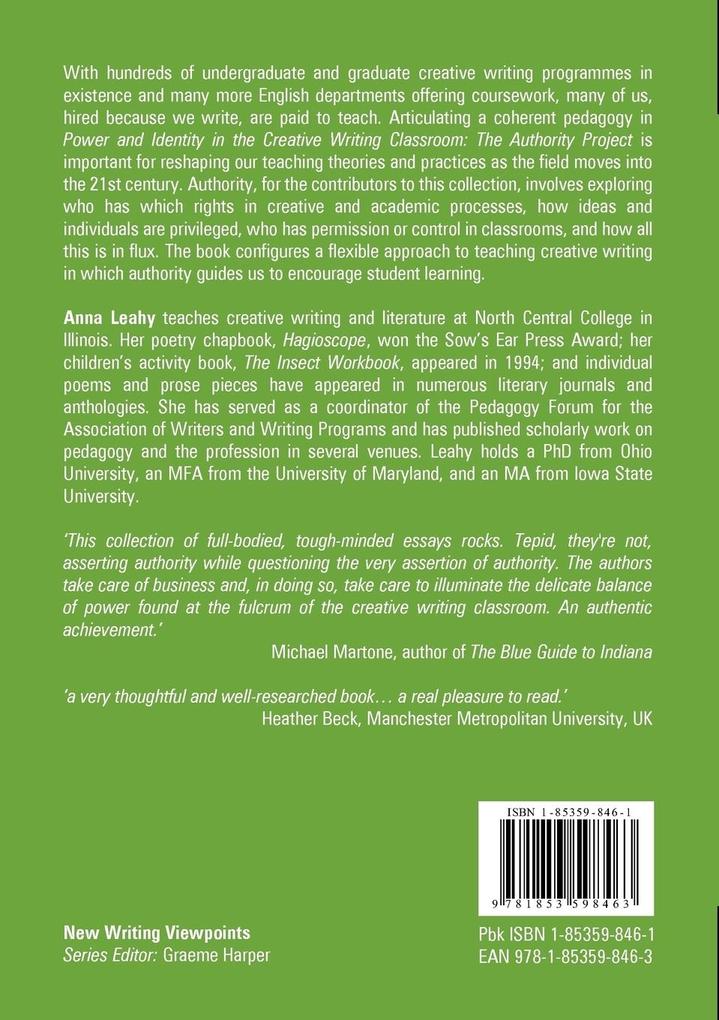
Power and Identity In the Creative Writing Classroom remaps theories and practices for teaching creative writing at university and college level. This collection critiques well-established approaches for teaching creative writing in all genres and builds a comprehensive and adaptable pedagogy based on issues of authority, power, and identity. A long-needed reflection, this book shapes creative writing pedagogy for the 21st century.
Inhaltsverzeichnis
Foreword: The Authority Project Anna LeahyI. Understanding the Larger Influences Personal Therapeutic Writing vs. Literary WritingNancy Kuhl. Who Cares--and How: The Value and Cost of Nurturing Anna Leahy. Inspiration, Creativity, and Crisis: The Romantic Myth of the Writer Meets the Contemporary Classroom Brent Royster. Reinventing Writing Classrooms: The Combination of Creating and Composing Evie Yoder Miller. The Double Bind and Stumbling Blocks: A Case Study as an Argument for Authority-Conscious Pedagogy Carl Vandermeulen.II. The Teacher's Place, Voice, and Style Teaching and Evaluation: Why Bother? Mary Cantrell. Who's the Teacher?: From Student to Mentor Audrey Petty. The Pregnant Muse: Assumptions, Authority, and Accessibility Rachel Hall. Dismantling Authority: Teaching What We Do Not Know Katharine Haake.III. Course Design Contracts, Radical Revision, Portfolios, and the Risks of Writing Wendy Bishop. An 'A' for Effort: How Grading Policies Shape Courses Suzanne Greenberg. Gender and Authorship: How Assumptions Shape Perceptions and Pedagogies Susan Hubbard. Writing the Community: Service Learning in Creative Writing Argie Manolis. IV. In the Classroom Where Do You Want Me To Sit?: Defining Authority through Metaphor Cathy Day. Duck, Duck, Turkey: Using Encouragement To Structure Workshop Assignments Mary Swander. How To Avoid Workshop Dilemmas:The Use of Myth to Teach Writerly Concepts Amy Sage Webb. Writing in the Shadows:Topics, Models, and Audiences that Focus on Language Sandy Feinstein. Afterword: The Reason It Is; the Rhyme It Isn't Graeme Harper and Stephanie Vanderslice