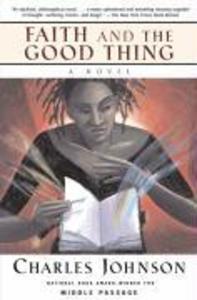
Faith Cross is told by her dying mother to "find herself the Good Thing," although she has no idea what that is. By following this young woman's journey from her mother's Baptist funeral, to a life of prostitution and, later, a stiflingly loveless marriage in Chicago, readers can glimpse the history of twentieth-century black America, annotated with philosophic insight into the nature of identity and justice along the way. Told in the style of black folklore, with voodoo werewitches, hypocritical pentacostal preachers, wise street bums, and the philosophy of Nubian Africa, Plato, Descartes, Hegel, and Schopenhauer, Faith and the Good Thing burgeons with riches. Like Voltaire's Candide with a touch of de Sade's Justine (or the protagonist of Flannery O'Connor's Wise Blood), Faith's Bunyonesque quest is the search of an innocent through the horrors of the world to terrible knowledge and vital understanding. This novel will dazzle the author's new and loyal fans who are discovering Johnson's early work for the first time.