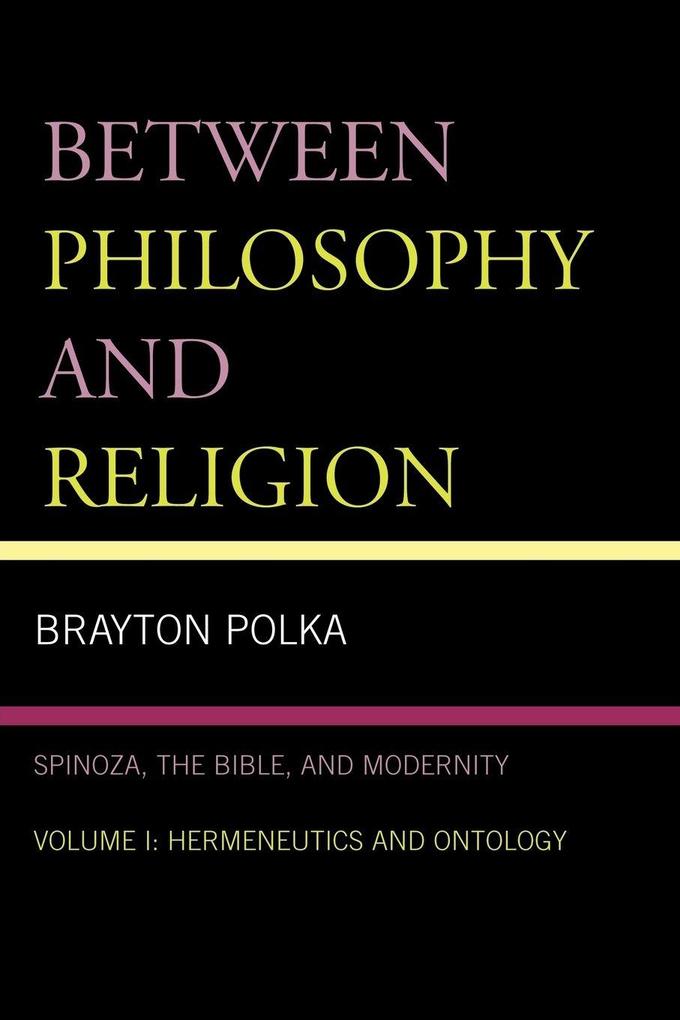
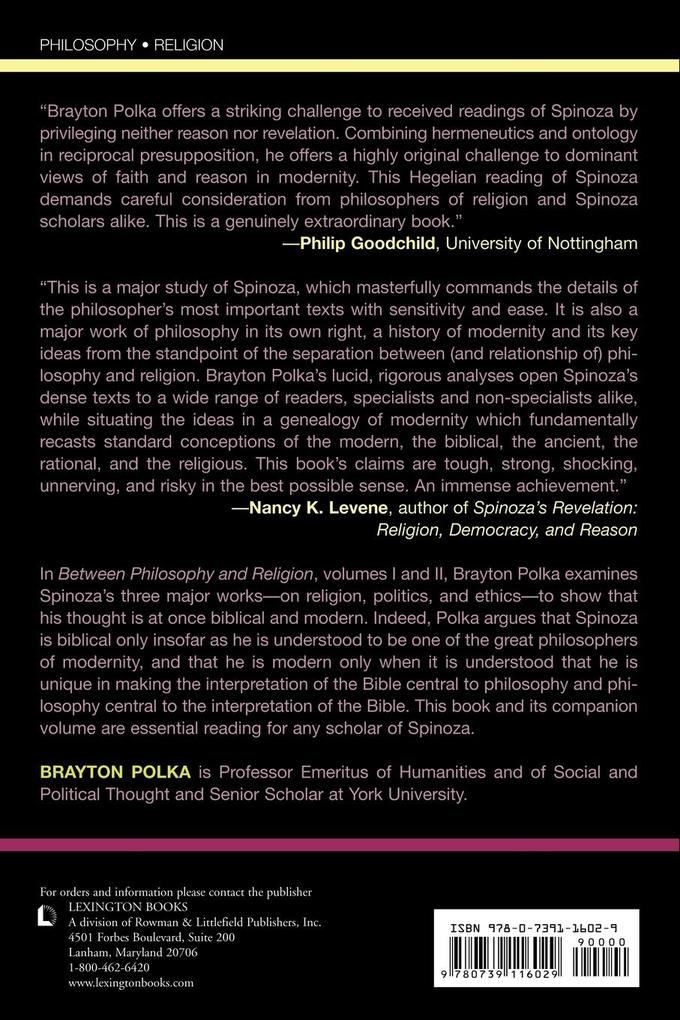
Polka offers a striking challenge to received readings of Spinoza by privileging neither reason nor revelation. Combining hermeneutics and ontology in reciprocal presupposition, he offers a highly original challenge to dominant views of faith and reason in modernity. This Hegelian reading of Spinoza demands careful consideration from philosophers of religion and Spinoza scholars alike. This is a genuinely extraordinary book. -- Philip Goodchild, Department of Theology and Religious Studies, University of Nottingham This is a major study of Spinoza, which masterfully commands the details of the philosopher's most important texts with sensitivity and ease. It is also a major work of philosophy in its own right, a history of modernity and its key ideas from the standpoint of the separation between (and relationship of) philosophy and religion. Polka's lucid, rigorous analyses open Spinoza's dense texts to a wide range of readers, specialists and non-specialists alike, while situating the ideas in a genealogy of modernity which fundamentally recasts standard conceptions of the modern, the biblical, the ancient, the rational, and the religious. The book's claims are tough, strong, shocking, unnerving, and risky in the best possible sense. An immense achievement. -- Nancy K. Levene, Author of Spinoza's Revelation: Religion, Democracy, and Reason