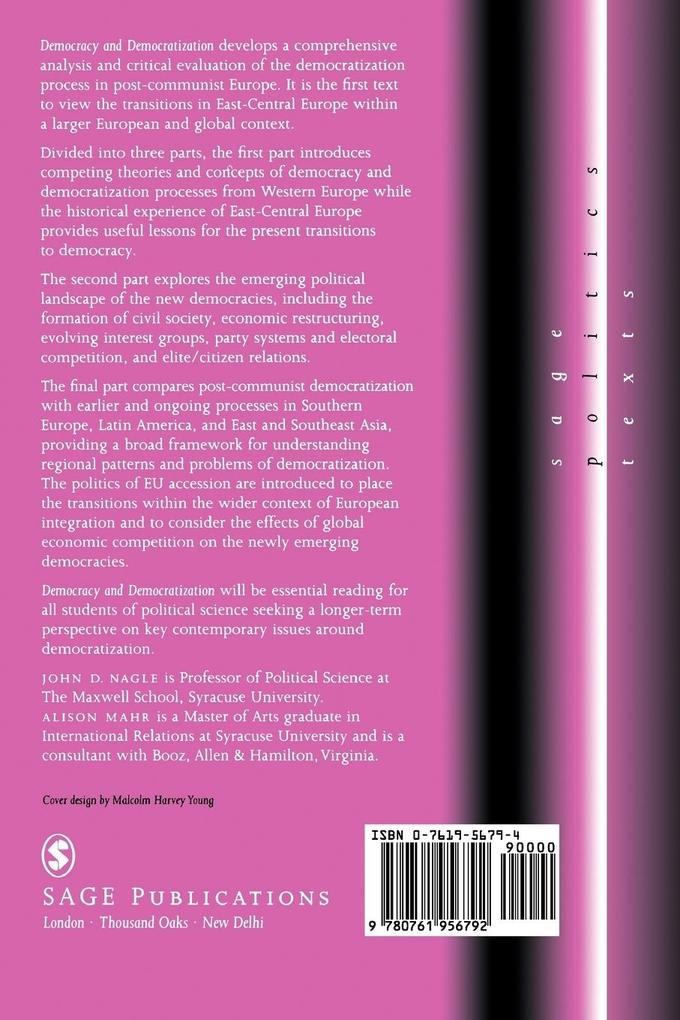
This wide-ranging overview of the processes of democratization in post-Communist Europe, places the transitions of East-Central Europe within a broad European and global context. The authors introduce the concept and theories of democracy, and then analyze the emerging politics of the new democracies to set the post-Communist transitions in longer-term comparative perspective.
Inhaltsverzeichnis
PART ONE: THEORETICAL AND HISTORICAL BACKGROUNDS FOR DEMOCRATIZATION
The Democracy Project and the Development of Comparative Politics
Historical Legacies of Regional Democratization
PART TWO: THE EMERGING POLITICS OF THE NEW DEMOCRACIES
Conceptualizations of Transition
Early Dichotomies and Evolving Complexities
Civil Society
Using the New Freedoms
Concepts of Economic Restructuring
Interest Group Articulation in Post-Communism
Political Party Formation and Electoral Competition
Elites and Citizens
Elite Democracy and Citizen Participation
PART THREE: REGIONAL AND INTERNATIONAL CONTEXTS OF DEMOCRATIZATION
Regional Comparisons of Democratization
Southern Europe - Lessons from Another European Region
Structuring Executive Power in Emerging Democracies
Warnings from Latin America
Economics First, Then (Maybe) Politics
The Challenge of the East Asian Model
East-Central Europe, the EU and Globalizing Capitalism
What Kind of Democratization, What Kind of Democracy?