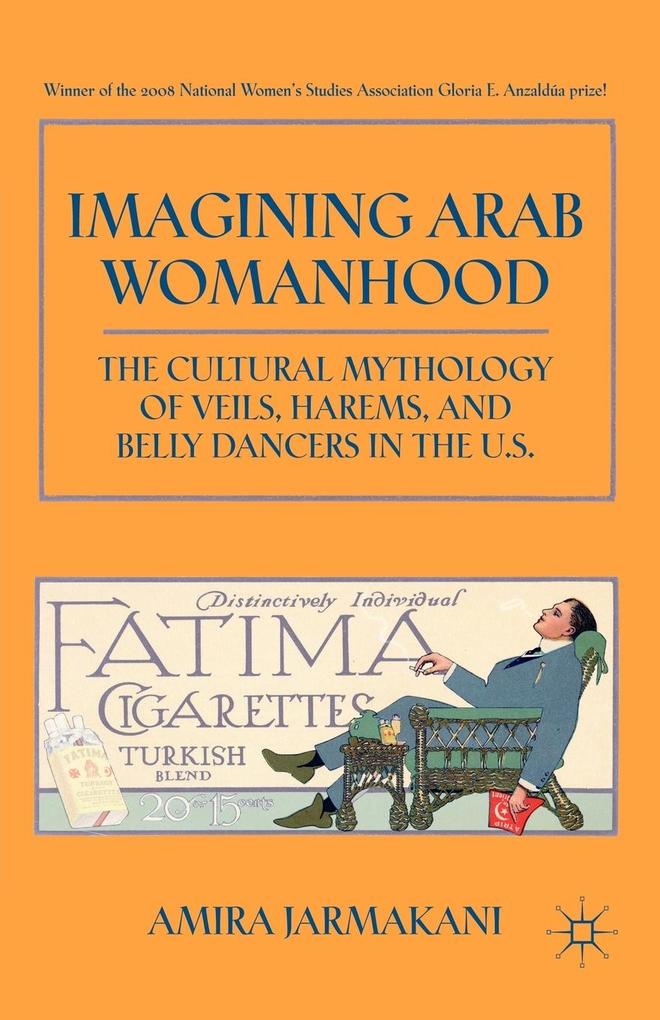
A fascinating demonstration of how U. S. representations of veils, harems, and belly dancers have operated as nostalgic and exotic symbols to help rationalize dominant U. S. narratives about power and progress.
Winner of the 2008 National Women's Studies Association Gloria Anzaldúa prize!
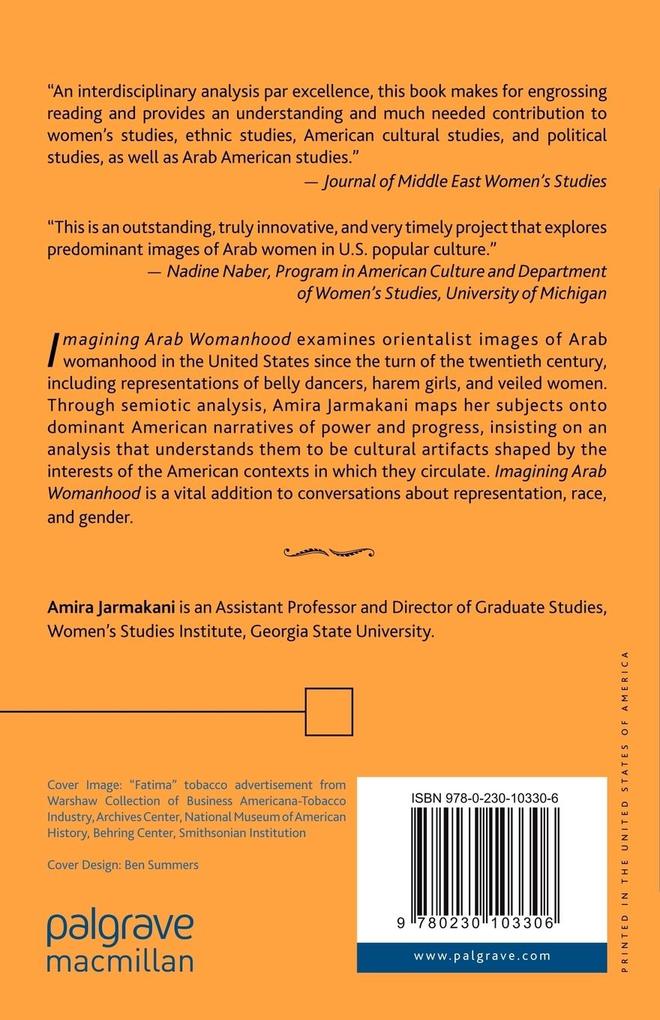
Imagining Arab Womanhood examines orientalist images of Arab womanhood in the United States since the turn of the twentieth century, exploring, in particular, representations of belly dancers, harem girls, and veiled women. Through semiotic analysis, Jarmakani demonstrates that these images have functioned as nostalgic placeholders for pressing, yet unarticulated concerns about shifting spatial and temporal realities within the contexts of expansionism/modernization and imperialism/late capitalism. Calling these representations cultural mythologies, Jarmakani maps them onto dominant American narratives of power and progress, insisting on an analysis that understands them to be artifacts shaped by the interests of the American contexts in which they circulate. Imagining Arab Womanhood is a vital addition to conversations about representation, race, and gender.
Inhaltsverzeichnis
Excavating Orientalist Images of Arab Womanhood Traveling Orientalism: U. S. Echoes of a French Tradition Dancing the Hootchy Kootchy: The Rhythms and Contortions of American Orientalism Selling Little Egypt: The Commodification of Arab Womanhood Veiled Intentions: The Cultural Mythology of Veils, Harems, and Belly Dancers in the Service of Empire, Security and Globalization