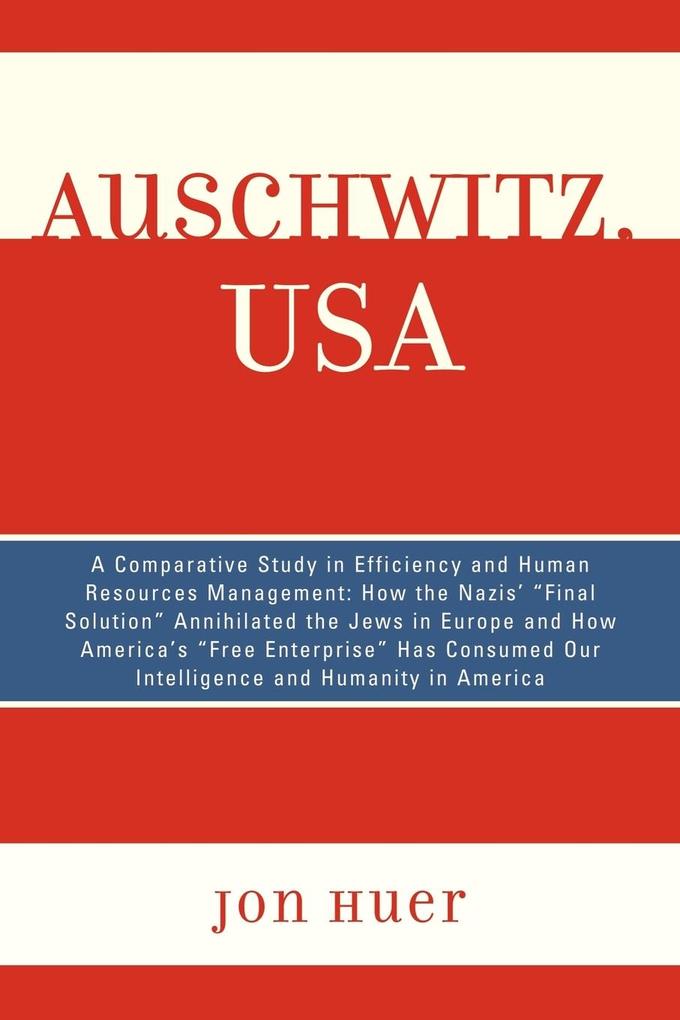
In the last hundred years of industrial advancement, a great deal of scientific progress has been made in the field of efficiency studies. Known as human resources management among those who study these things, the main quest has always been how to control human thoughts and actions so that everything works to the maximum benefit of those who control these human resources. Accordingly, the most "efficient" system is one that controls the human resources by eliminating the human part and turning them into pure resources. In other words, their ultimate organizational goal is to transform people into things. This is the quest of all efficiency experts and human resources managers and what is commonly called organizational behavior. This book is about the two best historical examples of such "efficiently-run" resource management.
Inhaltsverzeichnis
Chapter 1. Welcome to Auschwitz, USA
Chapter 2. Our Daily Deaths, Our Daily Bread
Chapter 3. Partners in Crime [Against Humanity]
Chapter 4. Auschwitz Dies, America Sleeps
Chapter 5. Efficiency, a Blessing or Curse?
Chapter 6. In Search of a Perfect Death
Chapter 7. The Efficiency Rating, 99 vs. 98 Percent
Chapter 8. The Auschwitz Method
Chapter 9. The Gas Chamber, the Most Efficient Death
Chapter 10. From Wannsee to the Gas Chamber
Chapter 11. On the Train Come the Cattle
Chapter 12. Then Cometh the Call from Hell
Chapter 13. To Be or Not To Be Human
Chapter 14. Efficiency's Progress, From Death Camps to Free-Enterprise
Chapter 15. Mind-Control, at Auschwitz and in the U.S.
Chapter 16. Alone at Auschwitz and in the U.S.
Chapter 17. The Nature of Evil Explained
Chapter 18. The Nature of Power Explained
Chapter 19. Entertainment Station Terminal: Auschwitz, USA
Chapter 20. The Epilogue
Chapter 21 Bibliography
Chapter 22 Footnotes
Chapter 23 Index