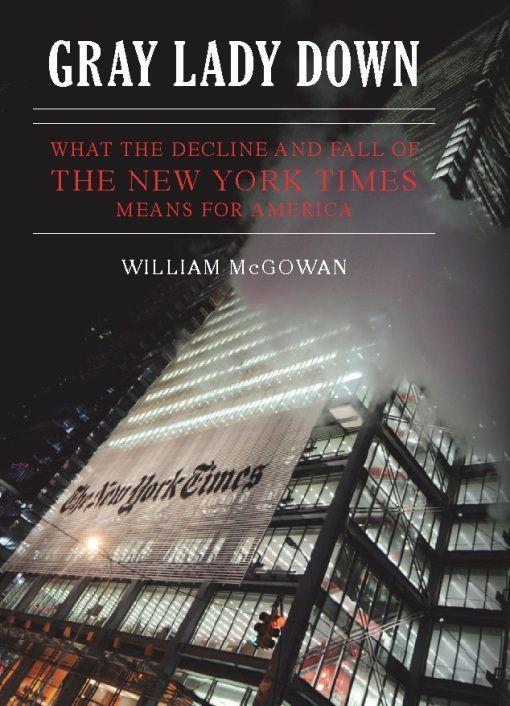
"A surprisingly sincere critique from the right of America's leading newspaper. Here is athoughtful, vividly supported expose from a journalist who loves newspapers and the "Times." As American journalism is roiled by technology and financial pressures McGowan succeeds in reminding us that arrogance and a limited world view are also to blame for the troubles of even our most celebrated newspapers."
-- Juan Williams, author, NPR and FOX News Channel
"Like many "New York Times" readers, I got the queasy feeling that something fundamental had changed at the paper with Arthur "Pinch" Sulzberger Jr.'s ascendancy in the early 1990s. America's most important paper became somehow more unashamed of its political bias and more insulated. By skillfully reporting the telling anecdotes, disturbing incidents and outright scandals of the past two decades, William McGowan shows us that things at the "Times" aren't as bad as we'd thought. They're worse! If he had common sense, Pinch Sulzberger would read ths book and promptly resign. But if he had common sense he wouldn't be Pinch Sulzberger."
-- Mickey Kaus, "Newsweek"
"Those of us who spent years happily reading the "New York Times" (not to mention thosewho--like me--spent years happily working at the "New York Times") need to read William McGowan's book to better understand how and why the Gray Lady has fallen on such hard times. The goal is not schadenfreude. The goal is to help her recover from what ails her."
-- Clifford D. May, President, Foundation for Defenseof Democracies; former "Times reporter," editor, foreign and Washington correspondent "McGowan's "Gray Lady Down" has the great strength of showing how the "Times's" multicutural relativism on the home front and xenophilia abroad left it completely flat footed when it was called upon to report on the rise of Islamic extremism in America. The "Times" has developed a dangerous capacity to discover "moderation" in what shou