Focused on the challenges faced by aspiring writers, Brady illuminates how technique serves 'story logic', the particular way fiction makes meaning. She offers a closer look at craft fundamentals (plot, characterization, point-of-view, imagery, style, and setting), including examples from classic and contemporary fiction and writing exercises.
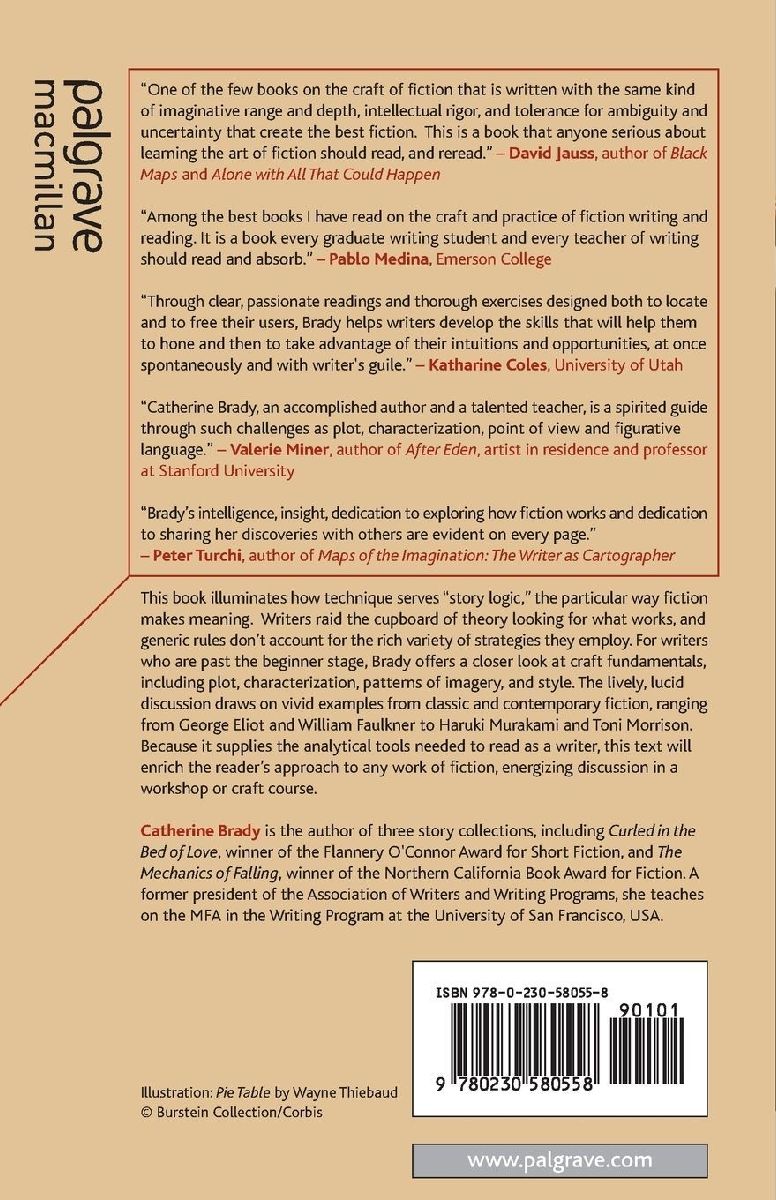
This book illuminates how technique serves 'story logic,' the particular way fiction makes meaning. Writers raid the cupboard of theory looking for what works, and generic rules don't account for the rich variety of strategies they employ. For writers who are past the beginner stage, Brady offers a closer look at craft fundamentals, including plot, characterization, patterns of imagery, and style. The lively, lucid discussion draws on vivid examples from classic and contemporary fiction, ranging from George Eliot and William Faulkner to Haruki Murakami and Toni Morrison. Because it supplies the analytical tools needed to read as a writer, this text will enrich the reader's approach to any work of fiction, energizing discussion in a workshop or craft course.
Inhaltsverzeichnis
Story Logic.- The Elusiveness at the Heart of Story Structure.- Chapter Structure and Shapeliness in the Novel.- Three Key Strategies of Story Logic.- Captured in Motion: Dynamic Characterization.- Point of View Q& A .- Synedoche and Metonymy in Setting, Staging and Dialogue .- Patterns of Imagery.- Showing and Telling.- The Sentence as a Touchstone of Style .- Exercises .- Notes .- Further Reading.