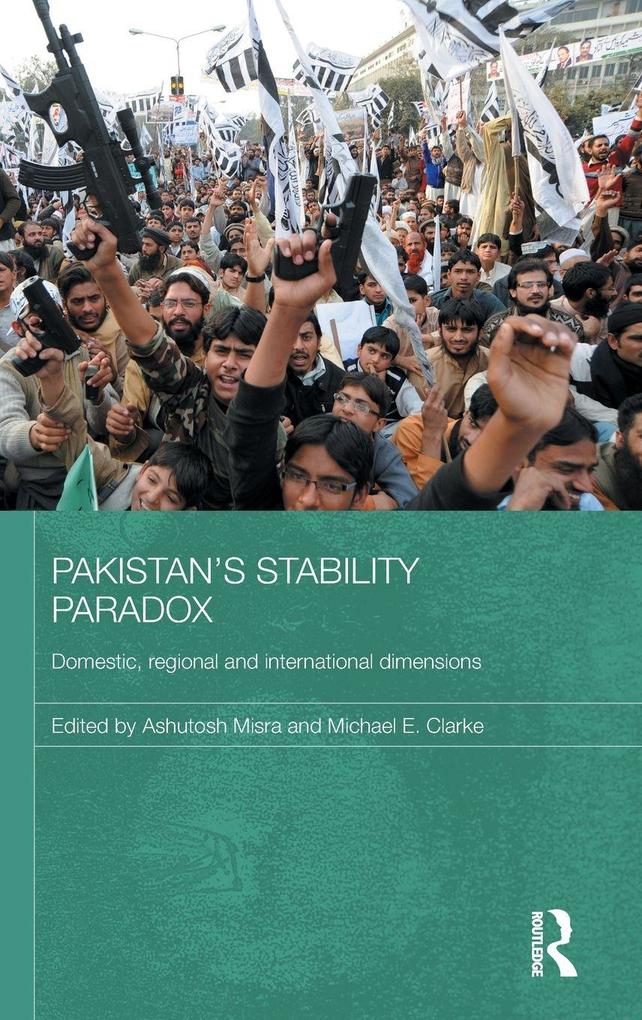
Pakistan, with the second largest Muslim population in the world, is a crucial country in the international system. This book identifies the factors that contribute both to Pakistan's perceived instability and its resilience. It examines the drivers of Pakistan chronic instability and addresses the implications of its current political and security predicaments for regional, international and its own security.
Inhaltsverzeichnis
Part 1: Domestic Dimensions 1. Understanding the Unstable Nature of Pakistan's Triadic Politics 2. Judicialization of Politics in Pakistan: Constitutional and Political Challenges and the Role of the Judiciary 3. What are they teaching them at Schools Nowadays? Understanding Pakistan's Social Revolution and Seminary Education 4. Women, Media, Equity and Equality: The Pakistani Context 5. The Militants' Landscape: Pakistan's Islamist Organizations and Their Impact on the Body Politic Part 2: Regional Dimensions 6. The India-Pakistan Peace Process 7. The State of Jihadi Organisations in Pakistan and Their Regional and International Linkages 8. Pakistan-Afghanistan Relations 9. The Evolution of the Pakistani Taliban Part 3: International Dimensions 10. Pakistan-US Relations: An Inconvenient Partnership of Convenience 11. Testing China's Rise: China-Pakistan Relations 12. Pakistan and the 'Four Faces' of Nuclear Terrorism: A Preliminary Assessment