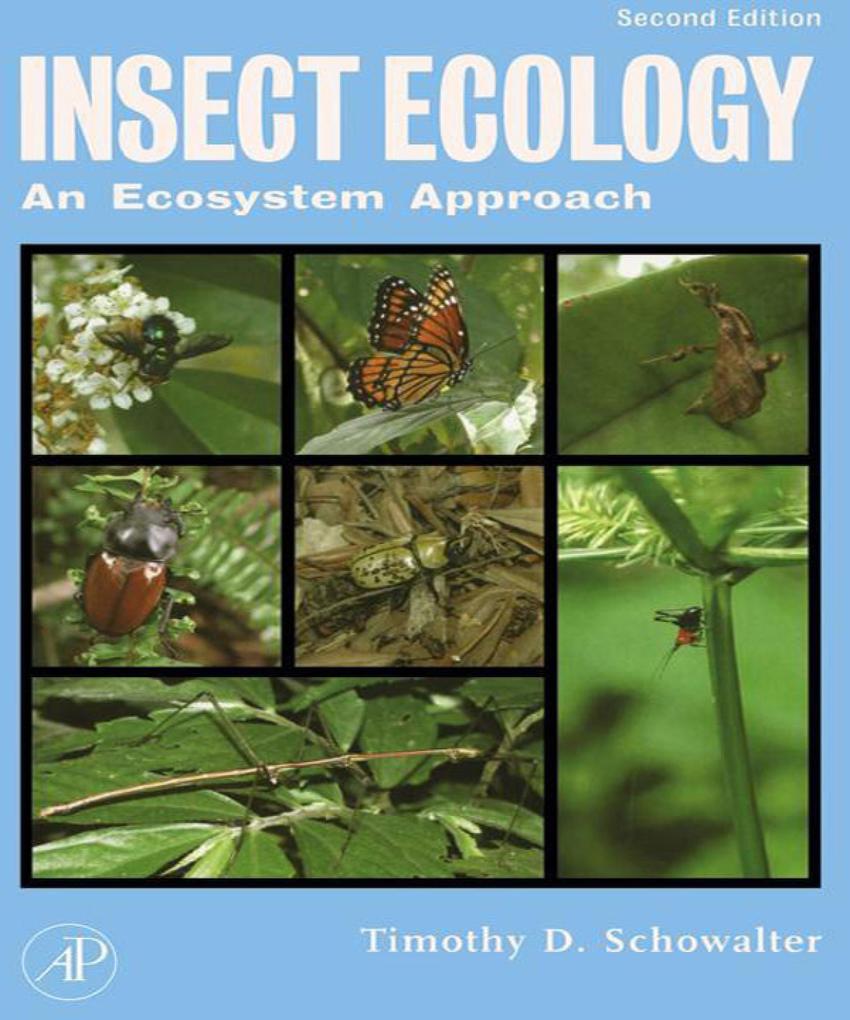
Dr. Timothy Schowalter has succeeded in creating a unique, updated treatment of insect ecology. This revised and expanded text looks at how insects adapt to environmental conditions while maintaining the ability to substantially alter their environment. It covers a range of topics- from individual insects that respond to local changes in the environment and affect resource distribution, to entire insect communities that have the capacity to modify ecosystem conditions. Insect Ecology, Second Edition, synthesizes the latest research in the field and has been produced in full color throughout. It is ideal for students in both entomology and ecology-focused programs. NEW TO THIS EDITION:* New topics such as elemental defense by plants, chaotic models, molecular methods to measure disperson, food web relationships, and more* Expanded sections on plant defenses, insect learning, evolutionary tradeoffs, conservation biology and more* Includes more than 350 new references* More than 40 new full-color figures
Inhaltsverzeichnis
1;FRONT COVER;1 2;ENCYCLOPEDIA OF INSECTS;4 3;COPYRIGHT PAGE;5 4;CONTENTS;6 5;CONTENTS BY SUBJECT AREA;18 6;CONTRIBUTORS;22 7;GUIDE TO THE ENCYCLOPEDIA;31 8;FOREWORD;33 9;PREFACE TO THE SECOND EDITION;35 10;PREFACE;36 11;ABOUT THE EDITORS;37 12;A;38 12.1;Acari;38 12.2;Accessory Glands;38 12.3;Acoustic Behavior;39 12.4;Aedes Mosquito;39 12.5;Aestivation;39 12.6;Africanized Bees;41 12.7;Agricultural Entomology;41 12.8;Alderfly;45 12.9;Amber;45 12.10;Anatomy: Head, Thorax, Abdomen, and Genitalia;48 12.11;Anopheles Mosquito;58 12.12;Anoplura;58 12.13;Antennae;58 12.14;Ants;61 12.15;Aphids;64 12.16;Apis Species;68 12.17;Aposematic Coloration;70 12.18;Apterygota;75 12.19;Aquatic Habitats;75 12.20;Arachnida;85 12.21;Archaeognatha;85 12.22;Arthropoda and Related Groups;87 12.23;Auchenorrhyncha;93 12.24;Autohemorrhage;101 12.25;Autotomy;101 13;B;102 13.1;Bedbugs;102 13.2;Bee;103 13.3;Beekeeping;103 13.4;Bee Products;108 13.5;Beetle;112 13.6;Biodiversity;112 13.7;Biogenic Amines;117 13.8;Biogeographical Patterns;119 13.9;Biological Control of Insect Pests;128 13.10;Bioluminescence;138 13.11;Biotechnology and Insects;142 13.12;Blattodea;145 13.13;Blood;149 13.14;Blood Sucking;149 13.15;Body Size;151 13.16;Boll Weevil;153 13.17;Bombyx mori;154 13.18;Book Louse;156 13.19;Borers;156 13.20;Brain and Optic Lobes;158 13.21;Bristletail;167 13.22;Bubonic Plague;167 14;C;170 14.1;Caddisfly;170 14.2;Caste;170 14.3;Caterpillars;172 14.4;Cat Fleas;175 14.5;Cave Insects;176 14.6;Cell Culture;181 14.7;Chemical Defense;182 14.8;Chemoreception;185 14.9;Chiggers and Other Disease-Causing Mites;189 14.10;Chitin;193 14.11;Chromosomes;195 14.12;Chrysalis;199 14.13;Cicadas;200 14.14;Circadian Rhythms;202 14.15;Circulatory System;206 14.16;Classification;210 14.17;Cockroach;210 14.18;Cocoon;210 14.19;Codling Moth;211 14.20;Coevolution;212 14.21;Cold/Heat Protection;216 14.22;Coleoptera;220 14.23;Collection and Preservation;238 14.24;Collembola;243 14.25;Colonies;247 14.26;Colorado Potato Beetle;249
14.27;Coloration;250 14.28;Commercialization of Insects and Their Products;257 14.29;Conservation;264 14.30;Crickets;269 14.31;Crypsis;273 14.32;Cultural Entomology;276 14.33;Cuticle;282 15;D;284 15.1;Daddy-Long-Legs;284 15.2;Damselfly;285 15.3;Dance Language;285 15.4;DDT;288 15.5;Defensive Behavior;289 15.6;Delusory Parasitosis;294 15.7;Dengue;294 15.8;Dermaptera;296 15.9;Development, Hormonal Control of;298 15.10;Diapause;304 15.11;Digestion;308 15.12;Digestive System;310 15.13;Diplura;318 15.14;Diptera;321 15.15;Diversity;334 15.16;Division of Labor in Insect Societies;334 15.17;Dobsonfly;336 15.18;Dog Heartworm;336 15.19;Dormancy;337 15.20;Dragonfly;338 15.21;Drosophila melanogaster;338 15.22;Dung Beetles;341 16;E;345 16.1;Earwig;345 16.2;Ecdysis;345 16.3;Ecdysteroids;345 16.4;Eggs;348 16.5;Egg Coverings;349 16.6;Ekbom Syndrome;350 16.7;Embiidina;352 16.8;Embryogenesis;353 16.9;Endangered Insects;357 16.10;Endopterygota;361 16.11;Entomological Societies;361 16.12;Ephemeroptera;365 16.13;Estivation;371 16.14;Evolution;371 16.15;Excretion;371 16.16;Exopterygota;376 16.17;Exoskeleton;376 16.18;Extension Entomology;379 16.19;Eyes and Vision;382 17;F;393 17.1;Fat Body;393 17.2;Feeding Behavior;394 17.3;Fire Ants;399 17.4;Flea;401 17.5;Flight;401 17.6;Fly;409 17.7;Folk Beliefs and Superstitions;409 17.8;Food, Insects as;413 17.9;Forensic Entomology;418 17.10;Forest Habitats;423 17.11;Fossil Record;433 17.12;Freshwater Habitats;440 17.13;Fruit Fly;440 18;G;441 18.1;Gallmaking and Insects;441 18.2;Genetically Modified Plants;443 18.3;Genetic Engineering;447 18.4;Genetic Variation;453 18.5;Grasshopper;456 18.6;Genomics;456 18.7;Grassland Habitats;461 18.8;Greenhouse Gases, Global Warming, and Insects;465 18.9;Growth, Individual;468 18.10;Grylloblattodea;471 18.11;Gypsy Moth;472 19;H;477 19.1;Hearing;477 19.2;Hemiptera;483 19.3;Hemolymph;483 19.4;Heteroptera;486 19.5;Hibernation;486 19.6;History of Entomology;486 19.7;Homeostasis, Behavioral;495 19.8;Homoptera;496 19.9;H
oney;496 19.10;Honey Bee;498 19.11;Honeydew;498 19.12;Hornet;500 19.13;Host Seeking, by Parasitoids;500 19.14;Host Seeking, for Plants;503 19.15;House Fly;506 19.16;Human History, Insects Effect on;508 19.17;Hymenoptera;510 19.18;Hypermetamorphosis;521 19.19;Hyperparasitism;523 20;I;526 20.1;Imaginal Discs;526 20.2;Immunology;529 20.3;Industrial Melanism;533 20.4;Insecta, Overview;538 20.5;Insecticides;539 20.6;Insecticide and Acaricide Resistance;542 20.7;Insectivorous Plants;548 20.8;Insectivorous Vertebrates;551 20.9;Insect Zoos;553 20.10;Integrated Pest Management;560 20.11;Integument;565 20.12;Introduced Insects;566 20.13;Island Biogeography;570 20.14;Isoptera;572 21;J;576 21.1;Japanese Beetle;576 21.2;June Beetles;577 21.3;Juvenile Hormones;578 22;K;583 22.1;Katydid;583 22.2;Killer Bees;583 23;L;584 23.1;Lacewing;584 23.2;Ladybugs;584 23.3;Larva;588 23.4;Learning;589 23.5;Legs;592 23.6;Lepidoptera;596 23.7;Lice;624 23.8;Lice, Human;624 23.9;Locusts;626 24;M;629 24.1;Magnetic Sense;629 24.2;Malaria;631 24.3;Mantodea;634 24.4;Mantophasmatodea;636 24.5;Marine Insects;637 24.6;Mating Behaviors;641 24.7;Mechanoreception;647 24.8;Mecoptera;648 24.9;Medical Entomology;651 24.10;Medicine, Insects in;655 24.11;Megaloptera;657 24.12;Metabolism;660 24.13;Metamorphosis;664 24.14;Migration;665 24.15;Mimicry;670 24.16;Mites;680 24.17;Molting;686 24.18;Monarchs;691 24.19;Mosquitoes;695 24.20;Moth;700 24.21;Mouthparts;700 24.22;Movies, Insects in;705 24.23;Muscle System;712 24.24;Museums and Display Collections;717 25;N;722 25.1;Neosomy;722 25.2;Neotropical African Bees;723 25.3;Nervous System;725 25.4;Nest Building;725 25.5;Neuropeptides;728 25.6;Neuroptera;732 25.7;Nomenclature and Classification, Principles of;744 25.8;Nutrition;752 26;O;758 26.1;Ocelli and Stemmata;758 26.2;Odonata;758 26.3;Orientation;766 26.4;Orthoptera;769 26.5;Ovarioles;780 26.6;Oviposition Behavior;782 27;P;785 27.1;Parasitoids;785 27.2;Parental Care;788 27.3;Parthenogenesis in Insects and Mites;790
27.4;Pathogens of Insects;794 27.5;Phasmida;802 27.6;Pheromones;803 27.7;Phoresy;809 27.8;Photography of Insects;811 27.9;Phthiraptera;814 27.10;Phylogeny of Insects;817 27.11;Physical Control of Insect Pests;831 27.12;Phytophagous Insects;835 27.13;Phytotoxicity;837 27.14;Plant Diseases and Insects;839 27.15;PlantInsect Interactions;843 27.16;Plecoptera;847 27.17;Pollination and Pollinators;850 27.18;Pollution, Insect Response to;856 27.19;Polyembryony;858 27.20;Population Ecology;863 27.21;Praying Mantid;874 27.22;Predation/Predatory Insects;874 27.23;Prosorrhyncha;876 27.24;Protura;892 27.25;Psocoptera;895 27.26;Pterygota;897 27.27;Puddling Behavior;897 27.28;Pupa and Puparium;899 28;Q;900 28.1;Queen;900 29;R;901 29.1;Raphidioptera;901 29.2;Rearing of Insects;903 29.3;Recruitment Communication;906 29.4;Regulatory Entomology;914 29.5;Reproduction, Female;917 29.6;Reproduction, Female: Hormonal Control of;919 29.7;Reproduction, Male;922 29.8;Reproduction, Male: Hormonal Control of;924 29.9;Research Tools, Insects as;925 29.10;Respiratory System;926 29.11;River Blindness;932 30;S;934 30.1;Salivary Glands;934 30.2;Scale Insect;938 30.3;Scales and Setae;938 30.4;Scorpions;941 30.5;Segmentation;946 30.6;Sericulture;949 30.7;Sex Determination;951 30.8;Sexual Selection;954 30.9;Silk Moth;958 30.10;Silk Production;958 30.11;Silverfish;961 30.12;Siphonaptera;961 30.13;Snakefly;965 30.14;Sociality;965 30.15;Soil Habitats;972 30.16;Sound Production;976 30.17;Spermatheca;976 30.18;Spermatophore;977 30.19;Spiders;978 30.20;Springtail;988 30.21;Stamps, Insects and;988 30.22;Sterile Insect Technique;990 30.23;Sternorrhyncha;994 30.24;Stonefly;1004 30.25;Stored Products as Habitats;1004 30.26;Strepsiptera;1008 30.27;Swimming, Lake Insects;1009 30.28;Swimming and Other Movements, Stream Insects;1012 30.29;Symbionts Aiding Digestion;1015 30.30;Symbionts, Bacterial;1020 30.31;Systematics;1024 31;T;1025 31.1;Taste;1025 31.2;Taxonomy;1025 31.3;Teaching Resources;1025 31.4;Temperature,
Effects on Development and Growth;1027 31.5;Termite;1030 31.6;Terrestrial Insects;1030 31.7;Thermoregulation;1030 31.8;Thrips;1036 31.9;Thysanoptera;1036 31.10;Thysanura;1040 31.11;Ticks;1040 31.12;Touch;1048 31.13;Tracheal System;1048 31.14;Trichoptera (Caddisfiies);1052 31.15;Tsetse Fly;1057 32;U;1062 32.1;Urban Habitats;1062 33;V;1065 33.1;Venom;1065 33.2;Veterinary Entomology;1068 33.3;Vibrational Communication;1071 33.4;Vinegaroons;1075 33.5;Vision;1078 33.6;Vitellogenesis;1078 34;W;1081 34.1;Walking and Jumping;1081 34.2;Wasps;1086 34.3;Water and Ion Balance, Hormonal Control of;1089 34.4;Wings;1092 34.5;Wolbachia;1098 34.6;Worker;1100 35;Y;1101 35.1;Yellow Fever;1101 35.2;Yellowjacket;1102 36;Z;1102 36.1;Zoonotic Agents, Arthropod-Borne;1102 36.2;Zoraptera;1106 36.3;Zygentoma;1107 37;GLOSSARY;1110 37.1;A;1110 37.2;B;1111 37.3;C;1112 37.4;D;1114 37.5;E;1114 37.6;F;1115 37.7;G;1116 37.8;H;1117 37.9;I;1118 37.10;J;1118 37.11;K;1118 37.12;L;1119 37.13;M;1119 37.14;N;1120 37.15;O;1121 37.16;P;1121 37.17;Q;1124 37.18;R;1124 37.19;S;1124 37.20;T;1126 37.21;U;1127 37.22;V;1127 37.23;W;1127 37.24;X;1128 37.25;Y;1128 37.26;Z;1128 38;SUBJECT INDEX;1130 38.1;A;1130 38.2;B;1133 38.3;C;1135 38.4;D;1139 38.5;E;1141 38.6;F;1143 38.7;G;1144 38.8;H;1145 38.9;I;1148 38.10;J;1149 38.11;K;1149 38.12;L;1149 38.13;M;1151 38.14;N;1154 38.15;O;1155 38.16;P;1156 38.17;Q;1160 38.18;R;1161 38.19;S;1162 38.20;T;1165 38.21;U;1167 38.22;V;1167 38.23;W;1168 38.24;X;1168 38.25;Y;1168 38.26;Z;1168