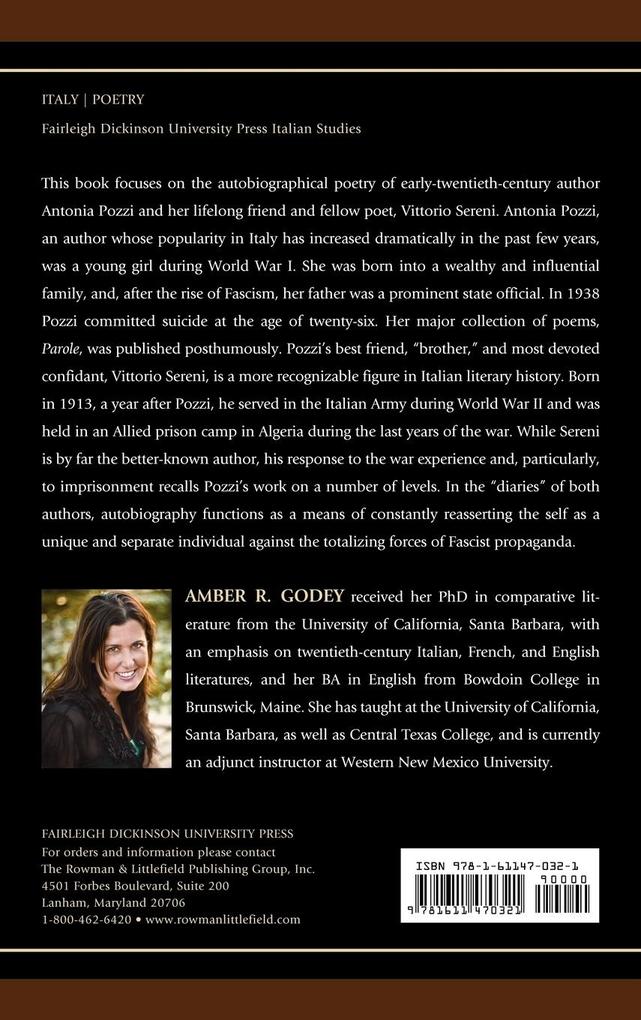
This book focuses on the autobiographical poetry of early 20th-century author Antonia Pozzi and her lifelong friend and fellow poet, Vittorio Sereni, most particularly on the autobiographical format of their writing and its role as a mode of "passive resistance" to Fascist control, a mode of resistance familiar to women's writing even before the onset of Fascist totalitarianism. While Sereni is by far the better-known author, his response to the war experience and, particularly, to imprisonment recalls Pozzi's work on a number of levels. In the "diaries" of both authors, autobiography functions as a means of constantly reasserting the self as a unique and separate individual against the totalizing forces of Fascist propaganda.
Inhaltsverzeichnis
Introduction< BR> Chapter 1: Theoretical Background< BR> Chapter 2: Historical Background< BR> Chapter 3: Bisogno di una sorella< BR> Chapter 4: The Banfi School and the Crisis of Modernity< BR> Chapter 5: "If my words could be given."< BR> Chapter 6: "I morti come noi"< BR> Conclusions< BR> Bibliography