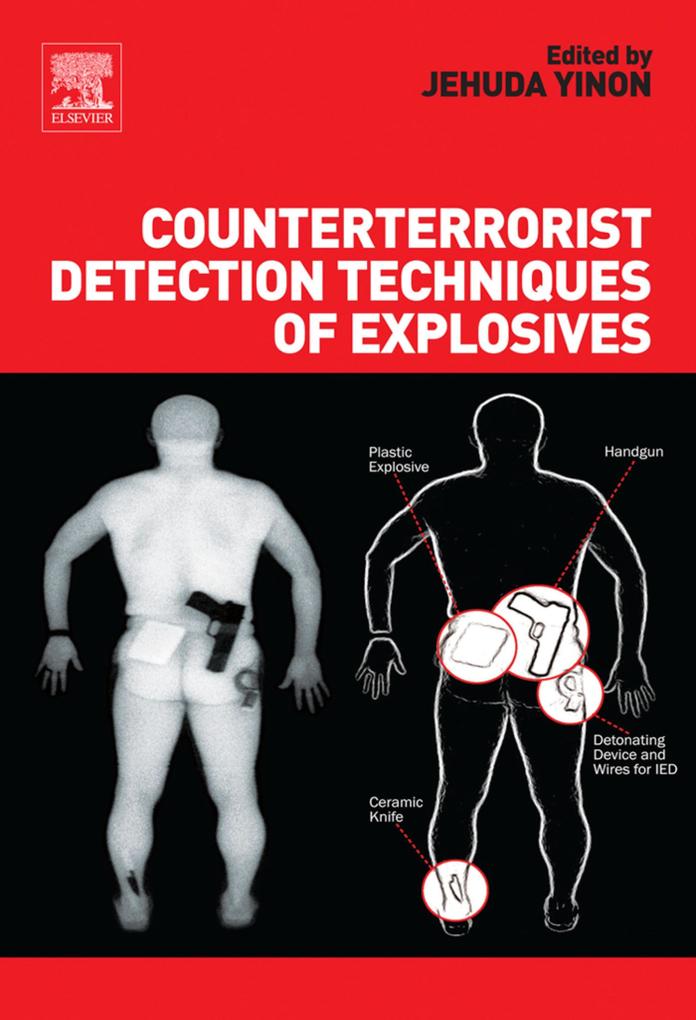
The detection of hidden explosives has become an issue of utmost importance in recent years. While terrorism is not new to the international community, recent terrorist attacks have raised the issue of detection of explosives and have generated a great demand for rapid, sensitive and reliable methods for detecting hidden explosives. Counterterrorist Detection Techniques of Explosives covers recent advances in this area of research including vapor and trace detection techniques (chemiluminescence, mass spectrometry, ion mobility spectrometry, electrochemical methods and micromechanical sensors, such as microcantilevers) and bulk detection techniques (neutron techniques, nuclear quadrupole resonance, x-ray diffraction imaging, millimeter-wave imaging, terahertz imaging and laser techniques). This book will be of interest to any scientists involved in the design and application of security screening technologies including new sensors and detecting devices which will prevent the smuggling of bombs and explosives. * Covers latest advances in vapor and trace detection techniques and bulk detection techniques* Reviews both current techniques and those in advanced stages of development* Techniques that are described in detail, including its principles of operation, as well as its applications in the detection of explosives
Inhaltsverzeichnis
1;Front Cover;1 2;Counterterrorist Detection Techniques of Explosives;4 3;Copyright Page;5 4;Table of Contents;8 5;Introduction;10 6;About the Editor;12 7;Contributors;14 8;Chapter 1 Detection of Explosives by Chemiluminescence;16 8.1;1. Introduction;18 8.2;2. Chemiluminescence systems in explosive analysis;23 8.3;3. Using chemiluminescence as detection technology in security;51 8.4;References;52 9;Chapter 2 Detection of Explosives by Mass Spectrometry;56 9.1;1. Introduction;58 9.2;2. Mass spectrometry principles of operation;58 9.3;3. Detection of explosives by mass spectrometry methods;63 9.4;4. Miniature and mobile mass spectrometers;69 9.5;5. Conclusions;73 9.6;References;73 10;Chapter 3 Explosives Detection Using Differential Mobility Spectrometry;76 10.1;1. Introduction;78 10.2;2. Background and principles of DMS;82 10.3;3. Technology of DMS;88 10.4;4. Studies of explosives by field asymmetric IMS;91 10.5;5. Explosives determination with a micro-fabricated differential mobility spectrometer;93 10.6;6. Fast GC with DMS;95 10.7;7. The EGIS Defender: a commercial high-speed GCDMS analyzer;100 10.8;8. Next developments in DMS and IMS determinations of explosives;100 10.9;9. Conclusions;103 10.10;Acknowledgments;103 10.11;References;103 11;Chapter 4 Electrochemical Sensing of Explosives;106 11.1;1. Introduction;108 11.2;2. Electrochemistry of explosive materials;109 11.3;3. Easy-to-use disposable electrode strips for explosives;110 11.4;4. Real-time electrochemical monitoring;111 11.5;5. Lab-on-a-chip electrochemical detection of explosives;117 11.6;6. Conclusions;121 11.7;Acknowledgments;121 11.8;References;121 12;Chapter 5 Explosive Vapor Detection Using Microcantilever Sensors;124 12.1;1. Introduction;126 12.2;2. Theory;127 12.3;3. Apparatus;129 12.4;4. PARC for analyte identification;133 12.5;5. Results and discussion;136 12.6;6. Conclusions;143 12.7;Acknowledgments;144 12.8;References;144 13;Chapter 6 Neutron Techniques for Detection of Explosives;146 13.1;1.
Introduction;148 13.2;2. Neutron techniques;150 13.3;3. Practical issues;156 13.4;4. Summary;166 13.5;References;168 14;Chapter 7 Nuclear Quadrupole Resonance Detection of Explosives;172 14.1;1. Introduction;174 14.2;2. Basic NQR Physics;174 14.3;3. NQR detection hardware;182 14.4;4. Signal excitation methods;192 14.5;5. NQR explosives detection;200 14.6;6. Outlook;208 14.7;References;208 15;Chapter 8 X-ray Diffraction Imaging for Explosives Detection;214 15.1;1. Introduction and history of X-ray diffraction imaging;216 15.2;2. Physical principles of XDI;221 15.3;3. XRD characterization of explosives;235 15.4;4. Tomographic imaging techniques;236 15.5;5. Next-generation XDI;242 15.6;6. Future outlook;247 15.7;Acknowledgments;248 15.8;References;248 16;Chapter 9 Detection of Explosives by Millimeter-wave Imaging;252 16.1;1. Introduction;254 16.2;2. Background;255 16.3;3. Millimeter-wave imaging system architectures and components;260 16.4;4. Imaging system design considerations;264 16.5;5. Millimeter-wave imaging systems and results;269 16.6;6. Conclusion;287 16.7;Acknowledgments;288 16.8;References;289 17;Chapter 10 Laser-based Detection Methods of Explosives;294 17.1;1. Introduction;296 17.2;2. Detection of explosives using laser-based vibrational spectroscopy;296 17.3;3. Laser-induced breakdown spectroscopy (LIBS);307 17.4;4. Other laser-based methods for explosive detection;314 17.5;References;331 18;Chapter 11 Detection of Explosives by Terahertz Imaging;338 18.1;1. Introduction;340 18.2;2. Terahertz radiation;341 18.3;3. Terahertz imaging techniques;350 18.4;4. Interferometric imaging with terahertz;357 18.5;5. Experimental terahertz imaging;362 18.6;6. Interferometric image analysis;371 18.7;7. Conclusions and challenges;376 18.8;Acknowledgments;377 18.9;References;377 19;Chapter 12 Explosives Detection Personnel Portals;382 19.1;1. Introduction;384 19.2;2. Trace and anomaly portal technologies: overview;385 19.3;3. Trace detection portal: background;386 19.4;
4. Anomaly detection portals;398 19.5;5. Future development of personnel portals;405 19.6;References;405 20;Chapter 13 Biological Detection of Explosives;410 20.1;1. Introduction;412 20.2;2. Canine detection;412 20.3;3. Instrumental options;417 20.4;4. Choosing between canine and instrumental detection;419 20.5;5. Alternative biological detectors;422 20.6;6. The canines take on explosives;423 20.7;7. Conducting the certification;439 20.8;8. Conclusions;444 20.9;References;445 21;Index;448