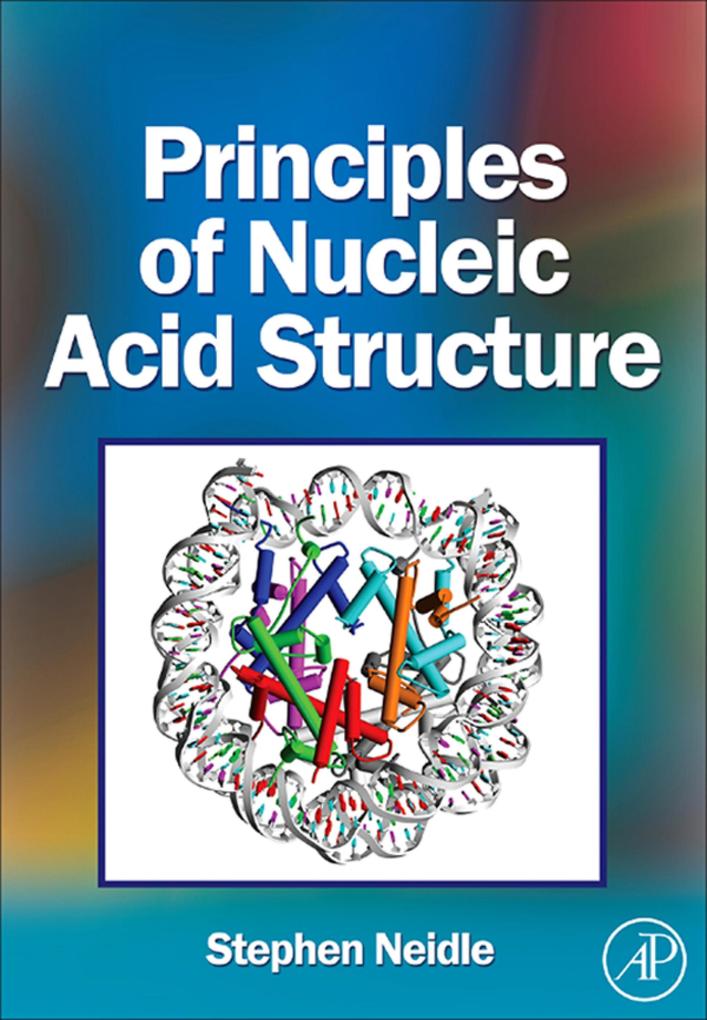
This unique and practical resource provides the most complete and concise summary of underlying principles and approaches to studying nucleic acid structure, including discussion of x-ray crystallography, NMR, molecular modelling, and databases. Its focus is on a survey of structures especially important for biomedical research and pharmacological applications. To aid novices, Principles of Nucleic Acid Structure includes an introduction to technical lingo used to describe nucleic acid structure and conformations (roll, slide, twist, buckle, etc.). This completely updated edition features expanded coverage of the latest advances relevant to recognition of DNA and RNA by small molecules and proteins. In particular, the reader will find extensive new discussions on: RNA folding, ribosome structure and antibiotic interactions, DNA quadruplexes, DNA and RNA protein complexes, and short interfering RNA (siRNA). This handy guide ends with a complete list of resources, including relevant online databases and software.
- Completely updated with expanded discussion of topics such as RNA folding, ribosome structure and antibiotic interactions, DNA quadruplexes, DNA and RNA protein complexes, and short interfering RNA (siRNA)
- Includes a complete list of resources, including relevant online databases and software
- Defines technical lingo for novices
Inhaltsverzeichnis
1;Front Cover;1 2;Principles of Nucleic Acid Structure;4 3;Copyright Page;5 4;Dedication Page;6 5;Preface;8 6;Contents;10 7;Chapter 1: Methods for Studying Nucleic Acid Structure;14 7.1;1.1 Introduction;14 7.2;1.2 X-ray Diffraction Methods for Structural Analysis;15 7.2.1;1.2.1 Overview;15 7.2.2;1.2.2 Fiber Diffraction Methods;18 7.2.3;1.2.3 Single-Crystal Methods;20 7.3;1.3 NMR Methods for Studying Nucleic Acid Structure and Dynamics;23 7.4;1.4 Molecular Modelling and Simulation of Nucleic Acids;24 7.5;1.5 Chemical, Enzymatic, and Biophysical Probes of Structure and Dynamics;27 7.6;1.6 Sources of Structural Data;28 7.7;1.7 Visualization of Nucleic Acid Molecular Structures;28 7.7.1;1.7.1 The Structures in This Book;29 7.8;References;29 7.9;Further Reading;30 8;Chapter 2: The Building-Blocks of DNA and RNA;33 8.1;2.1 Introduction;33 8.2;2.2 Base Pairing;36 8.3;2.3 Base and Base Pair Flexibility;37 8.4;2.4 Sugar Puckers;41 8.5;2.5 Conformations About the Glycosidic Bond;45 8.6;2.6 The Backbone Torsion Angles and Correlated Flexibility;46 8.7;References;49 8.8;Further Reading;50 9;Chapter 3: DNA Structure as Observed in Fibers and Crystals;51 9.1;3.1 Structural Fundamentals;51 9.1.1;3.1.1 Helical Parameters;51 9.1.2;3.1.2 Base-Pair Morphological Features;51 9.2;3.2 Polynucleotide Structures from Fiber Diffraction Studies;52 9.2.1;3.2.1 Classic DNA Structures;52 9.2.2;3.2.2 DNA Polymorphism in Fibers;56 9.3;3.3 B-DNA Oligonucleotide Structure as Seen in Crystallographic Analyses;60 9.3.1;3.3.1 The DickersonDrew Dodecamer;60 9.3.2;3.3.2 Other Studies of the DickersonDrew Dodecamer;62 9.3.3;3.3.3 Other B-DNA Oligonucleotide Structures;64 9.3.4;3.3.4 Sequence-Dependent Features of B-DNA: Their Occurrence and Their Prediction;69 9.4;3.4 A-DNA Oligonucleotide Crystal Structures;73 9.4.1;3.4.1 A-Form Octanucleotides;73 9.4.2;3.4.2 Do A-Form Oligonucleotides Occur in Solution? Crystal-Packing Effects;74 9.4.3;3.4.3 The A harr B Transition in Crystals;76 9.5;3.5 Z-DNA Left-Han
ded DNA;77 9.5.1;3.5.1 The Z-DNA Hexanucleotide Crystal Structure;77 9.5.2;3.5.2 Overall Structural Features;78 9.5.3;3.5.3 The Z-DNA Helix;79 9.5.4;3.5.4 Other Z-DNA Structures;80 9.5.5;3.5.5 Biological Aspects of Z-DNA;80 9.6;3.6 Bent DNA;82 9.6.1;3.6.1 DNA Periodicity in Solution;82 9.6.2;3.6.2 A-Tracts and Bending;83 9.6.3;3.6.3 Structures Showing Bending;84 9.6.4;3.6.4 The Structure of Poly dAmiddotdT;86 9.7;3.7 Concluding Remarks;87 9.8;References;87 9.9;Further Reading;93 10;Chapter 4: Nonstandard and Higher-Order DNA Structures: DNADNA Recognition;94 10.1;4.1 Mismatches in DNA;94 10.1.1;4.1.1 General Features;94 10.1.2;4.1.2 Purine:Purine Mismatches;95 10.1.3;4.1.3 Alkylation Mismatches;98 10.2;4.2 DNA Triple Helices;101 10.2.1;4.2.1 Introduction;101 10.2.2;4.2.2 Structural Studies;103 10.2.3;4.2.3 Antiparallel Triplexes and Nonstandard Base-pairings;108 10.2.4;4.2.4 Triplex Applications;113 10.3;4.3 Guanine Quadruplexes;114 10.3.1;4.3.1 Introduction;114 10.3.2;4.3.2 Overall Structural Features of Quadruplex DNA;116 10.3.3;4.3.3 Examples of Simple Quadruplex Structures;120 10.3.4;4.3.4 Some Complex Quadruplex Structures;121 10.3.5;4.3.5 The i-Motif;126 10.4;4.4 DNA Junctions;127 10.4.1;4.4.1 Holliday Junction Structures;127 10.4.2;4.4.2 DNA Enzyme Structures;131 10.5;4.5 Unnatural DNA Structures;133 10.6;References;137 10.7;Further Reading;144 11;Chapter 5: Principles of Small Molecule-DNA Recognition;145 11.1;5.1 Introduction;145 11.2;5.2 DNA-Water Interactions;149 11.2.1;5.2.1 Hydration in the Grooves in Detail;153 11.3;5.3 General Features of DNA-Drug and Small-Molecule Recognition;156 11.4;5.4 Intercalative Binding;157 11.4.1;5.4.1 Simple Intercalators;159 11.4.2;5.4.2 Complex Intercalators;160 11.4.3;5.4.3 Major-Groove Intercalation;164 11.4.4;5.4.4 Bis-Intercalators;171 11.5;5.5 Intercalative-Type Binding to Higher-Order DNAs;176 11.5.1;5.5.1 Triplex DNALigand Interactions;176 11.5.2;5.5.2 Ligand Binding to Quadruplex DNAs;177 11.5.3;5.5.3 Ligand Bindi
ng to Junction DNAs;179 11.6;5.6 Groove-Binding Molecules;182 11.6.1;5.6.1 Simple Groove Binding Molecules;182 11.6.2;5.6.2 Netropsin and Distamycin;191 11.6.3;5.6.3 Sequence-Specific Polyamides;195 11.7;5.7 Small Molecule Covalent Bonding to DNA;200 11.7.1;5.7.1 The Platinum Drugs;201 11.7.2;5.7.2 Covalent-Binding Combined with Sequence-Specific Recognition;204 11.8;References;208 11.9;Further Reading;215 12;Chapter 6: RNA Structures and Their Diversity;217 12.1;6.1 Introduction;217 12.2;6.2 Fundamentals of RNA Structure;219 12.2.1;6.2.1 Helical RNA Conformations;219 12.2.2;6.2.2 Mismatched and Bulged RNA Structures;223 12.3;6.3 Transfer RNA Structures;230 12.4;6.4 Ribozymes;234 12.4.1;6.4.1 The Hammerhead Ribozyme;236 12.4.2;6.4.2 Complex Ribozymes;237 12.5;6.5 Riboswitches;240 12.6;6.6 The Ribosome, a Ribozyme Machine;242 12.6.1;6.6.1 The Structure of the 30S Subunit;245 12.6.2;6.6.2 The Structure of the 50S subunit;247 12.6.3;6.6.3 Complete Ribosome Structures;247 12.7;6.7 RNA-Drug Complexes;248 12.8;6.8 RNA Motifs;254 12.9;6.9 Web Sites of Interest;256 12.10;References;257 12.11;Further Reading;261 13;Chapter 7: Principles of Protein-DNA Recognition;262 13.1;7.1 Introduction;262 13.2;7.2 Direct Protein-DNA Contacts;265 13.3;7.3 Major-Groove Interactions the alpha-Helix as the Recognition Element;270 13.4;7.4 Zinc-Finger Recognition Modes;272 13.5;7.5 Other Major Groove Recognition Motifs;276 13.6;7.6 Minor-Groove Recognition;277 13.6.1;7.6.1 Recognition of B-DNA;277 13.6.2;7.6.2 The Opening-up of the Minor Groove by TBP;280 13.6.3;7.6.3 Other Proteins that Induce Bending of DNA;281 13.7;7.7 DNA-Bending and Protein Recognition;285 13.8;7.8 Protein-DNA-Small Molecule Recognition;288 13.9;Useful Websites;291 13.10;References;291 13.11;Further Reading;295 14;Index;296