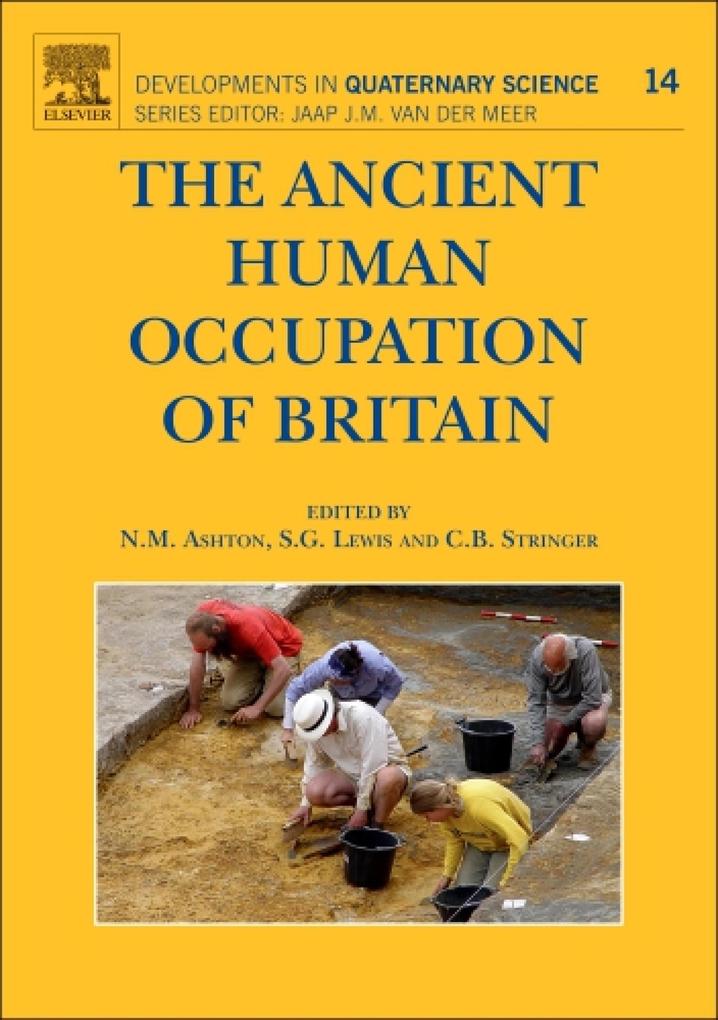
The Ancient Human Occupation of Britain Project (AHOB) funded by the Leverhulme Trust began in 2001 and brought together researchers from a range of disciplines with the aim of investigating the record of human presence in Britain from the earliest occupation until the end of the last Ice Age, about 12, 000 years ago. Study of changes in climate, landscape and biota over the last million years provides the environmental backdrop to understanding human presence and absence together with the development of new technologies. This book brings together the multidisciplinary work of the project. The chapters present the results of new fieldwork and research on old sites from museum collections using an array of new analytical techniques.
- Features an up-to-date treatment of the record of human presence in the British Isles during the Palaeolithic period (700, 000 - 10, 000 years before present)
- Takes multidisciplinary approach that includes archaeology, geochemistry, geochronology, stratigraphy and sedimentology
- Coincides with the culmination of the AHOB project in 2010, providing a benchmark statement on the record of human occupation in Britain that can be utilized and tested by future research
Inhaltsverzeichnis
1;Front Cover;1 2;The Ancient Human Occupation of Britain;4 3;Copyright Page;5 4;Contents;6 5;Contributors;8 6;Preface;10 7;Acknowledgements;12 8;Chapter 1: The Changing Landscapes of the Earliest Human Occupation of Britain and Europe;14 8.1;Acknowledgements;21 8.2;References;21 9;Chapter 2: Climates of the early Middle Pleistocene in Britain: Environments of the Earliest Humans in Northern Europe;24 9.1;2.1. Introduction;24 9.2;2.2. Climate Change During the early Middle Pleistocene;25 9.3;2.3. Reconstructing British Climates for the early Middle Pleistocene;26 9.4;2.4. Climates and Environments of the British early Middle Pleistocene;27 9.5;2.5. Climate Cyclicity During the early Middle Pleistocene;31 9.6;2.6. Significance of early Middle Pleistocene Climates to the Earliest Humans in Northern Europe and Britain;32 9.7;2.7. Summary;32 9.8;Acknowledgements;33 9.9;References;33 10;Chapter 3: Palaeoenvironments of Ancient Humans in Britain: The Application of Oxygenand Carbon Isotopes to the Reconstruction of Pleistocene Environments;36 10.1;3.1. Introduction;36 10.2;3.2. Oxygen and Carbon Stable Isotopes in Quaternary Studies;37 10.3;3.3. Modern Carbonates in Britain;40 10.4;3.4. The Oxygen and Carbon Isotopic Record of British Interglacials;42 10.5;3.5. Carbonates from the Cromerian Complex;43 10.6;3.6. Carbonates from the Hoxnian Interglacial;45 10.7;3.7. Summary and Conclusions;47 10.8;Acknowledgements;48 10.9;References;48 11;Chapter 4: Mapping the Human Record: Population Change in Britain During the Early Palaeolithic;52 11.1;4.1. Introduction;52 11.2;4.2. Previous Studies;53 11.3;4.3. The Solent River and its Tributaries;54 11.4;4.4. The Middle Thames Reconsidered;56 11.5;4.5. The early Middle Palaeolithic in Britain;56 11.6;4.6. The Palaeogeography of Britain;58 11.7;4.7. Conclusions;61 11.8;Acknowledgements;61 11.9;References;61 12;Chapter 5: The Emergence, Diversity and Significance of Mode 3 (Prepared Core) Technologies;66 12.1;5.1. Introduction;66 12.2;
5.2. Diversity and Unity in Mode 3 Technologies;67 12.3;5.3. Mode 3 Technology in Time and Space;70 12.4;5.4. Roots and Developments;71 12.5;5.5. Conclusions;75 12.6;Acknowledgements;75 12.7;References;75 13;Chapter 6: Technology and Landscape Use in the Early Middle Palaeolithic of the Thames Valley;80 13.1;6.1. Introduction;80 13.2;6.2. The Upper Thames;81 13.3;6.3. The Middle Thames;82 13.4;6.4. The Lower Thames;86 13.5;6.5. Discussion;95 13.6;6.6. Conclusions;99 13.7;Acknowledgements;99 13.8;References;99 14;Chapter 7: The Early Middle Palaeolithic: The European Context;104 14.1;7.1. Introduction;104 14.2;7.2. The Environmental Structure of the Early Middle Palaeolithic (MIS 8-6);105 14.3;7.3. Early Middle Palaeolithic of Northwest Europe;107 14.4;7.4. MIS 7;109 14.5;7.5. Discussion;113 14.6;7.6. Conclusion;121 14.7;Acknowledgements;121 14.8;References;122 15;Chapter 8: Continuities and Discontinuities in Neandertal Presence: A Closer Look at Northwestern Europe;126 15.1;8.1. Introduction;126 15.2;8.2. An Ecological Perspective: Definitions and Comparative Data;128 15.3;8.3. Neandertal Ecology;129 15.4;8.4. Three Data Sets: Archaeology, Genetics and Comparative Studies;131 15.5;8.5. Discussion;132 15.6;Acknowledgements;133 15.7;References;133 16;Chapter 9: Testing Human Presence During the Last Interglacial (MIS 5e): A Review of the British Evidence;138 16.1;9.1. Introduction;138 16.2;9.2. Stratigraphic Frameworks;139 16.3;9.3. Geochronology;142 16.4;9.4. Biostratigraphy;142 16.5;9.5. Testing Human Presence and Absence;145 16.6;9.6. Conclusion;149 16.7;Acknowledgements;169 16.8;References;169 17;Chapter 10: The Mammal Faunas of the British Late Pleistocene;178 17.1;10.1. Introduction;178 17.2;10.2. The Beginning of the Late Pleistocene Record;178 17.3;Acknowledgements;191 17.4;References;191 18;Chapter 11: The British Earlier Upper Palaeolithic: Settlement and Chronology;194 18.1;11.1. Introduction;194 18.2;11.2. The British Earlier Upper Palaeolithic: Limitatio
n of the Database and Questions;194 18.3;11.3. Leaf-Point Industries;197 18.4;11.4. Human Maxilla from Kent's Cavern;202 18.5;11.5. Evolved Aurignacian Presence in England and Wales;207 18.6;11.6. Context of the Paviland Burin from Kent's Cavern;210 18.7;11.7. The 'Red Lady of Paviland';217 18.8;11.8. The Early Gravettian;220 18.9;11.9. Bone Pin from Kent's Cavern;224 18.10;11.10. Later Gravettian Human Presence in the British Isles;225 18.11;11.11. Possible Long Hiatus in the British Sequence?;227 18.12;11.12. Conclusions;228 18.13;Acknowledgements;229 18.14;References;230 19;Chapter 12: The Later Upper Palaeolithic Recolonisation of Britain: New Results from AMS Radiocarbon Dating ;236 19.1;12.1. Introduction;236 19.2;12.2. Technological Considerations;237 19.3;12.3. Localities with Chronological Information About Later Upper Palaeolithic Recolonisation of the British Isles;241 19.4;12.4. Concluding Observations;255 19.5;Acknowledgements;257 19.6;References;257 20;Chapter 13: New Results from the Examination of Cut-Marks Using Three-Dimensional Imaging;262 20.1;13.1. Introduction;262 20.2;13.2. Methods;263 20.3;13.3. Case Studies;264 20.4;13.4. Discussion and Conclusion;272 20.5;Acknowledgements;273 20.6;References;273 21;Chapter 14: Pleistocene Hyaena Coprolite Palynology in Britain: Implications for the Environments of Early Humans;276 21.1;14.1. Introduction;276 21.2;14.2. Hyaenas and Coprolites;277 21.3;14.3. Palynological Method;279 21.4;14.4. Case Studies;281 21.5;14.5. Discussion and Taphonomic Considerations;284 21.6;14.6. Conclusions;287 21.7;Appendix A. Calcium and Phosphorous Determinations and X-Ray Diffraction (XRD);288 21.8;Acknowledgements;289 21.9;References;289 22;Chapter 15: Mammal Associations in the Pleistocene of Britain: Implications ofEcological Niche Modelling and a Method for Reconstructing Palaeoclimate;292 22.1;15.1. Introduction;292 22.2;15.2. Materials and Methods;293 22.3;15.3. Results;296 22.4;15.4. Discussion;301 22.5;15.5. Conclusi
ons;309 22.6;Appendix;311 22.7;Acknowledgements;314 22.8;References;314 23;Subject Index;318