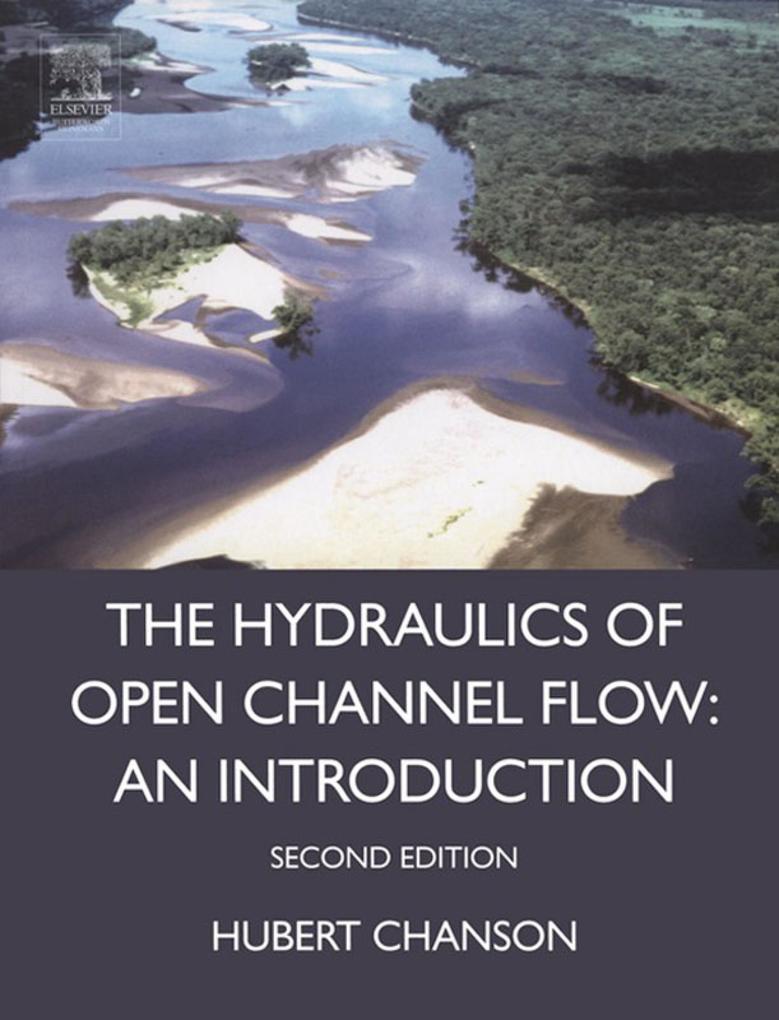
Since the publication of its first edition in 1999, 'The Hydraulics of Open Channel Flow' has been praised by professionals, academics, students and researchers alike as the most practical modern textbook on open channel flow available. This new edition includes substantial new material on hydraulic modelling, in particular addressing unsteady open channel flows. There are also many new exercises and projects, including a major new revision assignment.
This innovative textbook contains numerous examples and practical applications, and is fully illustrated with photographs. Dr Chanson introduces the basic principles of open channel flow and takes readers through the key topics of sediment transport, hydraulic modelling and the design of hydraulic structures.
- Comprehensive coverage of the basic principles of key application areas of the hydraulics of open channel flow
- New exercises and examples added to aid understanding
- Ideal for use by students and lecturers in civil and environmental engineering
Inhaltsverzeichnis
1;Cover;1 2;The Hydraulics of Open Channel Flow: An Introduction;4 3;Contents;6 4;Preface to the first edition;12 5;Preface to the second edition;14 6;Acknowledgements;17 7;About the author;19 8;Dedication;20 9;Glossary;21 9.1;A;21 9.2;B;22 9.3;C;23 9.4;D;26 9.5;E;26 9.6;F;27 9.7;G;28 9.8;H;28 9.9;I;29 9.10;J;30 9.11;K;30 9.12;L;30 9.13;M;30 9.14;N;31 9.15;O;32 9.16;P;32 9.17;R;33 9.18;S;34 9.19;T;36 9.20;U;37 9.21;V;37 9.22;W;38 9.23;Y;39 10;List of symbols;40 10.1;Greek symbols;44 10.2;Subscript;45 10.3;Abbreviations;46 10.4;Reminder;46 10.5;Dimensionless numbers;47 10.6;Notes;48 11;Part 1 Basic Principles of Open Channel Flows;50 11.1;1. Introduction;52 11.1.1;Summary;52 11.1.2;1.1 Presentation;52 11.1.3;1.2 Fluid properties;52 11.1.4;1.3 Static fluids;53 11.1.5;1.4 Open channel flow;55 11.1.5.1;1.4.1 Definition;55 11.1.5.2;1.4.2 Applications;55 11.1.5.3;1.4.3 Discussion;57 11.1.6;1.5 Exercises;57 11.2;2. Fundamental equations;58 11.2.1;Summary;58 11.2.2;2.1 Introduction;58 11.2.3;2.2 The fundamental equations;58 11.2.3.1;2.2.1 Introduction;58 11.2.3.2;2.2.2 The continuity equation;59 11.2.3.3;2.2.3 The momentum equation;60 11.2.3.3.1;The NavierStokes equation;60 11.2.3.3.2;Application of the momentum equation;64 11.2.3.3.3;Application: hydraulic jump;64 11.2.3.3.4;The Bernoulli equation;65 11.2.3.4;2.2.4 The energy equation;67 11.2.4;2.3 Exercises;68 11.3;3. Applications of the Bernoulli equation to open channel flows;70 11.3.1;Summary;70 11.3.2;3.1 Introduction;70 11.3.3;3.2 Application of the Bernoulli equation specific energy;70 11.3.3.1;3.2.1 Bernoulli equation;70 11.3.3.1.1;Summary;70 11.3.3.1.2;Application of the Bernoulli equation;71 11.3.3.1.2.1;Hydrostatic pressure distribution in open channel flow;71 11.3.3.1.2.2;Pressure distribution in open channel flow;72 11.3.3.1.2.3;Mean total head;73 11.3.3.1.2.4;Pitot tube;74 11.3.3.2;3.2.2 Influence of the velocity distribution;76 11.3.3.2.1;Introduction;76 11.3.3.2.2;Velocity distribution;76 11.3.3.2.3;Velocit
y coefficients;76 11.3.3.2.3.1;Momentum correction coefficient;76 11.3.3.2.3.2;Kinetic energy correction coefficient;77 11.3.3.2.3.3;Correction coefficient in the Bernoulli equation;78 11.3.3.3;3.2.3 Specific energy;78 11.3.3.3.1;Definition;78 11.3.3.3.2;Analysis of the specific energy;79 11.3.3.3.2.1;Relationship flow depth versus specific energy;79 11.3.3.3.2.2;Critical flow conditions;80 11.3.3.3.2.3;Application of the specific energy;82 11.3.3.3.3;Discussion;83 11.3.3.3.3.1;Change in specific energy associated with a fixed discharge;83 11.3.3.3.3.2;Case of fixed specific energy;85 11.3.3.4;3.2.4 Limitations of the Bernoulli equation;86 11.3.4;3.3 Froude number;86 11.3.4.1;3.3.1 Definition;86 11.3.4.2;3.3.2 Similarity and Froude number;88 11.3.4.3;3.3.3 Critical conditions and wave celerity;89 11.3.4.4;3.3.4 Analogy with compressible flow;90 11.3.4.5;3.3.5 Critical flows and controls;91 11.3.4.5.1;Occurrence of critical flow control section;91 11.3.4.5.2;Upstream and downstream controls;92 11.3.4.5.3;Application: influence of the channel width;92 11.3.5;3.4 Properties of common open-channel shapes;93 11.3.5.1;3.4.1 Properties;93 11.3.5.2;3.4.2 Critical flow conditions ;94 11.3.6;3.5 Exercises;95 11.4;4. Applications of the momentum principle: hydraulic jump, surge and flow resistance in open channels;99 11.4.1;Summary;99 11.4.2;4.1 Momentum principle and application;99 11.4.2.1;4.1.1 Introduction;99 11.4.2.2;4.1.2 Momentum principle;99 11.4.2.3;4.1.3 Momentum function ;102 11.4.3;4.2 Hydraulic jump;102 11.4.3.1;4.2.1 Presentation;102 11.4.3.1.1;Definition;103 11.4.3.2;4.2.2 Basic equations;103 11.4.3.3;4.2.3 Discussion;109 11.4.3.3.1;Types of hydraulic jump;109 11.4.3.3.2;Length of the roller;110 11.4.3.3.3;Application: energy dissipation basin;110 11.4.4;4.3 Surges and bores;113 11.4.4.1;4.3.1 Introduction;113 11.4.4.2;4.3.2 Equations;113 11.4.4.3;4.3.3 Discussion;116 11.4.4.4;4.3.4 Positive and negative surges;117 11.4.4.4.1;Definitions;117 11.4.4.4.1.1;Positiv
e surges;117 11.4.4.4.1.2;Negative surges;117 11.4.4.4.2;Discussion;118 11.4.5;4.4 Flow resistance in open channels;118 11.4.5.1;4.4.1 Presentation and definitions;118 11.4.5.1.1;Introduction;118 11.4.5.1.2;Head loss;119 11.4.5.1.3;Bottom shear stress and shear velocity;120 11.4.5.1.4;Friction factor calculation;121 11.4.5.2;4.4.2 Flow resistance of open channel flows;124 11.4.5.2.1;Momentum equation in steady uniform equilibrium open channel flow;124 11.4.5.2.2;Chézy coefficient;126 11.4.5.2.3;The GaucklerManning coefficient;128 11.4.5.2.4;The Stricklers coefficient;129 11.4.5.2.5;Particular flow resistance approximations;129 11.4.6;4.5 Flow resistance calculations in engineering practice;130 11.4.6.1;4.5.1 Introduction;130 11.4.6.1.1;Flow resistance calculations in open channels;130 11.4.6.2;4.5.2 Selection of a flow resistance formula;131 11.4.6.3;4.5.3 Flow resistance in a flood plain;135 11.4.7;4.6 Exercises;136 11.4.7.1;Momentum equation;136 11.4.7.2;Hydraulic jump;137 11.4.7.3;Surges and bores;138 11.4.7.4;Flow resistance;139 11.5;5. Uniform flows and gradually varied flows;143 11.5.1;Summary;143 11.5.2;5.1 Uniform flows;143 11.5.2.1;5.1.1 Presentation;143 11.5.2.1.1;Definition;143 11.5.2.1.2;Basic equations;143 11.5.2.2;5.1.2 Discussion;144 11.5.2.2.1;Mild and steep slopes;144 11.5.2.2.2;Critical slope;144 11.5.2.2.3;Application: most efficient cross-sectional shape;145 11.5.2.3;5.1.3 Uniform flow depth in non-rectangular channels;145 11.5.3;5.2 Non-uniform flows;149 11.5.3.1;5.2.1 Introduction;149 11.5.3.2;5.2.2 Equations for GVF: backwater calculation;151 11.5.3.3;5.2.3 Discussion;152 11.5.3.3.1;Singularity of the energy equation;152 11.5.3.3.2;Free-surface profiles;153 11.5.3.4;5.2.4 Backwater computations;155 11.5.3.4.1;Discussion;155 11.5.3.4.2;Standard step method (distance calculated from depth);156 11.5.4;5.3 Exercises;157 11.5.4.1;Critical and uniform flow calculations;158 11.5.4.2;Hydraulic controls;158 11.5.4.3;Backwater calculations;158 11.6;Part
1 Revision exercises;160 11.6.1;Revision exercise No. 1;160 11.6.2;Revision exercise No. 2;161 11.6.3;Revision exercise No. 3;162 11.6.4;Revision exercise No. 4;162 11.6.5;Revision exercise No. 5;163 11.6.6;Revision exercise No. 6;164 11.6.7;Revision exercise No. 7;165 11.6.8;Revision exercise No. 8;165 11.6.9;Revision exercise No. 9;166 11.7;Appendices to Part 1;168 11.7.1;A1.1 Constants and fluid properties;168 11.7.1.1;A1.1.1 Acceleration of gravity;168 11.7.1.1.1;Standard acceleration of gravity;168 11.7.1.1.2;Absolute gravity values;168 11.7.1.2;A1.1.2 Properties of water;169 11.7.1.3;A1.1.3 Gas properties;169 11.7.1.3.1;Basic equations;169 11.7.1.3.2;Physical properties;170 11.7.1.3.3;Compressibility and bulk modulus of elasticity;170 11.7.1.3.4;Celerity of sound;170 11.7.1.3.4.1;Introduction;170 11.7.1.3.4.2;Sound celerity in gas;171 11.7.1.3.4.3;Classical values;171 11.7.1.4;A1.1.4 Atmospheric parameters;171 11.7.1.4.1;Air pressure;171 11.7.1.4.2;Air temperature;171 11.7.1.4.3;Viscosity of air;171 11.7.2;A1.2 Unit conversions;172 11.7.2.1;A1.2.1 Introduction;172 11.7.2.1.1;Principles and rules;172 11.7.2.2;A1.2.2 Units and conversion factors;173 11.7.3;A1.3 Mathematics;174 11.7.3.1;Summary;174 11.7.3.2;A1.3.1 Introduction;174 11.7.3.2.1;References;174 11.7.3.2.2;Notation;174 11.7.3.2.3;Constants;175 11.7.3.3;A1.3.2 Vector operations;175 11.7.3.3.1;Definitions;175 11.7.3.3.2;Vector operations;175 11.7.3.3.2.1;Scalar product of two vectors;175 11.7.3.3.2.2;Vector product;175 11.7.3.4;A1.3.3 Differential and differentiation;176 11.7.3.4.1;Absolute differential;176 11.7.3.4.2;Differential operators;176 11.7.3.4.2.1;Gradient;176 11.7.3.4.2.2;Divergence;176 11.7.3.4.2.3;Curl;176 11.7.3.4.2.4;Laplacian operator;176 11.7.3.4.2.5;Polar coordinates;177 11.7.3.4.3;Operator relationship;177 11.7.3.4.3.1;Gradient;177 11.7.3.4.3.2;Divergence;177 11.7.3.4.3.3;Curl;177 11.7.3.4.3.4;Laplacian;178 11.7.3.5;A1.3.4 Trigonometric functions;178 11.7.3.5.1;Definitions;178 11.7.3.
5.2;Relationships;179 11.7.3.5.3;Inverse trigonometric functions;181 11.7.3.6;A1.3.5 Hyperbolic functions;182 11.7.3.6.1;Definitions;182 11.7.3.6.2;Relationships;183 11.7.3.6.3;Inverse hyperbolic functions;184 11.7.3.7;A1.3.6 Complex numbers;185 11.7.3.7.1;Definition;185 11.7.3.7.2;Properties;186 11.7.3.7.3;Conjugate number;186 11.7.3.8;A1.3.7 Polynomial equations;186 11.7.3.8.1;Presentation;186 11.7.3.8.2;Polynomial equation of degree two;186 11.7.3.8.3;Polynomial equation of degree three;187 11.7.4;A1.4 Alternate depths in open channel flow;187 11.7.4.1;A1.4.1 Presentation;187 11.7.4.2;A1.4.2 Discussion;188 12;Part 2 Introduction to Sediment Transport in Open Channels;190 12.1;6. Introduction to sediment transport in open channels;192 12.1.1;6.1 Introduction;192 12.1.2;6.2 Significance of sediment transport;192 12.1.2.1;6.2.1 Sediment transport in large alluvial streams;192 12.1.2.2;6.2.2 Failures caused by sediment-transport processes;193 12.1.2.2.1;Moore Creek dam, Tamworth, Australia;193 12.1.2.2.2;Old Quipolly dam, Werris Creek, Australia;195 12.1.2.2.3;Mount Isa railway bridges, Queensland, Australia;196 12.1.2.2.4;Shihmen dam, Taiwan;196 12.1.3;6.3 Terminology;197 12.1.4;6.4 Structure of this section;198 12.1.5;6.5 Exercises;199 12.2;7. Sediment transport and sediment properties;200 12.2.1;7.1 Basic concepts;200 12.2.1.1;7.1.1 Definitions;200 12.2.1.2;7.1.2 Bed formation;200 12.2.2;7.2 Physical properties of sediments;204 12.2.2.1;7.2.1 Introduction;204 12.2.2.2;7.2.2 Property of single particles;204 12.2.2.3;7.2.3 Properties of sediment mixture;205 12.2.2.4;7.2.4 Particle size distribution;207 12.2.3;7.3 Particle fall velocity;208 12.2.3.1;7.3.1 Presentation;208 12.2.3.2;7.3.2 Settling velocity of a single particle in still fluid;208 12.2.3.2.1;Discussion: settling velocity of sediment particles;212 12.2.3.3;7.3.3 Effect of sediment concentration;213 12.2.3.4;7.3.4 Effect of turbulence on the settling velocity;214 12.2.4;7.4 Angle of repose;214 12.2.5;7.5 L
aboratory measurements;215 12.2.5.1;7.5.1 Particle size distribution;215 12.2.5.2;7.5.2 Concentration of suspended sediments;215 12.2.6;7.6 Exercises;215 12.2.6.1;Bed forms;215 12.2.6.2;Sediment properties;216 12.2.6.3;Settling velocity;216 12.3;8. Inception of sediment motion occurrence of bed load motion;218 12.3.1;8.1 Introduction;218 12.3.2;8.2 Hydraulics of alluvial streams;218 12.3.2.1;8.2.1 Introduction;218 12.3.2.2;8.2.2 Velocity distributions in turbulent flows;218 12.3.2.3;8.2.3 Velocity profiles in alluvial streams;221 12.3.2.4;8.2.4 Forces acting on a sediment particle;222 12.3.3;8.3 Threshold of sediment bed motion;224 12.3.3.1;8.3.1 Introduction;224 12.3.3.2;8.3.2 Simple dimensional analysis;224 12.3.3.2.1;Discussion;224 12.3.3.3;8.3.3 Experimental observations;225 12.3.3.3.1;Comments;226 12.3.3.4;8.3.4 Discussion;229 12.3.4;8.4 Exercises;231 12.4;9. Inception of suspended-load motion;232 12.4.1;9.1 Presentation;232 12.4.2;9.2 Initiation of suspension and critical bed shear stress;232 12.4.3;9.3 Onset of hyperconcentrated flow;234 12.4.3.1;9.3.1 Definition;234 12.4.3.2;9.3.2 Discussion;234 12.4.4;9.4 Exercises;236 12.5;10. Sediment transport mechanisms: 1. Bed-load transport;237 12.5.1;10.1 Introduction;237 12.5.1.1;Definitions;240 12.5.2;10.2 Empirical correlations of bed-load transport rate;240 12.5.2.1;10.2.1 Introduction;240 12.5.2.2;10.2.2 Empirical bed-load transport predictions;240 12.5.3;10.3 Bed-load calculations;242 12.5.3.1;10.3.1 Presentation;242 12.5.3.2;10.3.2 Bed-load transport rate;243 12.5.3.3;10.3.3 Discussion;243 12.5.4;10.4 Applications;245 12.5.4.1;10.4.1 Application No. 1;245 12.5.4.1.1;First calculations;245 12.5.4.1.2;Approach No. 1: Meyer-Peter correlation;246 12.5.4.1.3;Approach No. 2: Einstein function;246 12.5.4.1.4;Approach No. 3: bed-load calculation (equation (10.5));246 12.5.4.1.5;Summary;247 12.5.4.2;10.4.2 Application No. 2;247 12.5.4.2.1;First calculations;247 12.5.4.2.2;Approach No. 1: Meyer-Peter correlation;248 12.
5.4.2.3;Approach No. 2 : Einstein function;248 12.5.4.2.4;Approach No. 3: bed-load calculation (equation (10.5));248 12.5.4.2.5;Summary;249 12.5.4.3;10.4.3 Application No. 3;249 12.5.4.3.1;First calculations;249 12.5.4.3.2;Approach No. 1: Meyer-Peter correlation;250 12.5.4.3.3;Approach No. 2: Einstein function;250 12.5.4.3.4;Approach No. 3: bed-load calculation (equation (10.5));250 12.5.4.3.5;Summary;250 12.5.4.3.6;Discussion;251 12.5.5;10.5 Exercises;251 12.6;11. Sediment transport mechanisms: 2. Suspended-load transport;253 12.6.1;11.1 Introduction;253 12.6.1.1;Mechanisms of suspended-load transport;254 12.6.2;11.2 Advective diffusion of sediment suspension;255 12.6.2.1;11.2.1 Introduction;255 12.6.2.2;11.2.2 Sediment concentration in streams;255 12.6.2.3;11.2.3 Discussion;256 12.6.2.3.1;Sediment motion and flow regions in sediment-laden flows;256 12.6.2.3.2;Reference concentration and elevation;257 12.6.2.3.3;Sediment diffusivity;257 12.6.3;11.3 Suspended-sediment transport rate;258 12.6.3.1;11.3.1 Presentation;258 12.6.3.2;11.3.2 Calculations;259 12.6.3.3;11.3.3 Application;260 12.6.4;11.4 Hyperconcentrated suspension flows;263 12.6.4.1;11.4.1 Presentation;263 12.6.4.2;11.4.2 Fluid properties;264 12.6.4.2.1;Rheology;264 12.6.4.3;11.4.3 Discussion;265 12.6.5;11.5 Exercises;265 12.7;12. Sediment transport capacity and total sediment transport;267 12.7.1;12.1 Introduction;267 12.7.2;12.2 Total sediment transport rate (sediment transport capacity);267 12.7.2.1;12.2.1 Presentation;267 12.7.2.2;12.2.2 Calculation of the sediment transport capacity;267 12.7.2.3;12.2.3 Discussion;269 12.7.3;12.3 Erosion, accretion and sediment bed motion;269 12.7.3.1;12.3.1 Presentation;269 12.7.3.2;12.3.2 Continuity principle for bed material;270 12.7.3.3;12.3.3 Applications;273 12.7.4;12.4 Sediment transport in alluvial channels;275 12.7.4.1;12.4.1 Introduction;275 12.7.4.2;12.4.2 Influence of bed forms on flow resistance;276 12.7.4.2.1;Skin friction shear stress;276 12.7.4.2.2;Bed-f
orm shear stress;277 12.7.4.2.3;Important;280 12.7.4.3;12.4.3 Design chart;281 12.7.5;12.5 Applications;281 12.7.5.1;12.5.1 Presentation;281 12.7.5.1.1;(A) Determination of the channel characteristics;283 12.7.5.1.2;(B) Selection of the inflow conditions;283 12.7.5.1.3;(C) Calculations of sediment-laden flow properties;283 12.7.5.1.3.1;[1] Preliminary calculations;283 12.7.5.1.3.2;[2] Pre-design calculations to assess the type of bed form;283 12.7.5.1.3.3;[3] Complete flow calculations;283 12.7.5.1.3.4;[4] Sediment transport calculations;284 12.7.5.1.4;Comments;284 12.7.5.2;12.5.2 Application No. 1;284 12.7.5.3;12.5.3 Application No. 2;285 12.7.6;12.6 Exercises;287 12.7.6.1;Continuity equation for sediment material;287 12.7.6.2;Total sediment transport capacity;287 12.8;Part 2 Revision exercises;288 12.8.1;Revision exercise No. 1;288 12.8.2;Revision exercise No. 2;288 12.8.3;Revision exercise No. 3;288 12.8.4;Revision exercise No. 4;288 12.8.5;Revision exercise No. 5;289 12.9;Appendix to Part 2;290 12.9.1;A2.1 Some examples of reservoir sedimentation;290 12.9.1.1;A2.1.1 Introduction;290 12.9.1.2;A2.1.2 Reservoir siltation in Australia;290 12.9.1.2.1;The Umberumberka dam, Broken Hill, NSW;290 12.9.1.2.2;The Korrumbyn Creek dam, Murwillumbah, NSW;290 12.9.1.2.3;The Cunningham Creek dam, Harden, NSW;294 12.9.1.3;A2.1.3 Extreme reservoir siltation;294 13;Part 3 Hydraulic Modelling;296 13.1;13. Summary of basic hydraulic principles;298 13.1.1;13.1 Introduction;298 13.1.2;13.2 Basic principles;298 13.1.2.1;13.2.1 Introduction;298 13.1.2.2;13.2.2 Basic equations in open channel flows;299 13.1.2.3;13.2.3 The Bernoulli equation;299 13.1.3;13.3 Flow resistance;300 13.2;14. Physical modelling of hydraulics;302 13.2.1;14.1 Introduction;302 13.2.1.1;Definition: the physical hydraulic model;302 13.2.1.2;Discussion;302 13.2.2;14.2 Basic principles;303 13.2.2.1;Basic-scale ratios;303 13.2.2.2;Subsequent-scale ratios;305 13.2.3;14.3 Dimensional analysis;305 13.2.3.1;14.3.1 Basic par
ameters;305 13.2.3.2;14.3.2 Dimensional analysis;306 13.2.3.3;14.3.3 Dynamic similarity;307 13.2.3.3.1;Practical considerations;307 13.2.3.4;14.3.4 Scale effects;308 13.2.3.4.1;Discussion;310 13.2.4;14.4 Modelling fully enclosed flows;311 13.2.4.1;14.4.1 Reynolds models;311 13.2.4.2;14.4.2 Discussion;311 13.2.4.2.1;Flow resistance in pipe flows;311 13.2.4.2.2;Skin friction and form drag;312 13.2.4.3;14.4.3 Practical considerations in modelling fully enclosed flows;312 13.2.5;14.5 Modelling free-surface flows;313 13.2.5.1;14.5.1 Presentation;313 13.2.5.2;14.5.2 Modelling hydraulic structures and wave motion;314 13.2.5.3;14.5.3 Modelling rivers and flood plains;314 13.2.5.3.1;Distorted models;314 13.2.5.3.2;Movable-bed models;315 13.2.5.4;14.5.4 Resistance scaling;315 13.2.5.4.1;Distorted models;316 13.2.6;14.6 Design of physical models;317 13.2.6.1;14.6.1 Introduction;317 13.2.6.2;14.6.2 General case;317 13.2.6.3;14.6.3 Distorted-scale models;318 13.2.7;14.7 Summary;318 13.2.8;14.8 Exercises;319 13.3;15. Numerical modelling of steady open channel flows: backwater computations;324 13.3.1;15.1 Introduction;324 13.3.2;15.2 Basic equations;324 13.3.2.1;15.2.1 Presentation;324 13.3.2.2;15.2.2 Basic assumptions;325 13.3.2.3;15.2.3 Applications;326 13.3.2.4;15.2.4 Discussion: flow resistance calculations;326 13.3.2.4.1;Empirical resistance coefficients;327 13.3.2.4.2;Discussion;328 13.3.3;15.3 Backwater calculations;328 13.3.3.1;15.3.1 Presentation;328 13.3.3.2;15.3.2 Method;328 13.3.3.3;15.3.3 Calculations;331 13.3.3.4;15.3.4 Comments;332 13.3.4;15.4 Numerical integration;332 13.3.4.1;15.4.1 Introduction;332 13.3.4.2;15.4.2 Standard step method (depth calculated from distance);333 13.3.4.3;15.4.3 Computational algorithm;334 13.3.4.4;15.4.4 Flood plain calculations;335 13.3.5;15.5 Discussion;336 13.3.6;15.6 Computer models;337 13.3.7;15.7 Exercises;337 13.4;16. Unsteady open channel flows: 1. Basic equations;339 13.4.1;Summary;339 13.4.2;16.1 Introduction;339 13.4.3;16.2 Ba
sic equations;340 13.4.3.1;16.2.1 Presentation;340 13.4.3.2;16.2.2 Integral form of the Saint-Venant equations;342 13.4.3.2.1;Continuity equation;342 13.4.3.2.2;Momentum principle;342 13.4.3.3;16.2.3 Differential form of the Saint-Venant equations;345 13.4.3.4;16.2.4 Flow resistance estimate;347 13.4.3.4.1;Flood plain calculations;349 13.4.3.5;16.2.5 Discussion;349 13.4.4;16.3 Method of characteristics;350 13.4.4.1;16.3.1 Introduction;350 13.4.4.1.1;Discussion: graphical solution of the characteristic system of equations;353 13.4.4.2;16.3.2 Boundary conditions;354 13.4.4.2.1;Initial and boundary conditions;356 13.4.4.3;16.3.3 Application: numerical integration of the method of characteristics;357 13.4.5;16.4 Discussion;359 13.4.5.1;16.4.1 The dynamic equation;359 13.4.5.1.1;Simplification of the dynamic wave equation;359 13.4.5.2;16.4.2 Limitations of the Saint-Venant equations;360 13.4.5.2.1;Flood plains;360 13.4.5.2.2;Non-hydrostatic pressure distributions;360 13.4.5.2.3;Sharp discontinuities;361 13.4.5.3;16.4.3 Concluding remarks;361 13.4.6;16.5 Exercises;362 13.5;17. Unsteady open channel flows: 2. Applications;367 13.5.1;Summary;367 13.5.2;17.1 Introduction;367 13.5.3;17.2 Propagation of waves;368 13.5.3.1;17.2.1 Propagation of a small wave;368 13.5.3.2;17.2.2 Propagation of a known discharge (monoclinal wave);370 13.5.4;17.3 The simple-wave problem;371 13.5.4.1;17.3.1 Basic equations;371 13.5.4.2;17.3.2 Application;373 13.5.5;17.4 Positive and negative surges;377 13.5.5.1;17.4.1 Presentation;377 13.5.5.2;17.4.2 Positive surge;378 13.5.5.2.1;Simple-wave calculations of a positive surge;380 13.5.5.2.2;Positive surge propagating in uniform equilibrium flow;382 13.5.5.3;17.4.3 Negative surge;384 13.5.5.3.1;Sudden complete opening;386 13.5.5.3.2;Sudden partial opening;386 13.5.6;17.5 The kinematic wave problem;388 13.5.6.1;17.5.1 Presentation;388 13.5.6.2;17.5.2 Discussion;389 13.5.7;17.6 The diffusion wave problem;390 13.5.7.1;17.6.1 Presentation;390 13.5.7.2;17.6
.2 Discussion;392 13.5.7.3;17.6.3 The CungeMuskingum method;393 13.5.7.3.1;Empiricism: the Muskingum method;393 13.5.7.3.2;CungeMuskingum method;394 13.5.8;17.7 Dam break wave;395 13.5.8.1;17.7.1 Presentation;395 13.5.8.2;17.7.2 Dam break wave in a horizontal channel;395 13.5.8.2.1;Dam break in a dry channel;395 13.5.8.2.2;Dam break in a horizontal channel initially filled with water;399 13.5.8.3;17.7.3 Discussion;406 13.5.8.3.1;Effects of flow resistance;406 13.5.8.3.2;Dam break wave down a sloping channel;408 13.5.8.3.3;Further dam break wave conditions;410 13.5.9;17.8 Exercises;411 13.6;Part 3 Revision exercises;420 13.6.1;Revision exercise No. 1;420 13.6.2;Revision exercise No. 2;420 13.6.3;Revision exercise No. 3;420 13.6.3.1;Solution;421 13.6.3.2;Remarks;422 13.7;Appendices to Part 3;423 13.7.1;A3.1 Physical modelling of movable boundary hydraulics;423 13.7.1.1;A3.1.1 Introduction;423 13.7.1.2;A3.1.2 Bed-load motion;423 13.7.1.2.1;Occurrence of bed-load motion;423 13.7.1.2.1.1;Discussion;424 13.7.1.2.2;Bed-load sediment transport rate;424 13.7.1.2.3;Summary;425 13.7.1.3;A3.1.3 Suspension;425 13.7.1.3.1;Occurrence of suspension;425 13.7.1.3.2;Suspended-sediment transport rate;425 13.7.1.4;A3.1.4 Time scale in sediment transport;426 13.7.2;A3.2 Extension of the backwater equation;426 13.7.2.1;A3.2.1 Introduction;426 13.7.2.1.1;Presentation;426 13.7.2.1.2;Energy equation;427 13.7.2.2;A3.2.2 Extension of the backwater equations;428 13.7.2.2.1;Flat channel of constant width;428 13.7.2.2.2;Flat channel of non-constant width;428 13.7.2.2.3;Channel of constant width and non-constant slope;428 13.7.2.2.4;Channel of non-constant width and non-constant slope;429 13.7.2.2.5;General case;429 13.7.3;A3.3 Computer calculations of backwater profiles;430 13.7.3.1;A3.3.1 Introduction;430 13.7.3.2;A3.3.2 Practical class;430 13.7.3.3;A3.3.3 Use of HydroChan;431 13.7.3.3.1;Inputs;431 13.7.3.3.2;Outputs;431 13.7.3.3.3;Discussion;432 13.7.3.4;A3.3.4 Application;432 13.7.4;A3.4 Gauss
ian error functions;433 13.7.4.1;A3.4.1 Gaussian error function;433 13.7.4.2;A3.4.2 Complementary error function;434 14;Part 4 Design of Hydraulic Structures;436 14.1;18. Introduction to the design of hydraulic structures;438 14.1.1;18.1 Introduction;438 14.1.2;18.2 Structure of Part 4;438 14.1.3;18.3 Professional design approach;438 14.2;19. Design of weirs and spillways;440 14.2.1;19.1 Introduction;440 14.2.1.1;19.1.1 Definitions: dams and weirs;440 14.2.1.2;19.1.2 Overflow spillway;440 14.2.1.3;19.1.3 Discussion;442 14.2.2;19.2 Crest design;444 14.2.2.1;19.2.1 Introduction;444 14.2.2.2;19.2.2 Broad-crested weir;445 14.2.2.3;19.2.3 Sharp-crested weir;446 14.2.2.4;19.2.4 Ogee-crest weir;448 14.2.2.4.1;Nappe-shaped overflow weir;450 14.2.2.4.2;Discharge characteristics of an ogee crest;451 14.2.2.4.3;Standard crest shapes;452 14.2.3;19.3 Chute design;455 14.2.3.1;19.3.1 Presentation;455 14.2.3.2;19.3.2 Application;456 14.2.3.3;19.3.3 Discussion;457 14.2.4;19.4 Stilling basins and energy dissipators;458 14.2.4.1;19.4.1 Presentation;458 14.2.4.2;19.4.2 Energy dissipation at hydraulic jumps;459 14.2.4.2.1;Introduction;459 14.2.4.2.2;Types of hydraulic jump;461 14.2.4.2.3;Length of the roller;462 14.2.4.3;19.4.3 Stilling basins;462 14.2.4.3.1;Basic shapes;463 14.2.4.3.2;Standard stilling basins;463 14.2.4.4;19.4.4 Discussion;464 14.2.5;19.5 Design procedure;466 14.2.5.1;19.5.1 Introduction;466 14.2.5.2;19.5.2 Dam spillway with hydraulic jump energy dissipator;466 14.2.5.2.1;Matching the JHRC and the TWRC;468 14.2.5.3;19.5.3 Practical considerations;473 14.2.6;19.6 Exercises;473 14.3;20. Design of drop structures and stepped cascades;480 14.3.1;20.1 Introduction;480 14.3.2;20.2 Drop structures;481 14.3.2.1;20.2.1 Introduction;481 14.3.2.2;20.2.2 Free overfall;482 14.3.2.3;20.2.3 Drop impact;485 14.3.2.4;20.2.4 Design criterion;485 14.3.2.5;20.2.5 Discussion;486 14.3.3;20.3 Nappe flow on stepped cascades;487 14.3.3.1;20.3.1 Presentation;487 14.3.3.2;20.3.2 Basic flow prop
erties;487 14.3.3.3;20.3.3 Energy dissipation;487 14.3.4;20.4 Exercises;488 14.4;21. Culvert design;489 14.4.1;21.1 Introduction;489 14.4.2;21.2 Basic features of a culvert;489 14.4.2.1;21.2.1 Definitions;489 14.4.2.2;21.2.2 Ideal-flow calculations;489 14.4.2.3;21.2.3 Design considerations;492 14.4.2.4;21.2.4 Flow through a culvert;492 14.4.2.5;21.2.5 Undular flow in the barrel;493 14.4.3;21.3 Design of standard culverts;494 14.4.3.1;21.3.1 Presentation;494 14.4.3.2;21.3.2 Operation flow patterns;494 14.4.3.3;21.3.3 Discharge characteristics;497 14.4.3.4;21.3.4 Design procedure;500 14.4.3.4.1;The larger value controls;503 14.4.4;21.4 Design of MEL culverts;503 14.4.4.1;21.4.1 Definition;503 14.4.4.2;21.4.2 Basic considerations;509 14.4.4.2.1;Streamlining;509 14.4.4.2.2;Critical flow conditions;509 14.4.4.3;21.4.3 A simple design method;510 14.4.4.3.1;Design process;510 14.4.4.3.2;Discussion;511 14.4.4.3.3;Energy losses;514 14.4.4.4;21.4.4 Discussion;516 14.4.4.4.1;Challenges and practical considerations;516 14.4.4.4.2;Design of multi-cell barrel;518 14.4.4.4.3;Operation for non-design flow conditions;518 14.4.4.5;21.4.5 Benefits of MEL culverts and waterways;519 14.4.5;21.5 Exercises;520 14.5;Part 4 Revision exercises;525 14.5.1;Revision exercise No. 1;525 14.5.2;Revision exercise No. 2 (hydraulic design of a new Gold Creek dam spillway);525 14.5.2.1;Appendix: History of the dam;528 14.5.3;Revision exercise No. 3 (hydraulic design of the Nudgee Road bridge waterway);529 14.5.4;Revision exercise No. 4;532 14.5.4.1;(1) Design (a);532 14.5.4.2;(2) Design (b);533 14.6;Appendices to Part 4;534 14.6.1;A4.1 Spillway chute flow calculations;534 14.6.1.1;A4.1.1 Introduction;534 14.6.1.2;A4.1.2 Developing flow region;535 14.6.1.2.1;Basic equations;535 14.6.1.2.2;Boundary layer growth;535 14.6.1.2.3;Developing flow characteristics;536 14.6.1.3;A4.1.3 Fully developed flow region;537 14.6.1.3.1;Presentation;537 14.6.1.3.2;Uniform equilibrium flow;537 14.6.1.3.3;Gradually varied
flow region;538 14.6.1.4;A4.1.4 Application and practice;539 14.6.1.4.1;Presentation;539 14.6.1.4.2;Practical considerations;540 14.6.1.4.3;Application;541 14.6.2;A4.2 Examples of minimum energy loss weirs;541 14.6.2.1;A4.2.1 Introduction;541 14.6.2.1.1;Design technique;541 14.6.2.1.2;Hydraulic calculations;542 14.6.2.2;A4.2.2 Examples of MEL weirs;543 14.6.3;A4.3 Examples of minimum energy loss culverts and waterways;545 14.6.3.1;A4.3.1 Introduction;545 14.6.3.2;A4.3.2 Historical developments of MEL culverts and waterways;545 14.6.3.3;A4.3.3 Examples of MEL waterways;546 14.6.3.4;A4.3.4 Examples of MEL culverts;548 14.6.3.4.1;Efficient designs;548 14.6.3.5;A4.3.5 Poor designs;554 14.6.4;A4.4 Computer calculations of standard culvert hydraulics;557 14.6.4.1;A4.4.1 Introduction;557 14.6.4.1.1;Discussion;557 14.6.4.1.1.1;Audio-visual material;557 14.6.4.1.1.2;Physical model;557 14.6.4.1.1.3;Computer program;557 14.6.4.2;A4.4.2 Use of HydroCulv;558 14.6.4.2.1;Inputs;558 14.6.4.2.2;Outputs;558 14.6.4.2.3;Discussion;559 14.6.4.3;4.4.3 Application;559 14.6.4.3.1;Comparison physical modelcomputer results;560 15;References;561 16;Additional bibliography;577 16.1;Bibliography: history of hydraulics;577 16.2;Bibliography: audio-visual material;577 16.3;Bibliography: internet references;578 17;Problems;580 17.1;P1. A study of the Marib dam and its sluice system (BC 115 to AD 575);582 17.1.1;Preface;582 17.1.2;P1.1 Introduction;582 17.1.2.1;P1.1.1 Historical background;582 17.1.2.2;P1.1.2 Dam construction;582 17.1.2.2.1;Southern sluice system;584 17.1.2.2.2;Northern sluice system;584 17.1.2.2.3;End of the Marib dam;585 17.1.2.2.4;New Marib dam;585 17.1.2.3;P1.1.3 Chronological summary;585 17.1.2.4;P1.1.4 Bibliography;585 17.1.2.4.1;Books;585 17.1.2.4.2;Journal articles;585 17.1.3;P1.2 Hydraulics problem;586 17.1.3.1;Introductory note;586 17.1.3.2;P1.2.1 Study of the spillways;586 17.1.3.3;P1.2.2 Study of the channel outlet and settling basin;586 17.1.3.4;P1.2.3 Study of the can
al;587 17.1.3.4.1;Notes;588 17.1.4;P1.3 Hydrological study: flood attenuation of the Marib reservoir;589 17.1.4.1;Assumptions;589 17.2;P2. A study of the Moeris reservoir, the Ha-Uar dam and the canal connecting the Nile River and Lake Moeris around BC 2900 to BC 230;590 17.2.1;Preface;590 17.2.2;P2.1 Introduction;590 17.2.2.1;P2.1.1 Presentation;590 17.2.2.2;P2.1.2 The Moeris Lake;590 17.2.2.2.1;Geometrical characteristics;592 17.2.2.2.2;Climatic conditions;592 17.2.2.3;P2.1.3 The Ha-Uar dam;593 17.2.2.3.1;Canal connecting the Nile and the Lake Moeris;593 17.2.2.3.2;Eastern dam;593 17.2.2.4;P2.1.4 Historical events;594 17.2.2.5;P2.1.5 Important dates;594 17.2.2.6;P2.1.6 Discussion;594 17.2.2.7;P2.1.7 Bibliography;595 17.2.2.7.1;Books;595 17.2.2.7.2;Journal articles;595 17.2.3;P2.2 Hydraulics problem;595 17.2.3.1;Introductory note;595 17.2.3.2;P2.2.1 Study of the upper regulator;596 17.2.3.3;P2.2.2 Study of the channel;597 17.2.4;P2.3 Hydrology of Egypt's Lake Moeris;598 17.2.4.1;Part A;598 17.2.4.2;Part B;598 17.3;P3. A study of the Moche river irrigation systems (Peru AD 2001532);600 17.3.1;Preface;600 17.3.2;P3.1 Introduction;600 17.3.2.1;P3.1.1 Presentation;600 17.3.2.1.1;Geography;601 17.3.2.1.2;The Mochican culture;601 17.3.2.1.3;The Chimu empire;601 17.3.2.1.4;The Inca empire;602 17.3.2.2;P3.1.2 The irrigation system of the Moche river valley;603 17.3.2.2.1;Vichansao canal;603 17.3.2.2.2;Inter-valley canal;604 17.3.2.3;P3.1.3 Important dates;605 17.3.2.4;P3.1.4 Bibliography;605 17.3.2.4.1;Books;605 17.3.2.4.2;Journal articles;605 17.3.3;P3.2 Hydraulics problem;606 17.3.3.1;P3.2.1 Study of the Vichansao canal and the diversion dam (Part A);606 17.3.3.2;P3.2.2 Study of the Inter-valley canal;606 17.3.4;P3.3 Hydrology of western Peru;608 17.3.4.1;P3.3.1 Background;608 17.3.4.2;P3.3.2 Question A;609 17.3.4.3;P3.3.3 Question B;609 17.3.4.4;P3.3.4 Question C;609 17.4;P4. Hydraulics of the Nîmes aqueduct;610 17.4.1;Preface;610 17.4.2;P4.1 Introduction;610 17.4.2.1;P
4.1.1 Presentation;610 17.4.2.2;P4.1.2 Hydrology and operation of Roman aqueducts;612 17.4.2.2.1;Hydrology;612 17.4.2.2.2;Regulation basins;613 17.4.2.3;P4.1.3 Culvert design;613 17.4.2.4;P4.1.4 The Nîmes aqueduct;614 17.4.2.5;P4.1.5 Bibliography;615 17.4.2.5.1;Internet references;617 17.4.3;P4.2 Hydraulic study of the Nîmes aqueduct;618 17.4.3.1;P4.2.1 Regulation system;618 17.4.3.2;P4.2.2 Free-surface profile calculations;618 17.4.3.3;P4.2.3 Culvert design;618 18;Suggestion/correction form;622 19;Author index;624 19.1;A;624 19.2;B;624 19.3;C;624 19.4;D;625 19.5;E;625 19.6;F;625 19.7;G;625 19.8;H;625 19.9;I;625 19.10;J;626 19.11;K;626 19.12;L;626 19.13;M;626 19.14;N;626 19.15;O;626 19.16;P;626 19.17;R;627 19.18;S;627 19.19;T;627 19.20;U;627 19.21;V;627 19.22;W;627 19.23;Y;627 19.24;Z;627 20;Subject index;628 20.1;A;628 20.2;B;628 20.3;C;628 20.4;D;629 20.5;E;630 20.6;F;630 20.7;G;630 20.8;H;630 20.9;I;631 20.10;J;631 20.11;K;631 20.12;L;631 20.13;M;631 20.14;N;632 20.15;O;632 20.16;P;632 20.17;R;632 20.18;S;632 20.19;T;633 20.20;U;634 20.21;V;634 20.22;W;634 20.23;Y;634 21;Color Plates;636