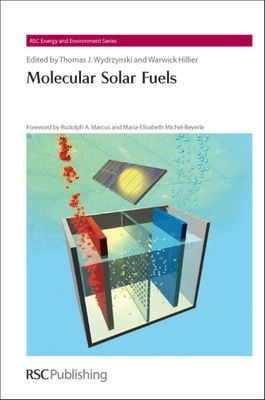
The US Department of Energy Basic Sciences Workshops in 2005 on 'Solar Energy Utilization' and in 2007 on 'Catalysis for Energy' identified the development of solar fuels as a key, carbon-neutral, energy resource for the future. Hydrogen is a promising example as the harmless waste product, on combustion with oxygen, is water. The energy released can be coupled to electrical current generation or the reduction of carbon compounds such as carbon dioxide. If hydrogen could be readily produced from water using solar energy, then an ideal fuel cycle would be possible. The main aim of the book is to present the latest knowledge and chemical prospects in developing hydrogen as a solar fuel. Using oxygenic photosynthesis and hydrogenase enzymes for bio-inspiration, this book presents the strategies for developing photocatalysts to produce a molecular solar fuel. Topics covered include the molecular mechanisms for the capture of light, photochemical conversion to chemical potential, and the storage of energy in chemical bonds, both in the natural systems and the synthetic chemical systems. The book is written by experts from various fields working on the biological and synthetic chemical side of molecular solar fuels to facilitate advancement in this area of research.
Inhaltsverzeichnis
Part I: Perspectives on Molecular Solar Fuels; Chapter 1: Solar Energy Utilization; Chapter 2: Engineering Low-Barrier Photocatalysts; Part II: The Capture of Solar Energy; Chapter 3: Bacteriorhodopsins - The Simplest Phototransducers; Chapter 4: Photosynthetic Light-Harvesting Complexes - The Most Efficient Light Gatherers; Chapter 5: Synthetic Light-Harvesting Pigment Arrays; Part III: Photochemical Conversion of Solar Energy; Chapter 6: Natural Photosynthetic Reaction Centers - Charge Separation with High Quantum Yields; Chapter 7: Wired Reaction Centers; Chapter 8: Bioelectrodes; Chapter 9: Charge Stabilization in Polymer Films; Part IV: Storage of Solar Energy; Chapter 10: The Photosynthetic Water-Splitting Complex; Chapter 11: Biomimics of the Water-Splitting Active Site; Chapter 12: Biological H2 Generation; Chapter 13: Biomimics of the hydrogenase active site; Part V: Future Goals; Chapter 14: Photocatalysts that Split Water and Produce H2 and O2 Within the Same Molecular Assembly; Chapter 15: Light-driven water oxidation and CO2 reduction; Chapter 16: Synthetic Biology