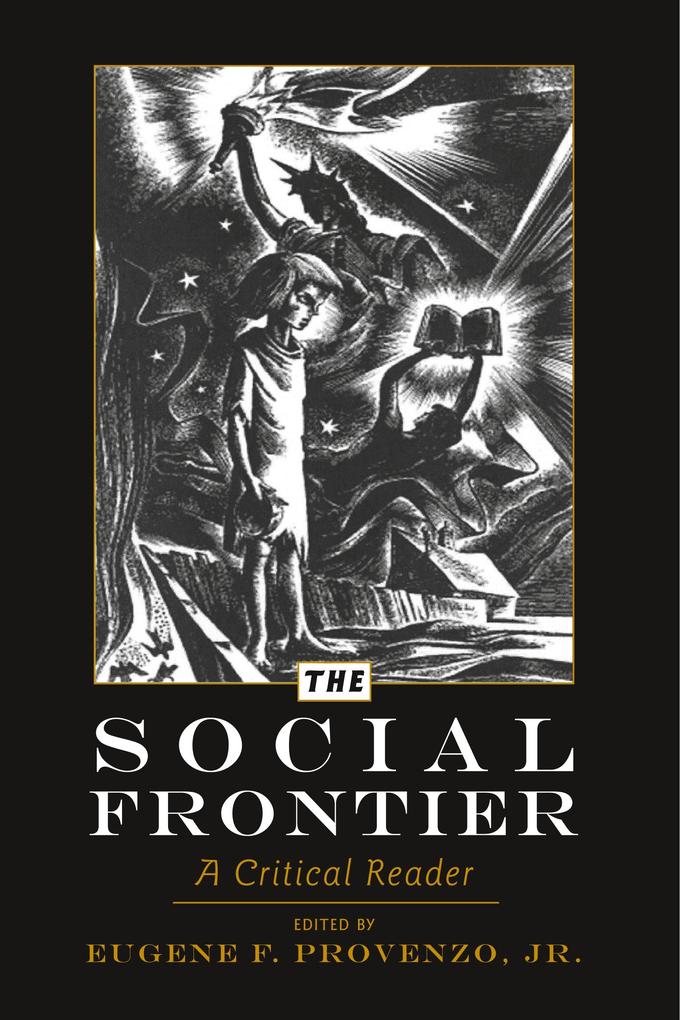
The Social Frontier is the most interesting and important educational journal to emerge from the Great Depression. First published in 1934 by a group of scholars at Teachers College, Columbia University that included George Counts and William Heard Kilpatrick, the magazine represented a conscious act of social and political reconstruction. With a strong «collectivist» orientation, the magazine was widely misperceived as communist in its approach. In fact, its editorial position called for a greater social role for teachers and a more just and equitable system of schooling.
The magazine, which was published for a total of nine years, included articles by major educational and social thinkers of the period from John Dewey to Robert Hutchins and Harold Rugg. Within months of the magazine's first issue it came under attack by right-wing political groups, particularly the Hurst newspaper chain. The Social Frontier: A Critical Reader provides a selection of the most interesting and historically important articles from the magazine with a comprehensive introduction and critical commentaries on the selected articles, which are as timely today as they were when first published seventy-five years ago.
Inhaltsverzeichnis
Contents: The Editorial Board: Orientation The Editorial Board: The Ives Law John Dewey: Can Education Share in Social Reconstruction? The Editorial Board: Collectivism and Collectivism The Editorial Board: Academic Freedom The Editorial Board: Editorial Comments on the Social Frontier The Editorial Board: Champions of Freedom Merle Curti: Our Revolutionary Tradition Harry D. Gideonse: Non-Partisan Education for Political Intelligence The Editorial Board: The Hearst Attack on Academic Freedom Harold Rugg: The American Scholar Faces a Social Crisis The Editorial Board: Seeds of Revolt William F. Ogburn: Prospecting for the Future John Dewey: Toward a National System of Education William H. Kilpatrick: Loyalty Oaths - A Threat to Intelligent Teaching Granville Hicks: The Captive School Norman Thomas: The New Deal - An Appraisal The Editorial Board: Teachers and the Class Struggle John Dewey: The Meaning of Liberalism Charles A. Beard: The Social Studies Curriculum The Editorial Board: The New Aristocracy John Dewey: Liberalism and Equality Myles Horton: The Highlander Folk School The Editorial Board: Shall Teachers Be Free? John Dewey: The Social Significance of Academic Freedom William H. Kilpatrick: Freedom to Develop Social Intelligence Carleton Washburne: Indoctrination Versus Education Lionel Heap: The Little Red Rider John L. Childs: Democracy, Education, and the Class Struggle Wilfred Eberhart: Poems Congress of the United States, House of Representatives: Survey of Teachers and Their Political Opinions John Dewey: Rationality in Education John Dewey: President Hutchins Proposals to Remake Higher Education Robert M. Hutchins: The Crisis in Contemporary Grammar, Rhetoric, and Mr. Dewey John Dewey: The Higher Learning in America John Dewey: Education and Social Change Carl Bode: Footnote Leon Trotsky: Question and Answer The Editorial Board: The Dies Committee and True Americanism Margaret Mead: The Problem of Minorities Jesse H. Newlon: Teachers and Politics - 1940 Harold Rugg: This Has Happened Before The Editorial Board: This War and American Education The Editorial Board: Education and Total War B. Othanel Smith: Essentials of Education for a People s Peace Directors of the Progressive Education Association: The Directors of the Progressive Education Association Vote 12 to 3 to Discontinue Publication Harold Rugg: We Accept in Principle but Reject in Practice. Is This Leadership? The Editorial Board: In Retrospect.
Jetzt reinlesen:
Inhaltsverzeichnis(pdf)