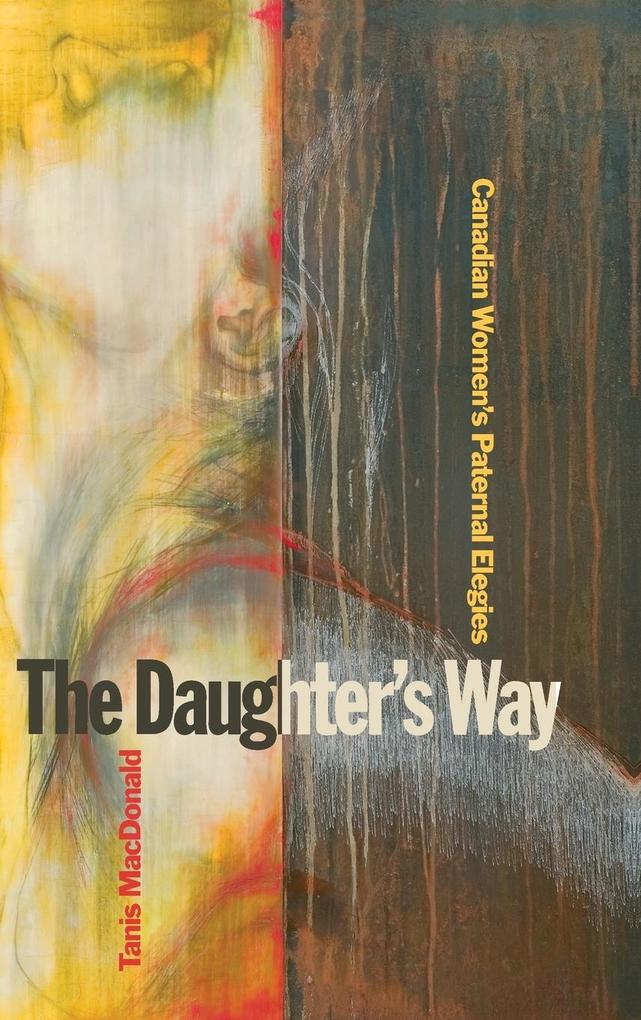
The Daughter's Way investigates negotiations of female subjectivity in twentieth-century Canadian women's elegies with a special emphasis on the father's death as a literary and political watershed. The book examines the work of Dorothy Livesay, P.K. Page, Jay Macpherson, Margaret Atwood, Kristjana Gunnars, Lola Lemire Tostevin, Anne Carson, and Erin Mouré as elegiac daughteronomies - literary artifacts of mourning that grow from the poets' investigation into the function and limitations of elegiac convention. Some poets treat the father as a metaphor for socio-political power, while others explore more personal iterations of loss, but all the poets in The Daughter's Way seek to redefine daughterly duty in a contemporary context by challenging elegiac tradition through questions of genre and gender.
Beginning with psychoanalytical theories of filiation, inheritance, and mourning as they are complicated by feminist challenges to theories of kinship and citizenship, The Daughter's Way debates the efficacy of the literary ""work of mourning"" in twentieth-century Canadian poetry. By investigating the way a daughter's filial piety performs and sometimes reconfigures such work, and situating melancholia as a creative force in women's elegies, the book considers how elegies inquire into the rhetoric of mourning as it is complicated by father-daughter kinship.
Inhaltsverzeichnis
- The Daughter's Way: Canadian Women's Paternal Elegies, by Tanis MacDonald
- Acknowledgements
- Part I: The Daughter's Way
- Introduction: Who Could Not Sing: Elegy and its (Female) Discontents
- Chapter One: Elegy and Authority: The Daughter's Way
- Part II: Daughters of Jove, Daughters of Job: Canadian Modernism's Bloody-Minded Women
- Chapter Two: Two Jove's Daughter: Dorothy Livesay's Elegiac Daughteronomy
- Chapter Three: ""So much militia routed in the man"": P.K. Page's Military Fathers
- Chapter Four: ""Absence, havoc"": Jay Macpherson's Rebellious Daughters
- Part III: Differently Conceived Nations: The Mourner's Journey
- Chapter Five: ""Do what you are good at"": Margaret Atwood's Authorizing Elegies
- Chapter Six: The Pilgrim and the Riddle: Anne Carson's ""The Anthropology of Water""
- Chapter Seven: Gateway Politics, Grief Poetics: West Meets West in Kristjana Gunnars' Zero Hour
- Part IV: Furies and Filles de la Sagesse: Language and Difference at Century's End
- Chapter Eight: Signature, Inheritance, Inquiry: Lola Lemire Tostevin's Cartouches
- Chapter Nine: Elegy of Refusal: Erin Mouré's Furious
- Conclusion: From the Water
- Works Cited
- Index