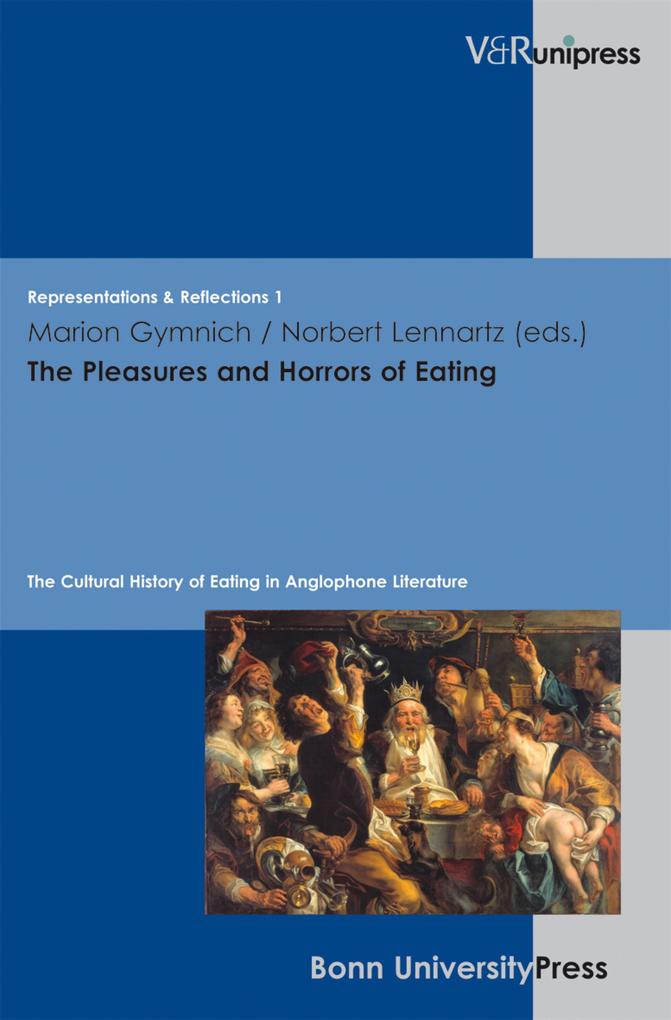
Browsing through books and TV channels we find people pre-occupied with eating, cooking and competing with chefs. Eating and food in today's media have become a form of entertainment and art. A survey of literary history and culture shows to what extent eating used to be closely related to all areas of human life, to religion, eroticism and even to death. In this volume, early modern ideas of feasting, banqueting and culinary pleasures are juxtaposed with post-18th- and 19th-century concepts in which the intake of food is increasingly subjected to moral, theological and economic reservations. In a wide range of essays, various images, rhetorics and poetics of plenty are not only contrasted with the horrors of gluttony, they are also seen in the context of modern phenomena such as the anorexic body or the gourmandizing bête humaine. It is this vexing binary approach to eating and food which this volume traces within a wide chronological framework and which is at the core not only of literature, art and film, but also of a flourishing popular culture.
Inhaltsverzeichnis
1;Contents;6 2;Introduction;10 3;Schollers are Bad Caruers Analogies of Reading and/as Eating in Tudor Physiology and Fiction;24 4;Eating Words: Some Notes on a Metaphor and its Use in Much Ado About Nothing;46 5;Food, Famine, Appetites and Eroticism in Plays by William Shakespeare and his Contemporaries;60 6;Eating, Drinking and Genre in Shakespeare;78 7;Alimentary Metaphors and their Political Context in Shakespeares Plays;96 8;Private Culinary Fantasies, Public Feasting, and the Cannibalization of the Body in Jacobean Drama;110 9;The Play as Banquet: Implications of a Metatheatrical Conceit in Jacobean Caroline Drama;126 10;Donne, Devotion, and Digestion;144 11;Questions of Taste: The Critic as Connoisseur and the Hungry Reader;166 12;Noctes Ambrosianae (1822 35): A Comic Symposium of the Romantic Period;188 13;Dining with the Brontës: Food and Gender Roles in Mid-Victorian England;206 14;Dyspepsia or Digestion: The Pleasures of the Board in Martin Chuzzlewit;222 15;Dont Play with Your Food? Edward Lears Nonsense Cookery and Limericks;238 16;The bête humaine and its Food in Nineteenth-Century Naturalist Fiction;256 17;The Promises of Plenty in Scarcity: Notes on Ascetic Modernism;274 18;Fascination and Pleasure: Aesthetic Culture, Darwinism, and Eating in English Literature at the Turn of the Century (Wells, Housman, Brooke);288 19;Food, Modernity, Modernism: D.H. Lawrence and the Futurist Cookbook;306 20;Food on Intertextual Demand: The Blood Oranges (John Hawkes); The Good Soldier (Ford Madox Ford); As You Like It and What You Will (William Shakespeare);324 21;Good to Eat: Selected Modern American Poems;340 22;All Hands to Dinner! Food and Drink in Naval Stories;362 23;The Pleasures in the Horrors of Eating Human Flesh: Stephen Sondheim and Hugh Wheelers Sweeney Todd;388 24;Eating bok choy in Chinatown The Pleasures and Horrors of Food in Chinese American Literature;410 25;The Battle of the Bulge? Anorexia Nervosa in North American Fiction 1969-1981-2007;430 26
;Armchair Epicures: The Proliferation of Food Programmes on British TV;448