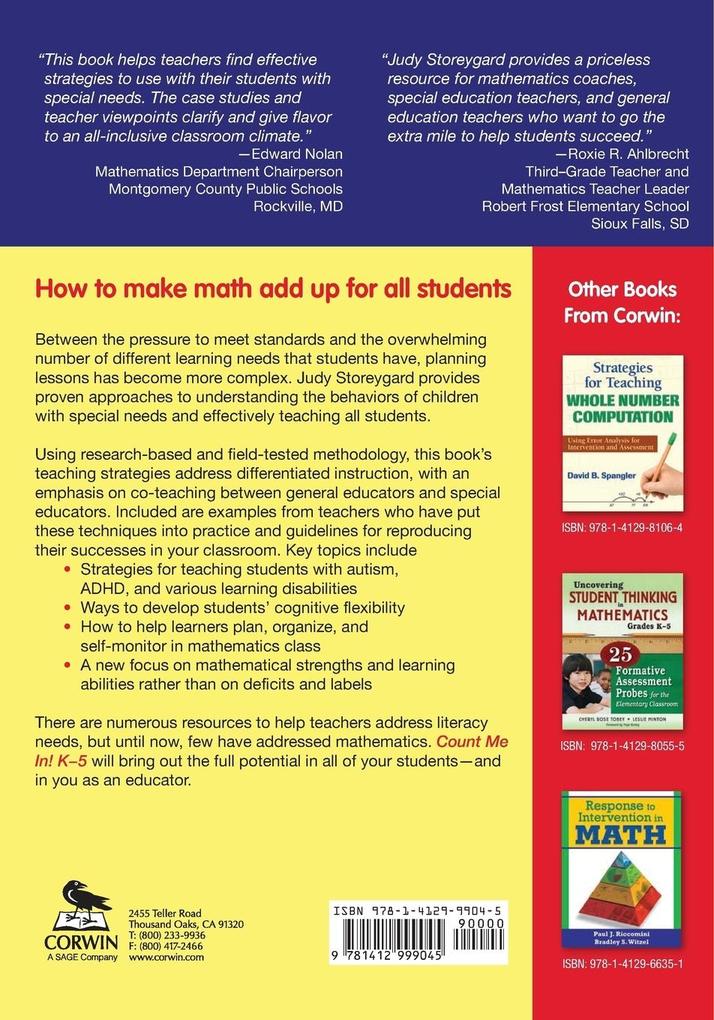
How to make math add up for all students
Between the pressure to meet standards and the overwhelming number of different learning needs that students have, planning lessons has become more complex. Many resources help teachers address literacy needs, but few address mathematics. Using research-based and field-tested methodology, this book provides proven approaches to understanding behaviors and creating teaching programs. Key topics include:
Strategies for teaching students with autism, ADHD, and various learning disabilities
Ways to develop students’ cognitive flexibility
How to help learners plan, organize and self-monitor in mathematics class
A new focus on mathematical strengths and learning ability rather than on deficits and labels
Inhaltsverzeichnis
Foreword by Karen Karp
Acknowledgments
About the Author
About the Contributors
Introduction
1. Building a Culture of Acceptance in the Inclusive Mathematics Classroom
2. Supporting Students in Expressing Mathematical Ideas
3. Helping Students Build the Capacity to Attend to and Focus on Mathematical Ideas
4. Developing Students Cognitive Flexibility
5. Developing Strategies for Students With Memory Difficulties
6. Building Students Abilities to Plan, Organize, and Self-Monitor in Mathematics Class
Conclusion
Glossary and Resources
References
Index