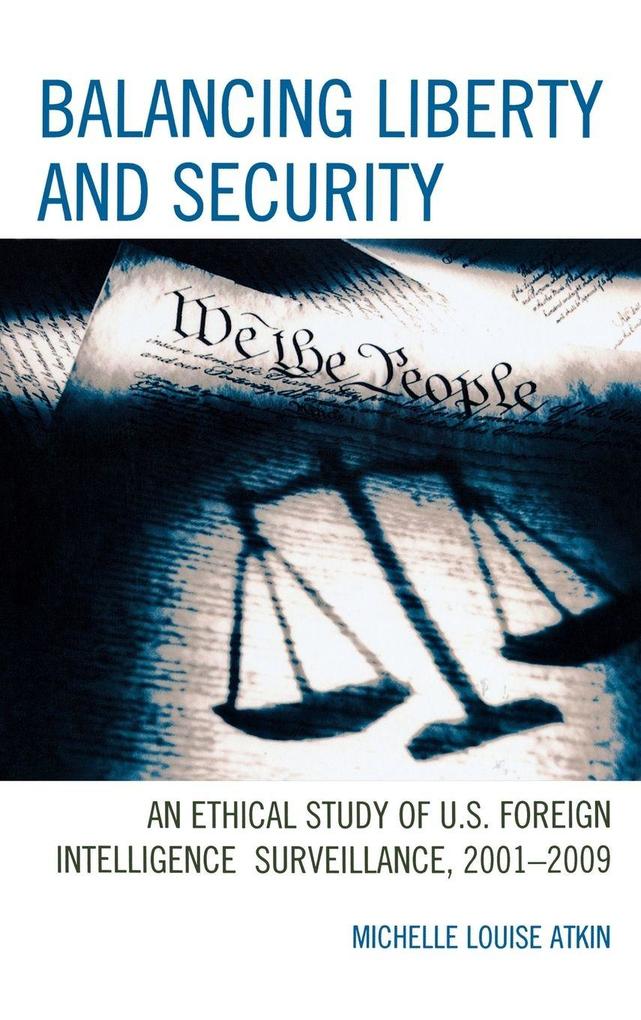
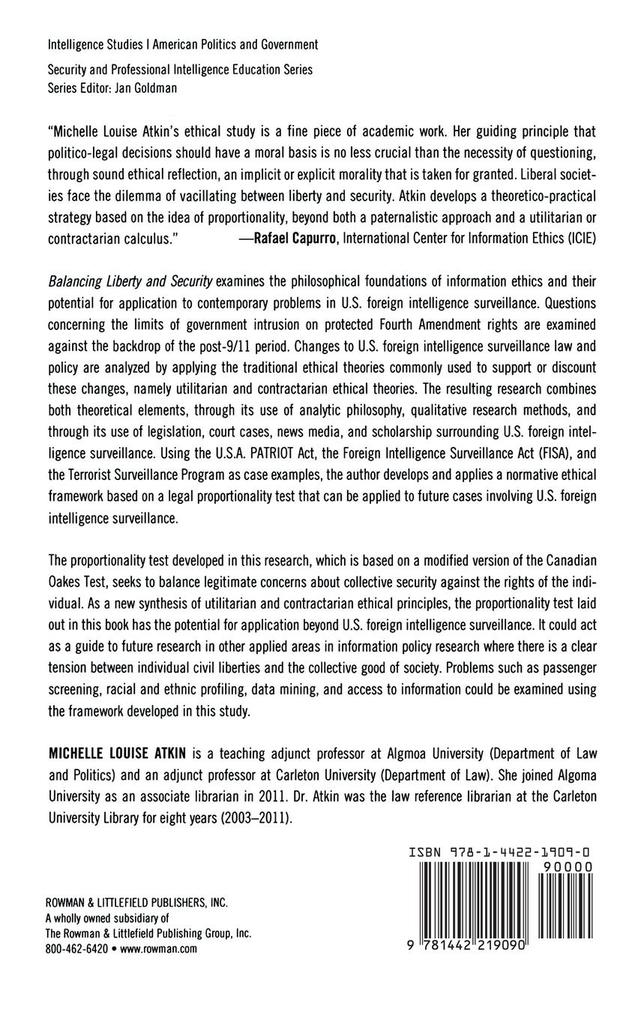
Using the post-9/11 period as its backdrop, the book examines questions concerning the limits of government intrusion on protected Fourth Amendment rights. From the introduction of the U. S. A. PATRIOT Act and amendments to the Foreign Intelligence Surveillance Act (FISA) to the Terrorist Surveillance Program, the author develops and applies a normative ethical framework based on a legal proportionality test that can be applied to future cases involving U. S. foreign intelligence surveillance.
Inhaltsverzeichnis
Preface
Abbreviations
Part I: Information Ethics in the Post 9/11 Period
Chapter 1. Information Ethics in the Post 9/11 Period
Chapter 2. Philosophical Approaches to Information Ethics
Part II: Civil Liberties in Insecure Times: Case Studies in Applied Ethics
Chapter 3. U.S.A. PATRIOT Act: A Necessary Tool in the War on Terror?
Chapter 4. Warrantless Surveillance: An Extension of War Time Powers?
Chapter 5. FISA Modernization: Mitigating Legal Liability
Part III: The Future of Privacy in Post 9/11 America
Chapter 6. Privacy Rights and Limits of Government Intrusion
Chapter 7. The Future of Privacy in Post 9/11 America: Conclusion
Works Cited
Appendices
Legislation
A. U.S.A. PATRIOT ACT of 2001, selected sections
B. U.S.A. PATRIOT Improvement and Reauthorization Act of 2005
C. Protect America Act of 2007, selected sections
D. FISA Amendments Act of 2008, selected sections
Case Summaries
E. R. v. Oakes
F. Terry v. Ohio