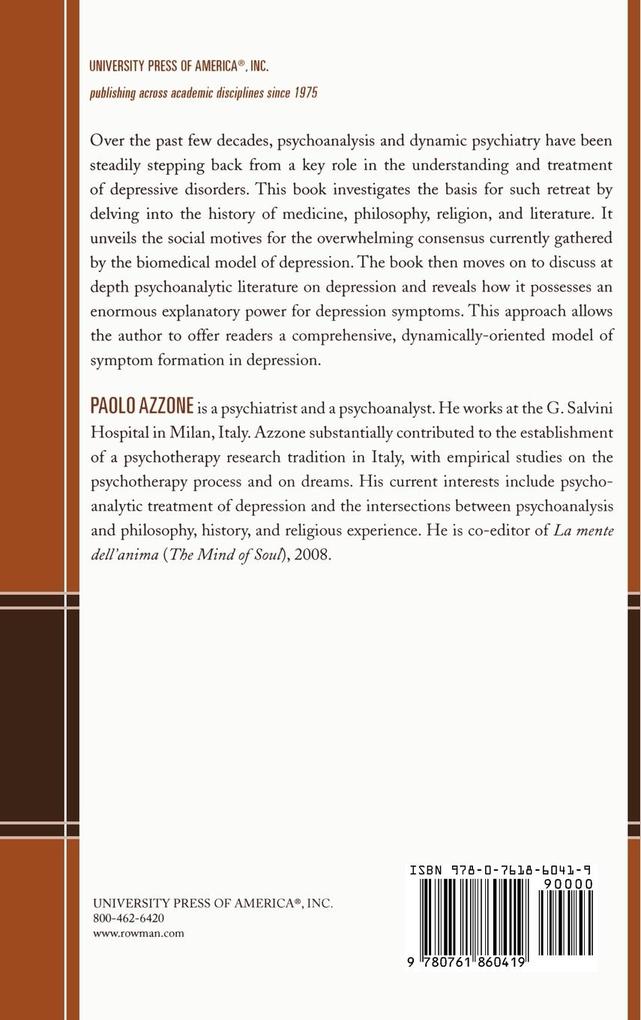
Over the past few decades, psychoanalysis and dynamic psychiatry have been steadily stepping back from a key role in the understanding and treatment of depressive disorders. This book investigates the historical and philosophical basis for such retreat and offer readers a comprehensive, dynamically-oriented model of symptom formation in depression.
Inhaltsverzeichnis
Prefatory Note
Acknowledgments
Part I: Historical Facts: Depression and Other Socially Shared Representations of Pain in Western Civilization
Chapter One: Sadness and Black Bile
Chapter Two: Sadness, Error and Sin
Chapter Three: Sadness and Human Societies
Part II: Clinical Facts
Chapter Four: Looking through a Distortive Mirror: Descriptive Psychopathology of Depression from a Psychoanalytic Perspective
Chapter Five: Encountering Depression in the Context of Mental Health Services: The Contribution from Psychoanalytic Literature
Part III: The Model
Chapter Six: A Model of the Process of Formation of Depressive Symptoms
Chapter Seven: Epistemological Observations
References