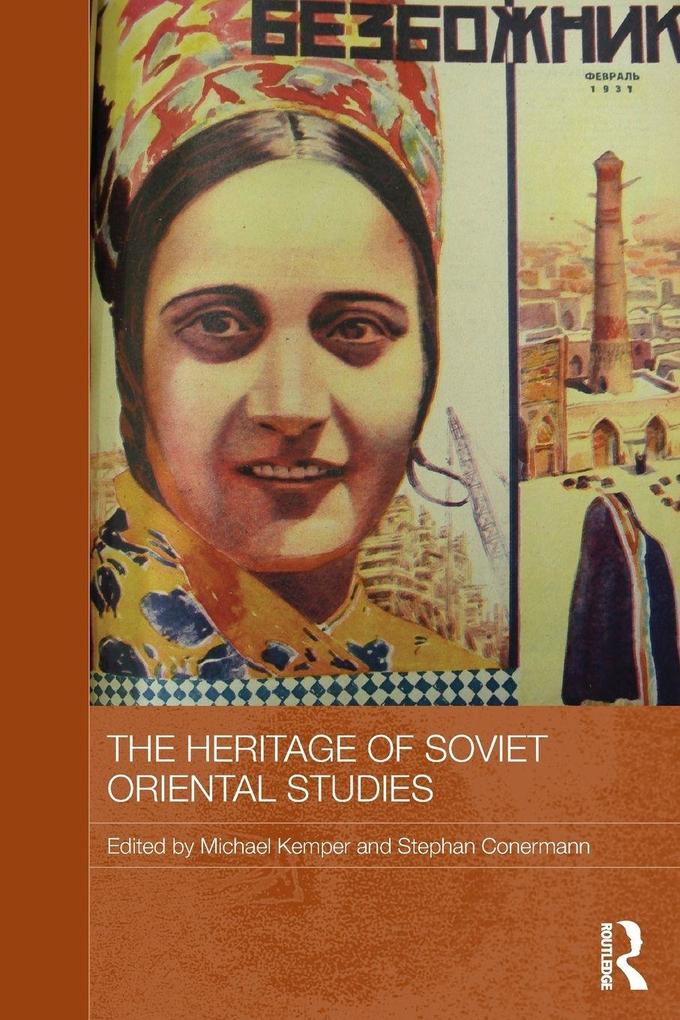
The Western field of oriental studies and orientalism - criticised by Edward Said among others for encouraging the orient to be viewed in a particular way - has a counterpart in Russia and the Soviet Union. This book examines this Russian/Soviet intellectual tradition of oriental scholarship covering Islamic history and Muslim literatures of the USSR republics of Central Asia and the Caucasus.
Inhaltsverzeichnis
Part I: Metropolitan Oriental Studies 1 .The Imperial Roots of Soviet Orientology 2. Profiles under Pressure: Orientalists in Petrograd/Leningrad, 1918-56 3. Between the 'Language of Humanity' and Latinizatsiia: Nikolai Marr and the Oriental Department of the State Public Library in Leningrad 4. The Contribution of Oriental Scholarship to the Soviet Anti-Islamic Discourse: From the Union of Militant Atheists to the Knowledge Society 5. Soviet Kurdology and Kurdish Orientalism 6. Evgenii M. Primakov: Arabist and KGB Middleman, Director and Statesman 7. The Leningrad/St. Petersburg School of Scientific Islamology 8. Hijacking Islam: The Search for a New Soviet Interpretation of Political Islam in 1980 9. Scholars, Advisers and State-Builders: Soviet Afghan Studies in the Light of Present-Day Afghan Development Part II: Oriental Studies and National Historiography in the Republics 10. The Struggle for the Reestablishment of Oriental Studies in Twentieth-Century Kazan 11. Arabic Historical Studies in Twentieth-Century Daghestan 12. The Politics of Scholarship and the Scholarship of Politics: Imperial, Soviet, and Post-Soviet Scholars Studying Tajikistan 13. Conceiving a People's History: The 1920-1936 Discourse on the Kazakh Past 14. Ahmad Yasavi and the Divan-i hikmat in Soviet Scholarship 15. Kyrgyz - Muslim - Central Asian? Recent Approaches to the Study of Kyrgyz Culture in Kyrgyzstan 16. The Transformation of Azerbaijani Orientalists into Islamic Thinkers after 1991