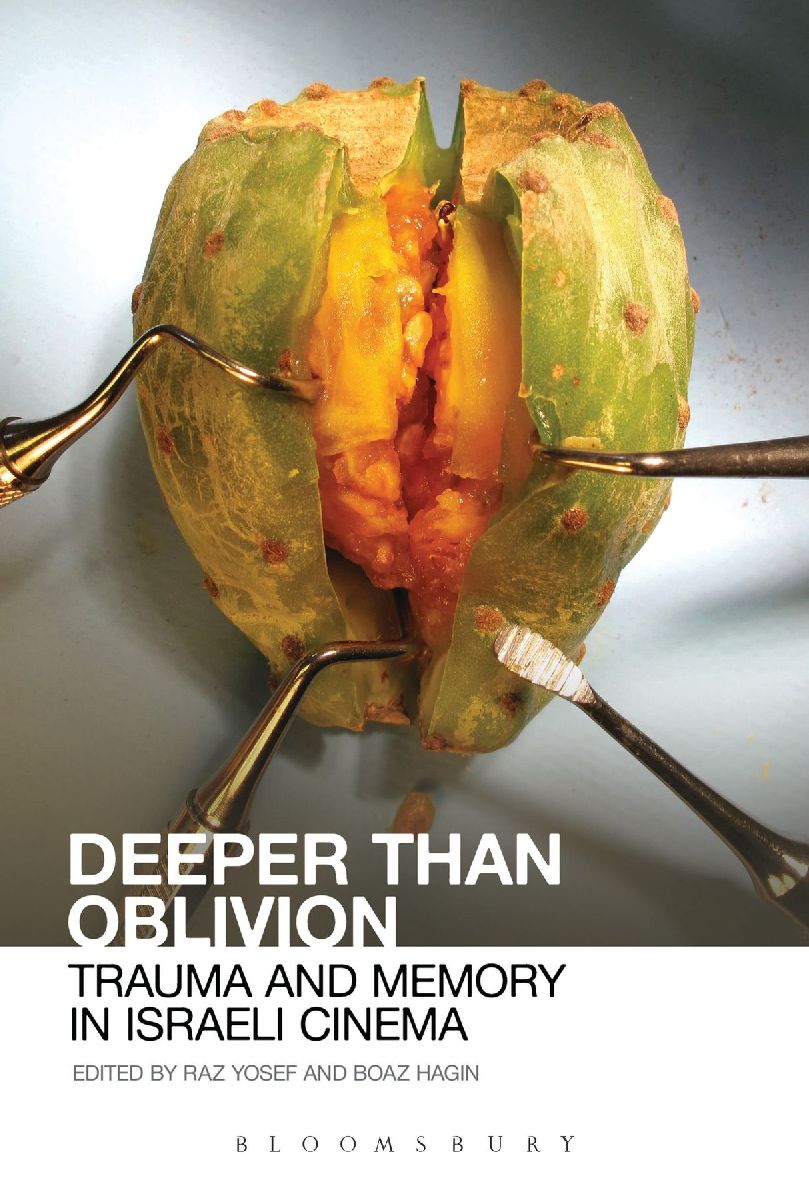
In this collection, leading scholars in both film studies and Israeli studies show that beyond representing familiar historical accounts or striving to offer a more complete and accurate depiction of the past, Israeli cinema has innovatively used trauma and memory to offer insights about Israeli society and to engage with cinematic experimentation and invention.
Tracing a long line of films from the 1940s up to the 2000s, the contributors use close readings of these films not only to reconstruct the past, but also to actively engage with it. Addressing both high-profile and lesser known fiction and non-fiction Israeli films, Deeper than Oblivion underlines the unique aesthetic choices many of these films make in their attempt to confront the difficulties, perhaps even impossibility, of representing trauma. By looking at recent and classic examples of Israeli films that turn to memory and trauma, this book addresses the pressing issues and disputes in the field today.
Inhaltsverzeichnis
Acknowledgments< BR> < BR> Chapter 1: < BR> Sweet on the Inside: Trauma, Memory, and Israeli Cinema< BR> Boaz Hagin and Raz Yosef< BR> < BR> Chapter 2:< BR> Postscript to Israeli Cinema: East/West and the Politics of Representation < BR> Ella Shohat< BR> < BR> Chapter 3:< BR> Gender, the Military, Memory, and the Photograph: Tamar Yarom's To See If I'm Smiling and American Films about Abu Ghraib< BR> Diane Waldman< BR> < BR> Chapter 4:< BR> The Event and the Picture: David Perlov's My Stills and Memories of the Eichmann Trial< BR> Anat Zanger< BR> < BR> Chapter 5:< BR> The Agonies of an Eternal Victim: Zionist Guilt in Avi Mograbi's Happy Birthday, Mr. Mograbi< BR> Shmulik Duvdevani< BR> < BR> Chapter 6:< BR> Traces of War: Memory, Trauma, and the Archive in Joseph Cedar's Beaufort< BR> Raz Yosef< BR> < BR> Chapter 7:< BR> Memory of a Death Foretold: Fathers and Sons in Assi Dayan's "Trilogy" < BR> Yael Munk< BR> < BR> Chapter 8:< BR> Queering Terror: Trauma, Race, and Nationalism in Palestinian and Israeli Gay Cinema during the Second Intifada< BR> Raya Morag< BR> < BR> Chapter 9:< BR>"Our Traumas": Terrorism, Tradition, and Mind Games in Frozen Days< BR> Boaz Hagin< BR> < BR> Chapter 10:< BR> History of Violence: From the Trauma of Expulsion to the Holocaust in Israeli Cinema < BR> Nurith Gertz and Gal Hermoni < BR> < BR> < BR> Chapter 11: < BR> Last Train to the Holocaust< BR> Judd Ne'eman and Nerit Grossman< BR> < BR> < BR> Chapter 12: < BR> Passages, Wars, and Encounters with Death: The Desert as a Site of Memory in Israeli Film< BR> Yael Zerubavel < BR> < BR> < BR> Chapter 13: < BR>"Walking through walls": Documentary Film and Other Technologies of Navigation, Aspiration, and Memory< BR> Janet Walker< BR> < BR> < BR> Notes on Contributors< BR> Index