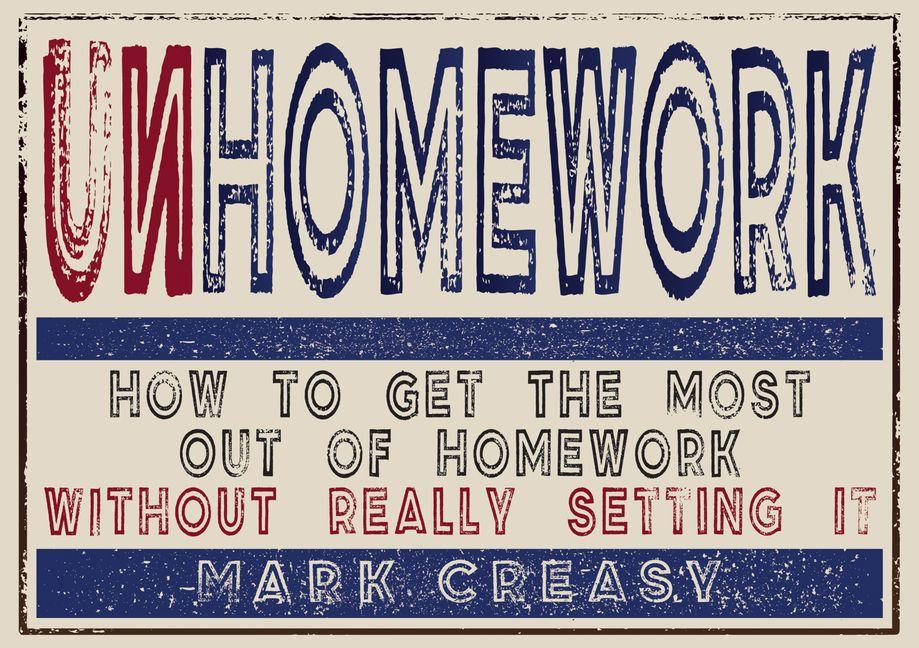
In a dynamic and ever changing education climate it is important to re-evaluate practice in schools on a regular basis in order to ensure that we are doing the right thing for our children. With questions being raised over the value of homework, Mark Creasy advises teachers and parents on how to get the most out of homework without letting it get in the way of their lives. The author provides suggestions for how teachers can make homework more effective, applicable and less pointless; by organising classroom learning to allow children to set their own homework and creating opportunities for learning out of everyday situations.Based on over 10 years of real teaching practice in both primary and secondary schools, Unhomework is both entertaining and informative. It challenges the current status quo of traditionally set homework and provides an insight for parents and educators intohow homework can be done differently, for greater effect as an extension to classroom practice. Unhomework is based on the 5Rs and these are detailed for teachers to implement to secure Unhomework successfully.With practical ideas for teachers across year groups and subjects to use, Unhomework is for teachers (Year 3-13) at all stages of the profession, senior managers in primary and secondary phases, independent and state sectors, parents and teacher trainers.
Inhaltsverzeichnis
Contents: Introduction Chapter One - Unhomework vs homework Homework What is the problem with homework? What is Unhomework? Chapter Two - How to secure Unhomework in your classroom Creating a climate for Unhomework Primary and secondary considerations Introducing Unhomework (the DAD Model) The first few weeks of Unhomework Establishing Unhomework Unhomework Utopia Chapter Three - Parents and Unhomework Parents' role in homework How to introduce Unhomework to parents (the MUM Model) How can parents further support their children? Further activities to support learning Chapter Four - Convincing colleagues 'You're doing what?' Potential challenges Different roles = different problems Their questions, your answers Using children as convincers Chapter Five - Developing Unhomework on a wider canvas In this together Unhomework across a department Whole school Unhomework Cross phase/transition work Chapter Six - My favourite Unhomeworks Examples from primary school children Examples from secondary school children Beyond Unhomework Internet resources Recommended books to support Unhomework Appendix 1 - Personal, Learning and Thinking Skills Appendix 2 - Mission: Homework Bibliography Webography