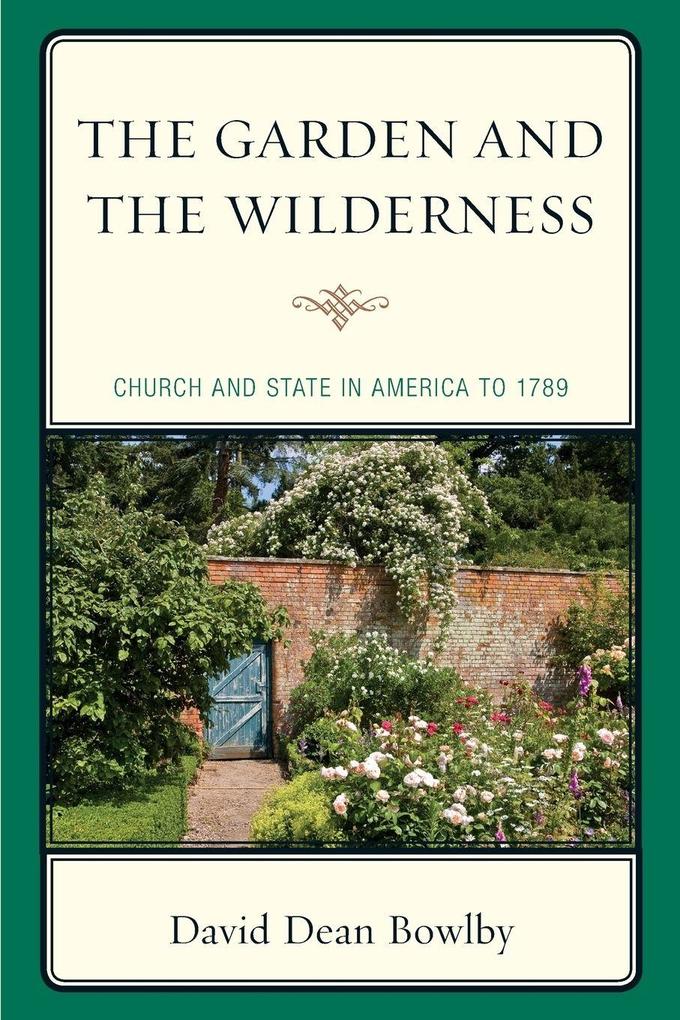
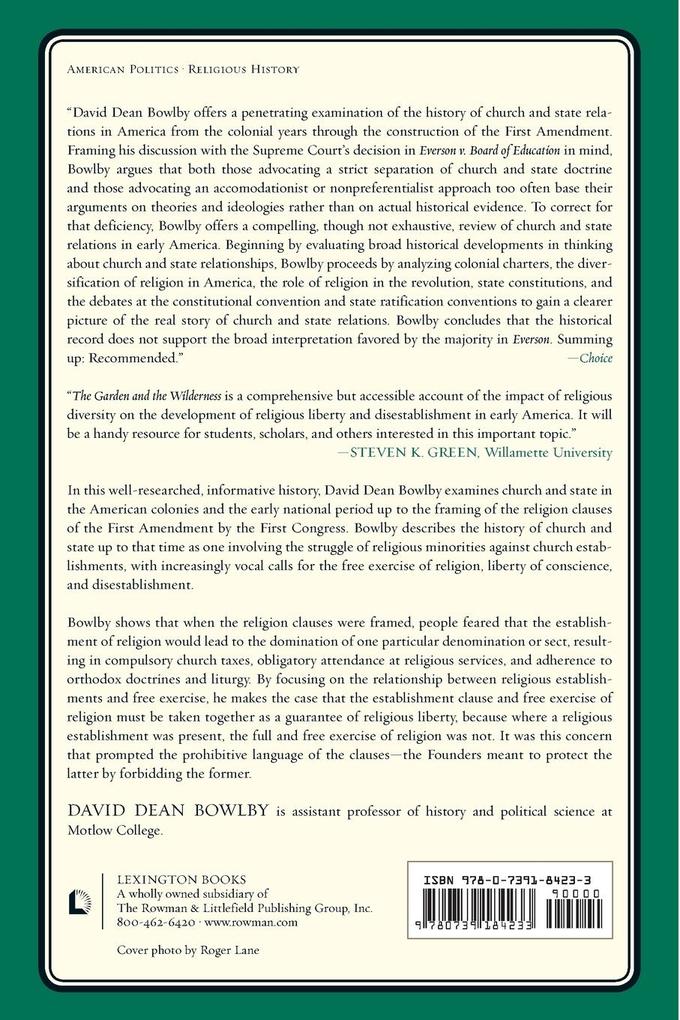
In this well-researched, informative history, David Dean Bowlby examines church and state in the American colonies and the early national period up to the framing of the religion clauses of the First Amendment by the First Congress. Bowlby describes the history of the church and state up to that time as one involving the struggle of religious minorities against church establishments, with increasingly vocal calls for the free exercise of religion, liberty of conscience, and disestablishment.
He shows that when the religion clauses were framed, people feared that the establishment of religion would lead to the domination of one particular denomination or sect, resulting in compulsory church taxes, obligatory attendance at religious services, and adherence to orthodox doctrines and liturgy. By focusing on the relationship between religious establishments and free exercise, he makes the case that the establishment clause and free exercise of religion must be taken together as a guarantee of religious liberty, because where a religious establishment was present the full and free exercise of religion was not. It was this concern that prompted the prohibitive language of the clauses-the Founders meant to protect the latter by forbidding the former.
Inhaltsverzeichnis
Preface
Chapter 1: The Old World Background
Chapter 2: Seventeenth Century New England
Chapter 3: The Seventeenth Century South
Chapter 4: The Middle Colonies in the Seventeenth Century
Chapter 5: Developments in the Eighteenth Century
Chapter 6: The Revolution & New State Constitutions
Chapter 7: The Conventions & First Congress
Conclusion
Bibliography