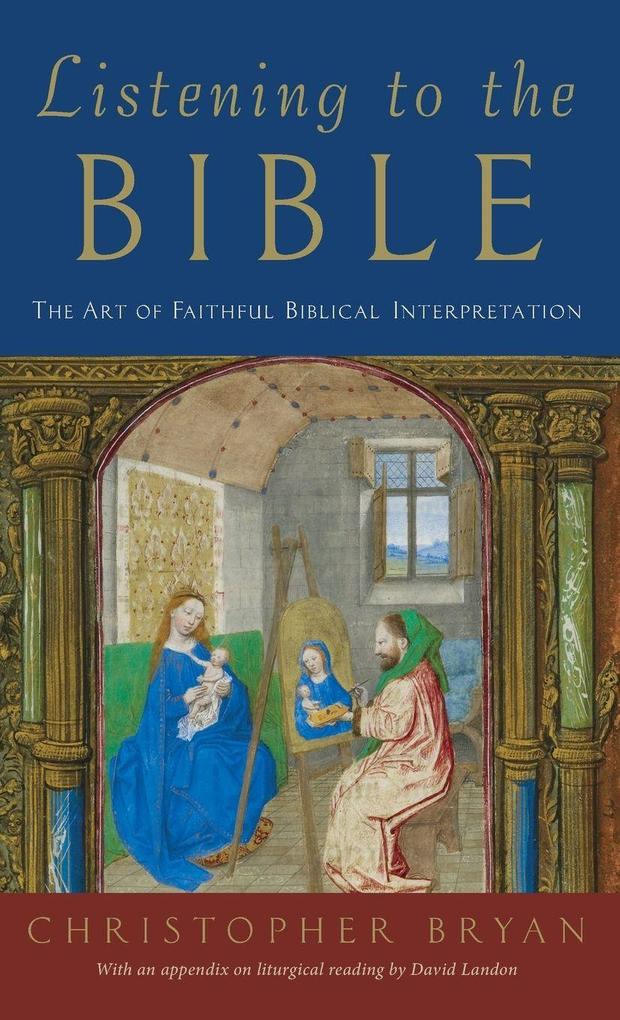
The disengagement of recent academic biblical study from church and synagogue has been widely noted, even by those within the discipline. In Listening to the Bible Christopher Bryan addresses scholars and students who would like to pursue biblical studies in relation to the practice and mission of faith, while also confronting the challenges of the Enlightenment. Is such a combination still possible? And if so, how is the task of biblical interpretation to be understood?
Bryan traces the history of modern approaches to the Bible, particularly historical criticism, noting its successes and failures. Basing his work on a wide knowledge of literature and literary critical theory, and drawing on the insights of the greatest literary critics of the last hundred years, notably Erich Auerbach and George Steiner, Bryan asks: what should be the task of the biblical scholar in the 21st century? Setting the question within this wider context enables Bryan to indicate a series of criteria with which biblical interpreters may do their work, and in the light of which there is no reason why that work cannot relate faithfully to the Church. This does not mean that sound biblical interpretation can ignore the specificity of scientific or historical questions, or dragoon its results into conformity with a set of ecclesial propositions. Bryan argues, however, that interpreters of biblical text cannot ignore its existence in the community of faith; and that although textual interpretation has scientific elements, it is, ultimately, an exercise in imagination.
In the book's final chapter, actor-director David Landon explores some techniques of oral delivery of scripture.
Inhaltsverzeichnis
- Contents
- I. The Division
- II How Did We Get Here?
- III. Why Jowett's Project was Impossible
- IV. The Hermeneutic of Suspicion
- V. So What Do We Do?
- VI. The First Task: Listening to the Individual Voices
- VII. A Digression: "Great Literature?"
- VI. The Second Task: Relating the Parts to the Whole
- 1. The Rule of Faith and the Question of History.
- 2. The Different Voices and Their Different Accounts of the History
- VII. The Third Task: So What Now?
- 1. Why We Must Ask the Question
- 2. The Scriptures as Interpretative Narrative
- 3. The Exercise of Christian Imagination
- VIII. The Drama of the Word
- Epilogue
- Appendix (by David Landon): Speaking the Word: A Guide to Liturgical Reading
- Selected Bibliography
- Notes
- Index