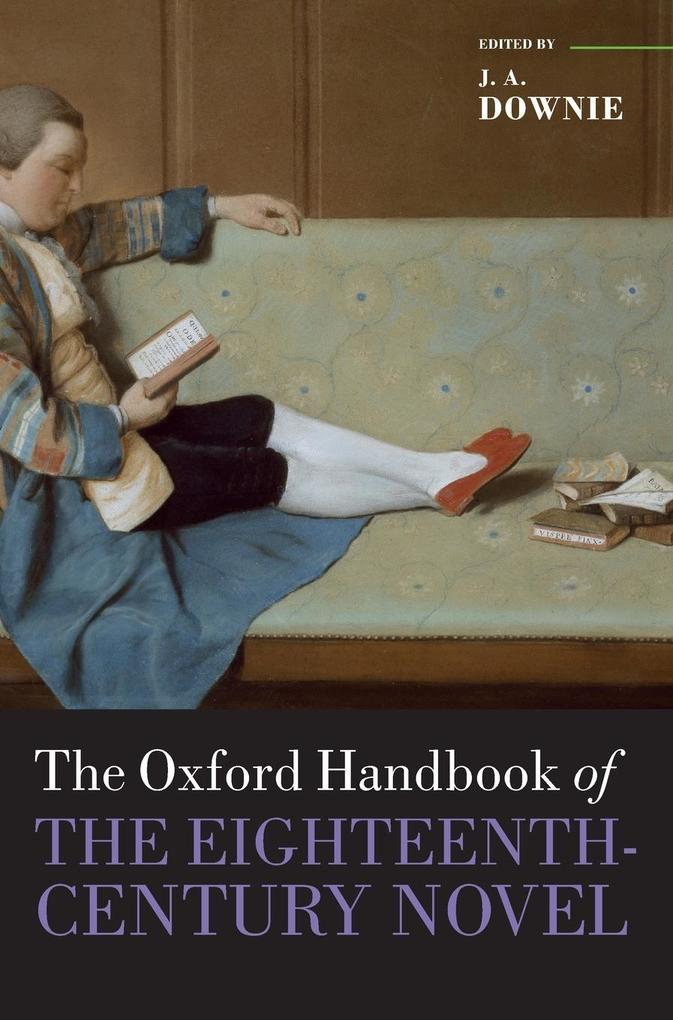
The Oxford Handbook of the Eighteenth Century Novel is the first published book to cover the 'eighteenth-century English novel' in its entirety. It is an indispensible resource for those with an interest in the history of the novel.
Although the emergence of the English novel is generally regarded as an eighteenth-century phenomenon, this is the first book to be published professing to cover the 'eighteenth-century English novel' in its entirety. This Handbook surveys the development of the English novel during the 'long' eighteenth century-in other words, from the later seventeenth century right through to the first three decades of the nineteenth century when, with the publication of the novels of Jane Austen and Walter Scott, 'the novel' finally gained critical acceptance and assumed the position of cultural hegemony it enjoyed for over a century. By situating the novels of the period which are still read today against the background of the hundreds published between 1660 and 1830, this Handbook not only covers those 'masters and mistresses' of early prose fiction-such as Defoe, Richardson, Fielding, Sterne, Burney, Scott and Austen-who are still acknowledged to be seminal figures in the emergence and development of the English novel, but also the significant number of recently-rediscovered novelists who were popular in their own day. At the same time, its comprehensive coverage of cultural contexts not considered by any existing study, but which are central to the emergence of the novel, such as the book trade and the mechanics of book production, copyright and censorship, the growth of the reading public, the economics of culture both in London and in the provinces, and the re-printing of popular fiction after 1774, offers unique insight into the making of the English novel.
Inhaltsverzeichnis
- Preface
- PART I: 1660-1770: FROM 'NOVELS' TO WHAT IS NOT YET 'THE NOVEL'
- The economics of culture 1660-1770
- 1: Peter Hinds: The Book Trade at the Turn of the Eighteenth Century
- 2: Michael F. Suarez, S. J.: Business of Fiction: Novel Publishing, 1695-1774
- 3: Pat Rogers: Social Structure, Class, and Gender, 1660-1770
- 4: Brian Cowan: Making Publics and Making Novels: Post-Habermasian Perspectives
- Influences on the early English novel
- 5: Walter L. Reed: The Continental Influence on the Eighteenth-Century Novel: 'The English Improve What Others Invent'
- 6: Gillian Dow: Criss-crossing the Channel: The French Novel and English Translation
- 7: W. R. Owens: Religious Writings and the Early Novel
- 8: Cynthia Wall: Travel Literature and the Early Novel
- 9: Rebecca Bullard: Secret History, Politics, and the Early Novel
- Early 'Novels' and Novelists
- 10: Thomas Keymer: Restoration Fiction
- 11: David Oakleaf: Testing the Market: Robinson Crusoe and After
- 12: Clement Hawes: Gulliver Effects
- 13: Peter Sabor: 'Labours of the Press': The Response to Pamela
- 14: John Dussinger: Samuel Richardson and the Epistolary Novel
- 15: Scott Black: Henry Fielding and the Progress of Romance
- 16: Simon Dickie: Novels of the 1750s
- 17: Tim Parnell: 'Tristram is the Fashion': Sterne, Shandyism, and the sentimental novel
- Epilogue: The English Novel at the end of the 1760s
- PART II: 1770-1832: THE MAKING OF THE ENGLISH NOVEL
- Literary Production 1770-1832
- 18: John Feather: The Book Trade 1770-1832
- 19: Robert Folkenflik: The Rise of the Illustrated English Novel to 1832
- Authors, readers, reviewers, and critics, 1770-1832
- 20: W. A. Speck: Social Structure, Class and Gender, 1770-1832
- 21: Barbara M. Benedict: 'Male' and 'Female' novels? Gendered Fictions and the Reading Public, 1770-1832
- 22: Antonia Forster: Reviewing the Novel
- 23: Peter Garside: 'Ordering' Novels: Describing Prose Fiction, 1770-1832
- Novels and Novelists, 1770-1832
- 24: Ros Ballaster: The Rise and Decline of the Epistolary Novel, 1770-1832
- 25: Geoffrey Sill: Developments in Sentimental Fiction
- 26: Deirdre Shauna Lynch: Philosophical Fictions and 'Jacobin' Novels in the 1790s
- 27: M. O. Grenby: The Anti-Jacobin Novel
- 28: David H. Richter: The Gothic Novel and the Lingering Appeal of Romance
- 29: Markman Ellis: Novel and Empire
- 30: Gary Kelly: The Popular Novel 1790 to 1820
- 31: Lisa Wood: The Evangelical Novel
- 32: Jan Fergus: 'Pictures of domestic Life in Country Villages': Jane Austen and the 'Realist' Novel
- 33: Ina Ferris: Authorizing the Novel: Walter Scott's Historical Fiction
- 34: Gary Dyer: Parody and Satire in the Novel, 1770-1832
- Epilogue