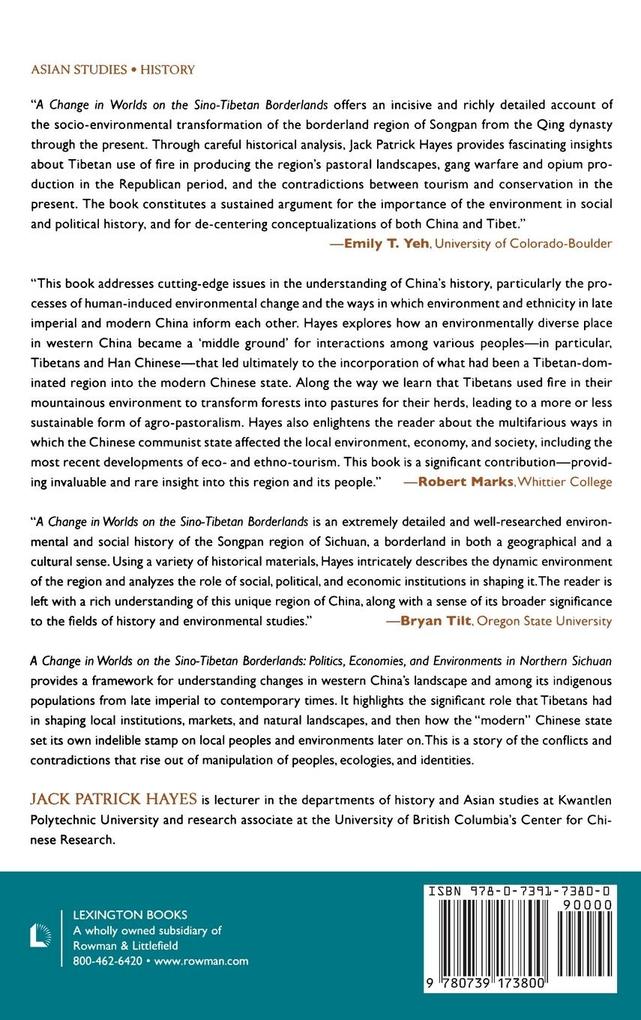
This study of Sino-Tibetan northern Sichuan provides a framework for understanding changes in western China’s landscape and among its indigenous populations from late imperial to contemporary times. It highlights the significant role that Tibetans first had in shaping local institutions, markets, and natural landscapes, and then how the "modern" Chinese state later set its own indelible stamp on local people and environments. This is a story of the conflicts and contradictions that rise out of manipulation of peoples, ecologies, and identities.
Inhaltsverzeichnis
Introduction
Chapter 1: Songpan: People, Environments, and Histories
Chapter 2: Pastoral Pursuits, Mining, and Poppies: Resources, Authority, and Resistance Under Local and Warlord Regimes
Chapter 3: Inscribing the State on the Landscape: State Models for Tibetans, Herds, and Forests in Songpan
Chapter 4: Landscapes and Civilization: Tourism, Ecology, and Ethnicity in Modern Songpan
Chapter 5: Conclusion