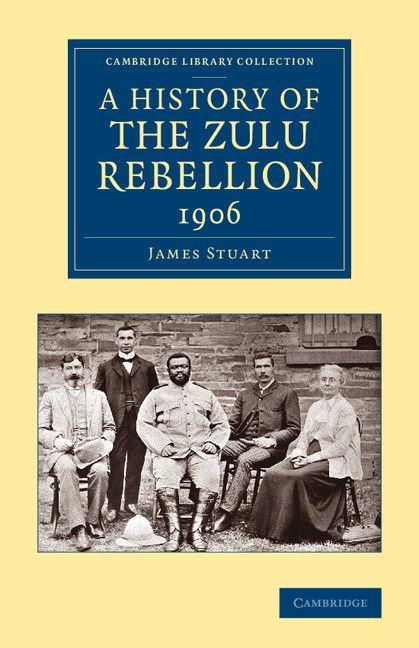
After many years of relatively peaceful coexistence, a dispute over taxation in 1906 stirred thousands of Zulus into bloody revolt against the British in Natal. Following the rebellion's defeat, James Stuart (1868-1942), an expert on Zulu customs and history, was commissioned to write the official history of military operations. It later became a private project of much broader scope. Providing a thoroughly researched account of the rebellion, Stuart wrote using the full breadth of his knowledge of Africa, drawing on the contacts and materials that became available to him during his time as an intelligence officer in the Natal Field Artillery. First published in 1913, the work also covers the administration of the Zulu territories and goes on to investigate the aftermath of the rebellion, including the arrest and imprisonment of the Zulu king, Dinuzulu.
Inhaltsverzeichnis
Preface; 1. Introduction; 2. System of native administration; 3. State of military organization on the outbreak of rebellion; 4. Zulu military system; 5. Events and conditions antecedent to outbreak of hostilities; 6. Mobilization and demonstrations in force; 7. Outbreak at Mpanza; 8. Flight of Bampata to Nkandhla forests; 9. The Nkandhla forests; 10. Mobilization of Zululand field force; 11. Converging movement on Cetshwayo's grave; 12. Operations by (a) Umvoti field force, (b) Mackay's column; 13. Further operations by Zululand field force; 14. Action at Mome Gorge; 15. State of affairs at Umsinga; 16. Concluding operations; 17. General concentration at Thring's Post; 18. Action at Izinsimba; 19. Some lessons of the rebellion; 20. Native Affairs Commission; 21. Dinuzulu expedition; 22. Preliminary examination and trial of Dinuzulu; 23. Review of policy followed in connection with Dinuzulu; 24. Conclusion; Appendices; Index.