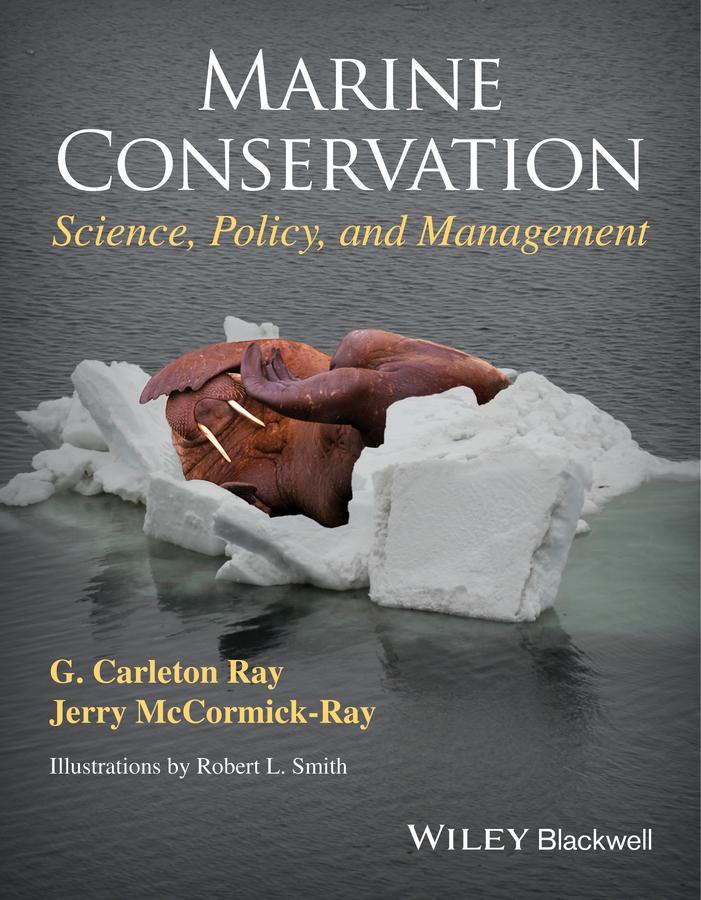
Providing a guide for marine conservation practice, Marine Conservation takes a whole-systems approach, covering major advances in marine ecosystem understanding. Its premise is that conservation must be informed by the natural histories of organisms together with the hierarchy of scale-related linkages and ecosystem processes. The authors introduce a broad range of overlapping issues and the conservation mechanisms that have been devised to achieve marine conservation goals. The book provides students and conservation practitioners with a framework for thoughtful, critical thinking in order to incite innovation in the 21st century.
"Marine Conservation presents a scholarly but eminently readable case for the necessity of a systems approach to conserving the oceans, combining superb introductions to the science, law and policy frameworks with carefully chosen case studies. This superb volume is a must for anyone interested in marine conservation, from students and practitioners to lay readers and policy-makers."
--Simon Levin, George M. Moffett Professor of Biology, Department of Ecology & Evolutionary Biology, Princeton University
Inhaltsverzeichnis
Contributors, ix
Preface, xii
About the companion website, xiv
1 IN PURSUIT OF MARINE CONSERVATION, 1
1. 1 The emergence of modern marine conservation, 1
1. 2 Defining "marine conservation", 4
1. 3 Marine conservation's scope, 4
1. 4 Adapting marine conservation to the 21st century, 5
2 MARINE CONSERVATION ISSUES, 7
2. 1 Igniting marine conservation concern, 7
2. 2 Primary issues: loss of marine biodiversity, 7
2. 3 Secondary issues: human activities, 13
2. 4 Tertiary issues: emergent and unintended consequences, 30
2. 5 The challenge for the 21st century, 35
3 MARINE CONSERVATION MECHANISMS, 43
3. 1 The toolkit, 43
3. 2 Biological conservation, 43
3. 3 Spatially explicit conservation, 48
3. 4 Governance: policy, strategy, tactics, 50
3. 5 Policy instruments for marine conservation, 54
3. 6 Management concepts, 65
3. 7 Agents for conservation, 68
3. 8 Conclusion, 70
4 MARINE SYSTEMS: THE BASE FOR CONSERVATION, 74
4. 1 A systems approach, 74
4. 2 Dynamic planetary forces, 74
4. 3 Major ocean structures and conditions, 78
4. 4 Planetary cycles, 81
4. 5 Major planetary interfaces, 82
4. 6 The dynamic coastal realm, 86
4. 7 The coastal realm: an ecosystem of global importance, 92
4. 8 The ecosystem concept, 97
4. 9 Ecosystem base for conservation, 99
5 NATURAL HISTORY OF MARINE ORGANISMS, 105
5. 1 What is natural history? , 105
5. 2 Darwinian evolution, 105
5. 3 Diversity of marine life, 106
5. 4 Life history, 112
5. 5 Biological associations, 123
5. 6 Biogeographic patterns in space and time, 126
5. 7 Biotic functional diversity, 127
5. 8 "Seascape" as an organizing principle, 131
5. 9 Natural history: the basis for conservation, 132
6 CHESAPEAKE BAY: ESTUARINE RESTORATION WITH AN ENVIRONMENTAL DEBT, 137
6. 1 The great shellfish bay, 137
6. 2 Ecological linkages to natural wealth, 137
6. 3 Eastern oyster: quintessential estuarine species, 151
6. 4 From resource abundance to ecosystem change, 154
6. 5 Bay restoration: chartering a course, 163
6. 6 People shall judge, 165
7 BERING SEA SEALS AND WALRUSES: RESPONSES TO ENVIRONMENTAL CHANGE, 171
G. Carleton Ray, Gary L. Hufford, Thomas R. Loughlin and Igor Krupnik
7. 1 A short history of dramatic change, 171
7. 2 Biophysical setting, 172
7. 3 Marine mammals of the southeastern Bering Sea, 174
7. 4 Ice-dependent pinnipeds of the northern Bering Sea, 179
7. 5 Do large marine mammals matter? , 186
7. 6 The conflict arena, 191
7. 7 Cultural factors: subsistence hunting, traditional knowledge, and community well-being, 194
7. 8 Are Beringian pinnipeds and the Bering Sea ecosystem at risk? , 197
8 THE BAHAMAS: CONSERVATION FOR A TROPICAL ISLAND NATION, 200
8. 1 A nation of islands, 200
8. 2 Biophysical and social setting, 200
8. 3 Conservation issues, 207
8. 4 Governance for sustainability, 222
8. 5 Island system at a crossroads, 230
9 THE ISLES OF SCILLY: SUSTAINING BIODIVERSITY, 234
Richard M. Warwick
9. 1 Setting the scene, 234
9. 2 Physical and biogeographic setting, 234
9. 3 Measuring and measures of biodiversity, 237
9. 4 Sustaining biodiversity from possible threats, 253
9. 5 Conservation legislation, mechanisms, and voluntary actions, 256
9. 6 The conservation status of Scilly, 260
10 GWAII HAANAS: FROM CONFLICT TO COOPERATIVE MANAGEMENT, 262
N. A. Sloan
10. 1 Nation-to-nation pursuit of land-sea conservation, 262
10. 2 Natural heritage, 263
10. 3 Cultural and commercial heritage, 272
10. 4 Integrating land-sea conservation, 278
10. 5 Crucible for ecosystem-based management, 284
11 SOUTH AFRICA: COASTAL-MARINE CONSERVATION AND RESOURCE MANAGEMENT IN A DYNAMIC SOCIO-POLITICAL ENVIRONMENT, 288
Barry Clark and Allan Heydorn
11. 1 A challenge for governance, 288
11. 2 South Africa's coastal realm: physical, biotic, and human setting, 289
11. 3 Major conservation issues of South African coasts, 294
11. 4 Coastal resource management: past and present, 303
11. 5 In pursuit of the Kogelberg Biosphere Reserve, 306
11. 6 The future of coastal management in South Africa, 311
12 SPECIES-DRIVEN CONSERVATION OF PATAGONIAN SEASCAPES, 315
Claudio Campagna, Valeria Falabella, and Victoria Zavattieri
12. 1 Darwin's Patagonia, 315
12. 2 A conservation dilemma, 316
12. 3 Oceanographic and biogeographic settings, 319
12. 4 Conservation setting: the status of a non-pristine ocean, 322
12. 5 Seascape species: a first approach to setting conservation priorities, 323
12. 6 From seascape spaces to important foraging areas, 324
12. 7 The concept of "Large Ocean Reserves", 326
12. 8 A first step towards a Patagonian Sea LOR: candidate areas for conservation, 331
12. 9 Making slow progress, 335
References, 336
Suggested readings, 337
13 FROM BEING TO BECOMING: A FUTURE VISION, 339
13. 1 The new normal, 339
13. 2 From being . . . , 339
13. 3 . . . to becoming, 340
13. 4 Emerging concepts for marine conservation, 344
13. 5 Look to the future, 353
References, 353
Species index, 357
Subject index, 361