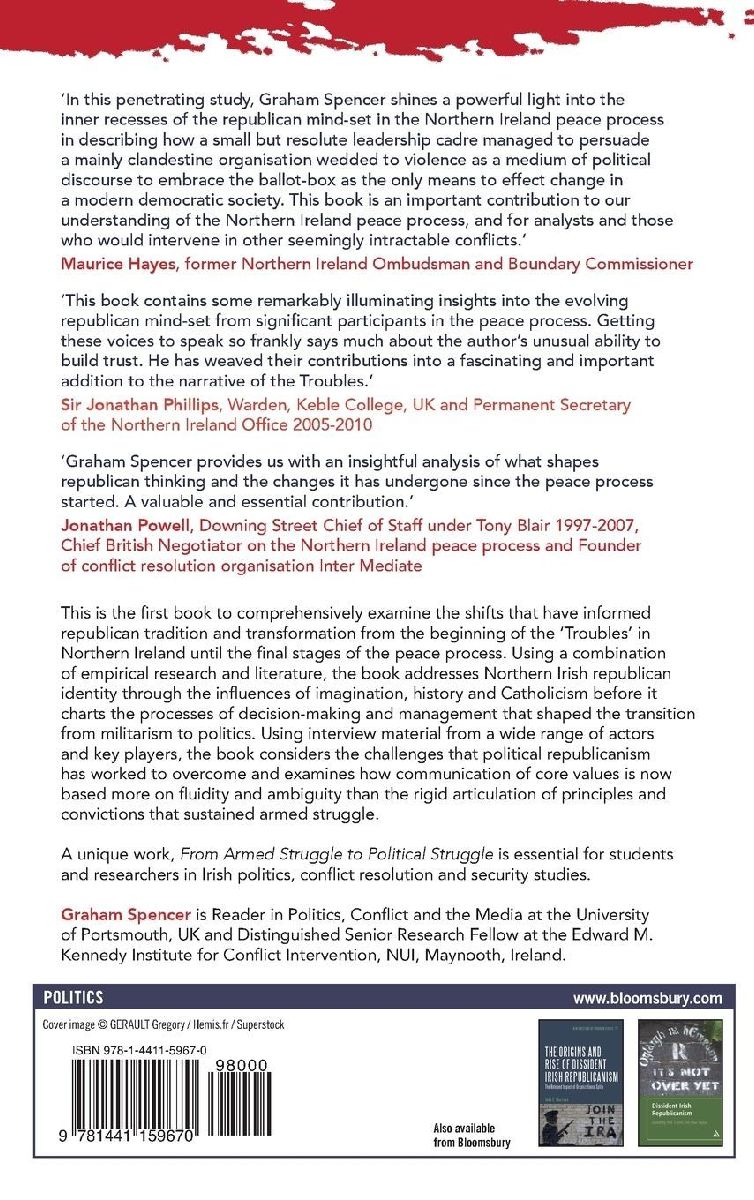
This is the first book to comprehensively examine the shifts that have informed republican tradition and transformation from the beginning of the "Troubles" in Northern Ireland until the final stages of the peace process. Using a combination of empirical research and literature, the book addresses Northern Irish republican identity through the influences of imagination, history and Catholicism before it charts the processes of decision-making and management that shaped the transition from militarism to politics. Drawing from interview material from a wide range of actors and key players the book considers the challenges that political republicanism has worked to overcome and concludes that ongoing political development will require a less acute, more ambiguous communication of values based on pragmatism and compromise, rather than the continued articulation of principles and convictions that sustained the armed struggle.
A unique work, From Armed Struggle to Political Struggle is essential for students and researchers in Irish politics, conflict resolution, and security studies
Inhaltsverzeichnis
Acknowledgements< BR> < BR> Introduction< BR> < BR> Chapter One: Imagination< BR> Myth< BR> Martyrdom< BR> Metaphor< BR> < BR> Chapter Two: History< BR> Origins and dynamics< BR> Re-emergence< BR> Militancy< BR> Hunger and transition< BR> < BR> Chapter Three: Catholicism< BR> History and context< BR> Reasoning and morality< BR> The Catholic Church and republicanism< BR> Catholic perspectives on republicanism< BR> Republican perspectives on Catholicism< BR> < BR> Chapter Four: Politics< BR> Dialogues with nationalism< BR> SDLP perspectives< BR> < BR> Chapter Five: Peace< BR> The Good Friday Agreement< BR> British and Irish Official perspectives< BR> Endgame: After Good Friday< BR> < BR> Chapter Six: Rebels and Reconciliation< BR> The 'dissident' threat< BR> Claiming the past to shape the future< BR> < BR> Conclusion< BR> < BR> Bibliography< BR> < BR> Index