






Das eBook.de Hörbuch Abo - jederzeit, überall, für nur 7,95 € monatlich!
Jetzt entdecken
mehr erfahren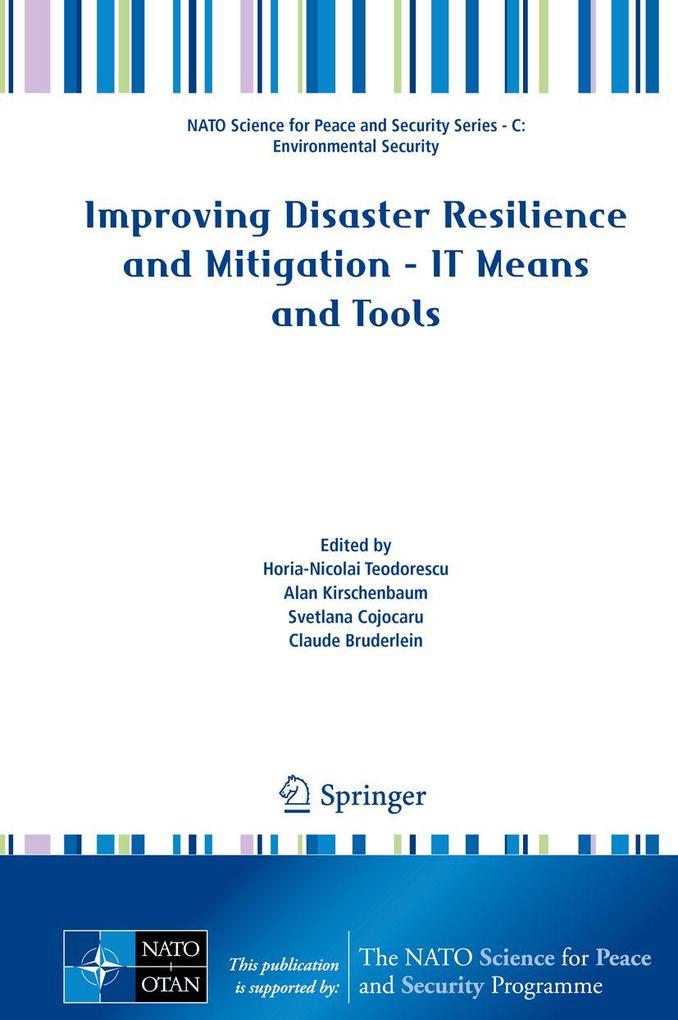
Inhaltsverzeichnis
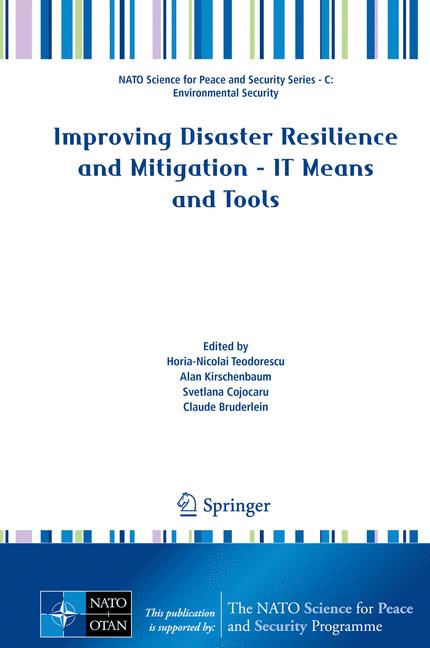
Part I: Fundamentals and Modeling. - Survey of IC& T in disaster mitigation and disaster situation management. - Organizations under siege: innovative adaptive behaviors in work organizations. - Risk perception and communication. - Establishing social resilience with (public-private partnership)-based BCM (Business Continuity Management). - A model for the spatio-temporal distribution of population using country-wide statistical data and its application to the estimation of human exposure to disasters. - From noise to knowledge: smart city-responses to disruption. - Challenges of image-based crowd-sourcing for situation awareness in disaster management. -Foresight and forecast for prevention, mitigation and recovering after social, technical and environmental disasters. - Disaster early warning and relief: a human-centered approach. - Expert systems for assessing disaster impact on the environment. - Fuzzy logic and data mining in disaster mitigation. - Decision support to build in landslide prone areas. - Part II: Tools and Applications. - Mitigation using emergent technologies. - Geographic information for disaster management An overview. - /The potential of cloud computing for analysis and finding solutions in disasters; M. Craus, C. Butincu. - How to improve the reactiveness and efficiency of embedded multi-core systems by use of probabilistic simulation and optimization techniques. - Design of safe systems. - Emergency-Sona Res: a system for ultrasound diagnostics support in extreme cases. - A decision support system for forest fire containment. - Vulnerability analysis and GIS based seismic risk assessment Georgia case. - Sensors for environmental control based on chaotic systems. - Wearable, assistive system for monitoring people in critical Environments.
Es wurden noch keine Bewertungen abgegeben. Schreiben Sie die erste Bewertung zu "Improving Disaster Resilience and Mitigation - IT Means and Tools" und helfen Sie damit anderen bei der Kaufentscheidung.